I’ve often wondered what that word meant. ‘Wuthering’. How is it pronounced, anyway? Woo-the-ring? View-the-ring? Whuh-the-ring? The eponymous book by Emily Bronte is certainly well-known. I would wager a small piece of buffalo mozzarella, though, that the poem of the same name by Sylvia Plath is not as famous. But Owen Sheers would like it better known, and here’s his take (from The Poet’s Guide to Britain) on this American poet’s tribute to the Yorkshire moors.
 This series has been about the relationship of poets with the British landscape. Moorland, this bare, wild upland country has often provided writers with the perfect setting to evoke sensations of drama, menace and alienation. It isn’t hard to see why. Standing in the midst of this bleakly imposing Yorkshire moorland, one can’t help but feel insignificant, consumed by the landscape. This landscape has featured in the works of many writers, but the poet who captures a unique vision of these Moors wasn’t even British. In fact, she only came to Yorkshire a few times. She was the young American poet Sylvia Plath.
 Sylvia Plath wrote some of the most striking, original and widely-read modern poetry. Unfortunately, the mythology surrounding her personal life, her marriage to the celebrated poet Ted Hughes, her mental health problems, and her tragic suicide has tended to sometimes overshadow the richness and variety of her writing.
She is most famous for the poems of intense personal drama, “Daddy”, “Lady Lazarus”, “Ariel”, written in the last months of her life. Few would think of her as being a landscape poet, and yet throughout her prolific career, Plath wrote a number of vivid poems of place. One of the best of these is a strange and immensely powerful piece called Wuthering Heights. It’s set on the Yorkshire Moors, and after reading it, we want to make the hike up to the Moor top ruin that not only inspired Emily Bronte’s classic novel, but also this brilliant and chilling poem of Sylvia Plath’s.
Wuthering Heights by Sylvia Plath

The horizons ring me like faggots,
Tilted and disparate, and always unstable.
Touched by a match, they might warm me,
And their fine lines singe
The air to orange
Before the distances they pin evaporate,
Weighting the pale sky with a soldier color.
But they only dissolve and dissolve
Like a series of promises, as I step forward.


There is no life higher than the grasstops
Or the hearts of sheep, and the wind
Pours by like destiny, bending
Everything in one direction.
I can feel it trying
To funnel my heat away.
If I pay the roots of the heather
Too close attention, they will invite me
To whiten my bones among them.


The sheep know where they are,
Browsing in their dirty wool-clouds,
Gray as the weather.
The black slots of their pupils take me in.
It is like being mailed into space,
A thin, silly message.
They stand about in grandmotherly disguise,
All wig curls and yellow teeth
And hard, marbly baas.


I come to wheel ruts, and water
Limpid as the solitudes
That flee through my fingers.
Hollow doorsteps go from grass to grass;
Lintel and sill have unhinged themselves.
Of people and the air only
Remembers a few odd syllables.
It rehearses them moaningly:
Black stone, black stone.


The sky leans on me, me, the one upright
Among all horizontals.
The grass is beating its head distractedly.
It is too delicate
For a life in such company;
Darkness terrifies it.
Now, in valleys narrow
And black as purses, the house lights
Gleam like small change.
It’s disturbing, visceral writing, a poem in which the poet and the landscape she is describing seem to be merging into one, as if Plath were evoking the Moorland world purely to reflect her own state of mind. She wrote a sequence of seven poems about the Yorkshire Moors between 1956 and 1961. Before heading up to the Wuthering Heights, we take a look a couple of these earlier Moors poems, both written when she was in her early twenties – Hardcastle Crags and The Great Carbuncle. Both of these poems feed powerfully into the five concise verses of Wuthering Heights, written several years later, when Plath was 28.
The young British poet Clare Pollard is an admirer of Plath’s work. When most people think of Plath’s poetry, it’s fair to say they’re really thinking about her later poems, those intensely personal works, and maybe not her landscape work. Pollard says, “I think people think of the domestic landscapes, the beekeeping, we think of her in a flat with the baby, and also kind of these very intensely private mythic worlds, the world in her head. We don’t think of her as a nature poet at all, I don’t think, and yet if you look at her collected poems, you see she does engage with the outer world, she’s intensely interested in the outside world, and in writing landscape poetry.”
But where did Plath’s fascination with the Yorkshire Moors stem from, and what was she doing in England?
 Sylvia Plath was born in Boston in 1932 into a family of academics, and she had written poetry intensively throughout her childhood and adolescence. She was a straight-A student, but being so driven took its toll, and in her late teens she suffered a breakdown. Yet, despite this, she went on to graduate top of her class, and in September 1955, aged 22, she arrived in Britain, having won a prestigious Fulbright scholarship to the women’s college of Newnham in Cambridge.
Her acceptance here meant the world for Plath, it really was her dream come true. She had huge expectations about what her time here at Newnham would bring for her. She was also, clearly, fiercely ambitious. When one reads her journal, it’s quite funny to see how keen she is to meet the right people. She’d come here to conquer the literary landscape. In a BBC interview in 1962, she said, “I had always idolised England, because I think, with an English major, especially, you think that here it all began, and you want to walk under Milton’s mulberry tree at Cambridge and you remember all that Dickens that you read when you were little, and this is simply a literary influence.”
 She would have been delighted to find that she has since become one of those Cambridge literary legends. Owen Sheers went to talk to some of the undergraduates at Newnham College about Sylvia and her poetry.
“I think she’s definitely an icon, she made herself into an icon with her struggles and how she’s perceived to be a sufferer.”
“People tend to have a romanticised view about some of her poetry, that stereotype of 16-year old girls in dark rooms reading The Bell Jar.”
Sometimes fans of Sylvia Plath’s work get something of a name for themselves for being quite fanatical. Sheers asks the students if there is any kind of embarrassment being at Newnham, saying they are a fan of Sylvia Plath’s work?
“People imagine Sylvia Plath is equal to teen angst, but I think she has that raw emotion that teenagers, when they are going through a certain stage, respond to.”
As Plath was writing the journals, some of those early poems, she was only a couple of years older than these students; she was 23 years old, and yet she’s so focussed heaping all these expectations upon herself. Is that kind of drive unusual?
“Everyone at Cambridge is terrifying… Everybody works hard to get here, everybody’s ambitious and everyone has aims to be the best they can. In that way, I don’t think she’s unusual from any of us here.”
“The difference with Sylvia is that she had the guts to admit that she wanted to go somewhere and that she wanted to make something of it.”
“When I read her journal, it’s full of bits where she says to herself, ‘Shape up, this term, this year, you will do well, you will do this, you will do that,’ and I find myself saying, ‘Yes, yes, I will!’ And then I think, am I taking advice from Sylvia Plath? And then I think, maybe I do want to be a brilliant poet like her, who wouldn’t? But maybe that’s also quite terrifying, that there’s a part of Sylvia Plath that is so recognisable.”
“This is where she fell in love with Ted Hughes, so there must have been moments where she was possibly in the full flushes of romance. So maybe she was happiest here.”
Aurelia Plath, Sylvia’s mother, said, “She was a very feminine, very warm person. She had many minor loves in her life, and each time would retreat in a disillusioned way because either there was jealousy because of the time her writing consumed, the dedication she was willing to give it, and the emerging success she was receiving.”
Only a few months after arriving in Cambridge, Sylvia met Ted Hughes at a party celebrating the launch of a student poetry magazine. She said in 1961, “I’d read some of Ted’s poems in this magazine, I was very impressed, and wanted to meet him. I went to this little celebration, and that’s where we met. We kept writing poems to each other, then it just grew out of that, I guess, a feeling that we both were writing so much and having such a fun time doing it, we decided we should keep on.” Hughes added, “The poems haven’t really survived, the marriage overtook the poems.”
 Sylvia and Ted were married in a secret wedding just four months after they met. Following the honeymoon in September 1956, Ted took her home to his parents’ house in Heptonstall, a village perched on the Moor tops above the Calder Valley. Until they arrived, Ted’s parents didn’t even know that their youngest son had a wife. Sylvia arrived eager to make a good impression on her new in-laws, but also to immerse herself in everything this foreign landscape offered her as a writer. It was a very exciting period in her life. At the same time, it all got a bit much for her. She was a young wife, staying here with her husband’s family for the first time. She was in a very different culture, and on top of it all, the good old Yorkshire weather must have been a stark contrast to bright skies she was used to back home in America.
 However, at some level, her Yorkshire experiences were all grist to her poetry. In the Pennines, she discovered a landscape that was at once alien and yet at the same time inspirational. The double-edged relationship with a forbidding, foreign environment is the recurring subject through Plath’s sequence of Moors poems, and one that culminates in Wuthering Heights, where she finally seems to claim the landscape as her own.
She couldn’t have written that great poem, Wuthering Heights, without first writing those other Yorkshire poems that came before it, one of which began right here.
Hardcastle Crags by Sylvia Plath

Flintlike, her feet struck
Such a racket of echoes from the steely street,
Tacking in moon-blued crooks from the black
Stone-built town, that she heard the quick air ignite
Its tinder and shake


A firework of echoes from wall
To wall of the dark, dwarfed cottages.
But the echoes died at her back as the walls
Gave way to fields and the incessant seethe of grasses
Riding in the full


Of the moon, manes to the wind,
Tireless, tied, as a moon-bound sea
Moves on its root. Though a mist-wraith wound
Up from the fissured valley and hung shoulder-high
Ahead, it fattened


To no family-featured ghost,
Nor did any word body with a name
The blank mood she walked in. Once past
The dream-peopled village, her eyes entertained no dream,
And the sandman's dust


Lost luster under her footsoles.
The long wind, paring her person down
To a pinch of flame, blew its burdened whistle
In the whorl of her ear, and like a scooped-out pumpkin crown
Her head cupped the babel.


All the night gave her, in return
For the paltry gift of her bulk and the beat
Of her heart was the humped indifferent iron
Of its hills, and its pastures bordered by black stone set
On black stone. Barns


Guarded broods and litters
Behind shut doors; the dairy herds
Knelt in the meadow mute as boulders;
Sheep drowsed stoneward in their tussocks of wool, and birds,
Twig-sleep, wore


Granite ruffs, their shadows
The guise of leaves. The whole landscape
Loomed absolute as the antique world was
Once in its earliest sway of lymph and sap,
Unaltered by eyes,


Enough to snuff the quick
Of her small heat out, but before the weight
Of stones and hills of stones could break
Her down to mere quartz grit in that stony light
She turned back.
Heading out into the rough country beyond Heptonstall village, with those terse and stony sounds resonating around one’s head, one can’t help but sense that menace which Plath evokes lurking behind every rock and tree. It’s an eerie place to go walking. At Hardcastle Crags, Plath begins her journey and this is where her relationship with the Yorkshire landscape takes off. The eponymous poem that she wrote was her first really exciting work about the Yorkshire Moors, and contains all of the raw materials of her later work about this landscape. There is imagery of the grasses, that touch of the occult, the landscape being threatening, something that very much challenges her, that she has to stand up to.
 Although these images are good, and they do work and help one see this place, they don’t yet quite have that uniquely strange quality that one associate with her work. That’s because she is a young poet who is still negotiating her way through this environment, and finding out how she wants to write about it. Most of Plath’s Yorkshire writing picks up on a sense of the supernatural. Along with the often haunting atmosphere of the Moors themselves, Ted also introduced his new wife to the local folklore and superstition.
One of the interesting things about being up her in Yorkshire is discovering how strong the culture of story-telling still is, and specifically, the telling of ghost stories. In a pub on the edge of Widdup Moor, one can hear some of these folk tales for oneself.
She hung herself in the corridor down there, and that’s her chair over by the bar. Anybody comes in now and she doesn’t like them, the front door bangs to. And he sat down in the chair, and as he did the door banged and the wind whistled round and opened these doors as well, and they banged. So he had the double doors. He never sat in the chair again.
This is the kind of story that Sylvia Plath would have heard during her time in Moors. It’s the quality of these stories that has fed into that slightly haunting tone in her writing about this place. It’s an entirely appropriate tone because it does capture an essence of what it feels like to be here. The Moors are quite an eerie place. They can feel very other-worldly.
 The second of Sylvia’s poems that is worth exploring was written after a trip to Yorkshire in June 1957. It draws deeply on the supernatural dimension of the Moors and is called The Great Carbuncle. As her relationship with these Moors develops, she increasingly brings more of herself into the poems she writes about them. In The Great Carbuncle she does this by fusing her experience here with a short story from her own literary heritage – a story by the American writer Nathaniel Hawthorne. In the story, a group of explorers travel out into the wilderness in search of a gem of great brightness, the Great Carbuncle, which one would imagine to be pretty handy should the mist suddenly come down and one can’t see a thing in any direction whatsoever.
The Great Carbuncle by Sylvia Plath

We came over the moor-top
Through air streaming and green-lit,
Stone farms foundering in it,
Valleys of grass altering
In a light neither dawn


Nor nightfall, out hands, faces
Lucent as porcelain, the earth's
Claim and weight gone out of them.
Some such transfiguring moved
The eight pilgrims towards its source--


Toward the great jewel: shown often,
Never given; hidden, yet
Simultaneously seen
On moor-top, at sea-bottom,
Knowable only by light


Other than noon, that moon, stars ---
The once-known way becoming
Wholly other, and ourselves
Estranged, changed, suspended where
Angels are rumored, clearly


Floating , among the floating
Tables and chairs. Gravity's
Lost in the lift and drift of
An easier element
Than earth, and there is nothing


So fine we cannot do it.
But nearing means distancing:
At the common homecoming
Light withdraws. Chairs, tables drop
Down: the body weighs like stone.
Jo Shapcott, one of Britain’s leading poets, says, “There’s a kind of strangeness that makes the landscape almost surreal… The Great Carbuncle [is] an extraordinary tour de force… Plath exploring the landscape but exploring the atmosphere and the light. It’s quite beautiful but quite terrifying at the same time.”
She’s still early on in her writing life, still a young poet when she writes The Great Carbuncle. Despite this, Shapcott points out, “she is already technically assured. You feel, as a reader, you are in the hands of a completely safe poet. Powers of observation are fantastic.”
Shapcott herself, after moving into hill country in the Welsh borders, was inspired to write a sequence of short, two-verse poems. Like Plath, she says, she was an urban stranger to the hills. She also, like her, responded to the light.
The British writer who fired Plath’s imagination from a young age, and with whom she shared the same Gothic sensibility, was Emily Bronte, author of that famous Moorland novel of romantic passion, Wuthering Heights. Newly married and full of own literary ambitions, it must have been thrilling for Sylvia to come to Bronte country, and with her very own Heathcliff in tow. It’s no surprise that when Sylvia Plath got here she came to have a look at the Bronte Parsonage in Haworth. This was the home of those famous literary literary Bronte sisters who must have cast such a shadow of influence and ambition over the young Plath while she was here.
The Brontes were a truly impressive family. Like Sylvia, they’d started writing from an early age, and Charlotte and Emily went on to achieve Sylvia’s dream of publishing iconic novels before they were thirty. Her own time in Yorkshire didn’t only inspire poetry, but article and short stories as well. Her literary career received a huge boost when the prestigious New Yorker magazine accepted Hardcastle Crags for publication. The $350 fee for the poem was enough to pay the rent on her and Ted’s apartment when they moved to Boston for the summer of 1958.
 Sylvia’s travels with Ted around America gave her a whole new range of landscapes to write about. After their return to England, Hardcastle Crags appeared in her first collection of published poems, The Colossus. By August 1961, Sylvia and Ted had a young daughter and were expecting a second child when they decided to move from London to a village near Dartmoor in Devon. Tragically, it was here, a year later, that their marriage fell apart. However, shortly after the move, being near moorland again, Sylvia wrote a poem that was based on an extraordinary hike from Haworth up to the windswept ruin of the Top Withins, the supposed location of Heathcliff's manor in the Bronte novel. It was this forlorn place that inspired Sylvia’s most origination evocation of the moors, her own Wuthering Heights.
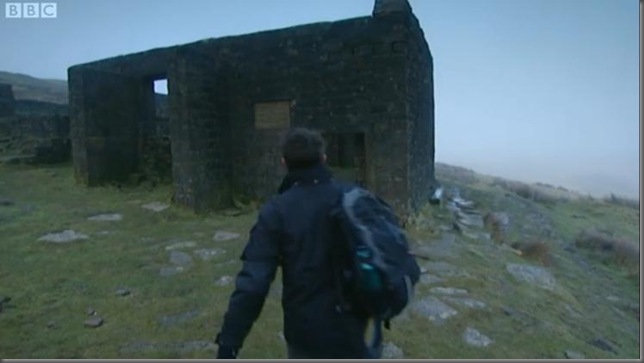 That walk with the lines of Plath’s poem in one’s head charges it even more with energy. Everywhere one looks, one sees parts of the poem, the grass distractedly beating its head, the black stones of the walls, and then feeling the wind pouring by like destiny. Plath came up here for this ruin, and although it has no specific association with Emily Bronte’s Wuthering Heights, its exposed position right on the top of the Moors is thought to have inspired the setting of Heathcliff’s fictional manor. She must have been excited to be atop this hill. One of her reasons to come to Britain was because of its literary history, and here she was literally immersed in it. While earlier this weight of literary history might have been intimidating, now she had the confidence to take the title Wuthering Heights to tell her own story.
“As well as a seriousness and a passion, she has always been wonderful at rooting into her subconscious for exactly the right image to express an emotion. But also a kind of wit, a great humour that really expresses itself wonderfully in Wuthering Heights in the sheep. Although the sheep are sinister, they’re also a bit silly and old womanish. And she characterises that beautifully. It’s deft, wonderfully deft.” [Jo Shapcott]
One of the most successful things about Wuthering Heights is the way that Sylvia Plath captures this environment, by using some incredibly startlingly surprising imagery. For example, in Hardcastle Crags, although her line, “the incessant seethe of grasses riding in the fall of the moon” works, and is a really vivid description, in Wuthering Heights, she takes us to a whole new level when she writes “the grass is beating its head distractedly. It is too delicate for a life in such company. Darkness terrifies it.” We know that although she has got exactly the right image for the grasses up there, that she is also talking about herself. So the grasses and her state of mind have become one.
So it’s a fantastic landscape poem, and one of her best because although her psychology is very present in it, it’s still a landscape poem that brings this environment to vital life in a really amazing way.
Wuthering Heights must have been a poem that Sylvia Plath rated highly, as she made it the opening to Crossing The Water, the second collection she had planned for publication. Tragically, Sylvia didn’t live to see this or her third and most famous collection, Ariel, published. However, almost 20 years after her death, her collected poems won the Pulitzer Prize, and today she is recognised as a pioneering figure, and one of modern poetry’s most important voices.
“There’s absolutely no denying that Sylvia Plath has had a huge impact on women poets. Many have either felt they’ve have to define themselves against her in a completely different way… She was the first poet I really read seriously, and she had a huge impact on me.” [Claire Pollard]
It was in conversation with the Moor landscape that the young Sylvia Plath developed her poetic voice. In return, she has made the Yorkshire Moors live on the page in a wholly new way, through the poems they inspired her to write. In all of her moor poems, the landscape is threatening, apparently intent on snuffing the quick of her small heat out. And on the whole it would seem that it’s successful, because at the end of those poems, she does retreat from the Moorland and returns to the lowland lights.
But Wuthering Heights is different, and at the end, she doesn’t retreat from the Moors, but chooses instead to stay put, up on the high ground. This gives the close of the poem a real sense of victory, as if by imprinting the landscape with her unique vision and imagination, she powerfully claims it as her own.
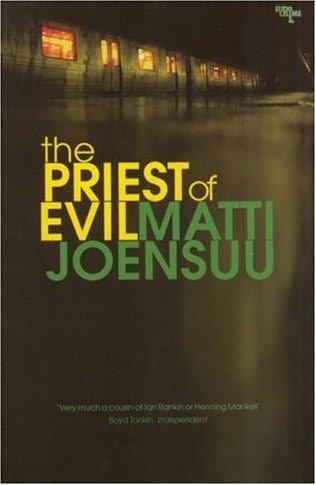 Difficult, but not impossible. Policeman novelist Matti Yrjänä Joensuu is a Finn with a vision. In his The Priest of Evil, he develops a peculiar mish-mash of new age religion, serial killings, deeply troubled adults and their disturbed relationships with appallingly cold and twisted parents, bullied children and their close friendships, mind control, and beneath it all, such aching sadness that it is not surprising Finland has one of the highest suicide rates in the world. A couple of fundamentalist preachers are accosting passersby at various Metro stops in Helsinki, and there appears to be a correlation between them and people falling onto the tracks. Were they pushed? Are they suicidal? The CCTVs show nothing suspicious. The investigating policeman is that rare bird in detective fiction – a man truly content in his marriage and with his little girls. Separate strands of the tale deal with a shaman who invokes an earth goddess and bleeds birds to death for his sacrifices, and a boy who strikes up a friendship with a girl who saves him from bullies. The boy’s mother is a virulently manipulative shrew, and his father is – like Joensuu – a man isolated from his colleagues because of his side career as a successful novelist. It’s obvious from the get-go who the killer is, but the goodness in the book is in the chase and in the details of a hidden Helsinki, and Joensuu’s fervent belief that the police, with a ringside view on society, is the front line in sensing evil in all its forms.
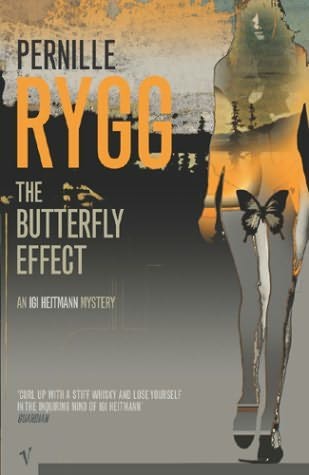 And then we have Pernille Rygg’s The Butterfly Effect, which propagates the usual misunderstanding about chaos theory, flapping wings and hurricanes, but also comes up with yet another tale of child abuse. (What is with crime fiction and child abuse? It’s as though there is no other reason for murders on the planet. Oooh, either the victim or the murderer was abused as a kid. Oooh.) In this story set in a such a small dull town in Norway that living there must be living death, a girl’s body is found in the snow, riddled with bullets. The narrator, a sparky woman, determines that the dead girl had been her father’s last client; her father was a detective who had recently died in an accident. She is keen to find out if the deaths are in any way connected, and in the course of her slightly shambolic investigation, encounters corruption (what! in Norway? Impossible!) and bent psychologists. She herself is an interesting case: a psychology student complete with a troubled relation with her mother, and married to a gay man, to boot. Her suspects are equally eclectic: a founder of a Wicca-like cult, property developers, druggies. As with the other Scandinavian storytellers of recent fame, Rygg wants to analyse the effect of psychological abuse on children and its ramifications on wider society. Small closed societies like Norway probably have scars in their psyches because everything one does is ostensibly obvious to one’s neighbours; but this close scrutiny drives evil deeper into hiding, and the consequences are therefore more corrosive.
 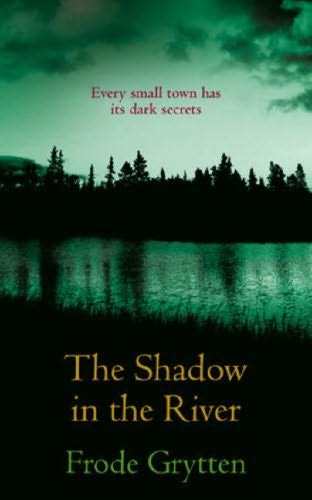 To save us from utter pessimism about Nordic noir, we have Frode Grytten, the third and last of our Scandinavians this month, who has penned The Shadow in the River, and who is quite, quite different from the rest I’ve read so far. He is a man of mordant wit, and he shows off his skills superbly in this tale of xenophobia in Odda, yet another depressingly small and moribund town in western Norway. Grytten is a journalist for the Bergens Tidende, a newspaper in neighbouring Bergen, and so is the protagonist of this book, Robert Bell, a disillusioned, semi-alcoholic man in love with his brother’s wife, a man whose career is not going anywhere, a man who is sinking into apathy but still manages to retain his biting satirical bent of mind. He investigates the death of a local man while public opinion begins to harden against immigrant Serbs with whom the victim had been seen to argue. His brother, a policeman in charge of the case, resents his interference, but surely the resentment stems from his suspicions of his wife’s relationship with Robert. This is black understated humour and poignant and moving.
 relatives are told they died in action. The handicapped fiancee of one of the men, a girl from a privileged background and with a backbone of steel, then receives a letter which kindles her suspicion that there has been a cover-up. With immense fortitude, she begins an unofficial investigation into the matter. She casts her dragnet wide, antagonises public officials who do not want any muck raked up in the years after the war, raises the spectre of possible humiliation for the families of the dead men, stirs fond memories among mothers and sisters and wives, and follows the trail of suspicious deaths of men she finds out were involved in covering up the deaths of the soldiers. She finds out that the men’s sentences had been commuted, but vicious intermediaries had ensured the news wouldn’t reach them. She finds out that their deaths had been particularly heartless – they had been tossed into the no man’s land – when even the Germans had been horrified and ceased fire. There is much beauty to be savoured in this elegiac tale. Japrisot has vividly brought to life an era simultaneously heroic and corrupt, and the twist at the end is heart-aching, yet affirming. Excellent stuff.
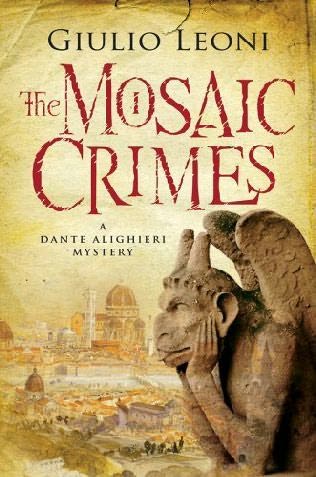 Finally, we have the frenetic The Third Heaven Conspiracy (also known as The Mosaic Crimes) by Giulio Leoni – a tale of Dante (in this case following the man himself, rather than serial killers killing in accordance to the deaths in his magnum opus). Dante is an investigator, a Prior, in Florence, and he attempts to solve the death of a mosaicist involved in the construction of the new cathedral in his city. Meanwhile, the Papacy is intruding into Florentine affairs, raising the hackles of the political elite of the city-state, and raising as well the spectre of renewed conflict between the supporters of the Holy Roman Emperor and those of the Pope. Dante himself is violently anti-Rome, having himself participated in the Guelph-Ghibelline wars of a few years before. As he digs deeper into the crime, he finds that it’s not just political intrigue that is involved, but also a battle for the soul of Florence, an intellectual conquest by means of supposedly secular educational institutions. Leoni tries to get into Dante’s psyche, using his published works as a mirror to his mind, and the attempt is – to my mind, at least – futile. There’s nothing about the story that needs Dante. It appears to be a conceit of lazy writers to use historical characters as detectives, and there is sufficient encouragement from casual readers for this sort of work. I’ve seen Newton and Longfellow dragooned into the role of detective, and now it’s Dante’s turn. Ho hum.