JOST A MON

The idle ramblings of a Jack of some trades, Master of none

Mar 10, 2017

Osmium

It appears that J P Vaswani is still going strong, nearly a century after he was born. While he is known for his spiritual teachings, at one time his c.v. also included a line to the effect that he was the nephew of T L Vaswani, a boon companion of Mohandas Gandhi himself, and a founder of a mission. I was never clear on what that mission's mission was.

Back in Jakarta in the 80s he would visit our school frequently. As a Shukracharya for the kids, he would hold forth on a variety of topics for our moral instruction. We'd sit in the assembly hall, wilting with boredom, and listen to him go on about matters of the soul and supreme powers and the like. Once in a while he'd come out with an illustrative story or two. We rarely paid much attention.

One day he was talking about the immensity of God.

'Do you know osmium?' he said. 'It is the heaviest metal in the world.'

We stirred.

'It is so heavy,' he said, 'that you could not lift a spoonful of it.'

At this point half the class turned to look at me. I was no less than JP at throwing out random assertions.

I shook my head in teenage outrage.

'He is wrong,' I said through clenched teeth.

After the lesson, my classmates laughed at me.

'Come on, guys,' I said. 'Work it out.'

A spoon is about 15 millilitres. The density of osmium is 22.6 grammes / ml. So you have 339 grammes of osmium in a spoon.

I'm yet to find a person who can't lift 339 grammes.

Mar 13, 2015

An Abundance of Riches

In the early 90s, shortly after the implosion of the USSR, the world was suddenly awash with brilliant Soviet scientists and engineers who found themselves unemployed and impoverished. Many of them wanted nothing more than to continue their work, while others seized the opportunity to move to greener pastures abroad. A small number were coopted by countries and terrorists seeking nuclear and biochemical weapons know-how. In order to keep the rest from succumbing to such temptation, US institutions organised monthly stipends for them, while George Soros created the International Science Foundation to support the sciences in the former Soviet Union. Meanwhile, a large-scale emigration of Jewish scientists began to Israel, which found itself swamped by these riches.

I was at TIFR in the summer one of those years, and the notice-boards in the cafe were festooned with newspaper clippings describing efforts by various countries to attract the scientists. Some pooh-poohed the miserly stipends the US were paying out - $500 a year or so. Some marvelled at the Chinese willingness to pay top dollar for expertise. And many bemoaned Indian bureaucratic intransigence and hierarchical pig-headedness that prevented us from paying higher salaries to attract Soviet scientists than our own professors were earning. And thus a superb opportunity to revamp our scientific and technical base, and to improve the calibre of our research and our universities was forever lost.

For the Israelis, though, the incoming rush was a mixed blessing. Haaretz recently had a beautiful piece on the diaspora from the Soviet Union. The Jews of the USSR did much to change the political landscape in Israel, especially towards a conservative direction. They also added considerable fillip to cultural diversity. But many of them found it hard to adjust to their new lives. Israel did not have the capacity to accommodate every brilliant Jewish scientist who arrived. After two or three top-notch algebraic theorists arrived, for example, where would the fourth be placed? And so many a scientist, who anywhere else in the world would have been a superstar, found themselves sidelined and frustrated.

It is a heartbreaking thing when pearls are so abundant that their shine is lessened.

In August this year, Seoul will host the latest International Congress of Mathematicians. It's that quadrennial time when gossips begin to natter about Fields Medallists. A lot of people are talking up Manjul Bhargava. It is his last chance to win - by the time the next ICM comes around he will be older than 40. I'm hoping at least one woman will be awarded the prize this time.

In the run-up to the last ICM (in Hyderabad), I'd blogged about potential candidates for that year. None of them won. I hope to profile a few new names ahead of this year's ICM.

One that has popped up (new to me, at least) is Laure Saint-Raymond. Here is a loose translation of an interview that appeared a few days ago in Le Journal: "Laure Saint-Raymond, la boss des maths", by Louise Mussat (April 28, 2014).


Elected to the Academy of Sciences in December 2013, this top-flight researcher will participate at the International Congress of Mathematicians in Seoul in August.

The blackboard that stretches across one of the walls of her office at the École normale supérieure (ENS) is whitened by clouds of intertwined mysterious symbols. These are equations, and they are unsurprising - Laure Saint-Raymond is a mathematician, a pearl in
her field of partial differential equations applied to problems of physics. A winner of the European Mathematical Society's Prize in 2008 and of the Joliot-Curie "Young Woman Scientist" award in 2011, she was elected to the Academy of Sciences when she was 38 years old, the youngest ever. And in August she will present a lecture in Seoul at the ICM, an unmissable event that attracts thousands of mathematicians every four years, during which the famous Fields medals are awarded.

Stratospheric Research

What does the daily life of a top mathematician look like? Wracking one's brains before a sheet of blank paper before scribbling equations on a blackboard? "Not exactly!" says this energetic researcher, smiling. "I spend a lot of time teaching, attending seminars, trawling the literature to help me keep abreast of what is happening, and communicating the results of my own research. But thinking in front of a blackboard is part of my work, and most of the time it's with my team. It's the creative phase, a mutual game during which we sometimes find nothing or sometimes not what we were looking for!"

What Laure Saint-Raymond seeks with her collaborators is to capture physical phenomena with mathematics. "My training in physics helps me to better understand the language of physicists and exchange ideas and develop an intuition for the phenomena we are trying to describe," she says. That was the year she graduated with a degree in applied mathematics from the University of Paris VI, the same year she obtained her degree in plasma physics.

All these strings to her bow have enabled her to tackle a tricky problem, first posed in 1900 and still unresolved: how does one effect a transition from a physical model to another, less complex and less precise? The scientist explains, "When we are in the presence of a rarefied gas, for example in the Earth's upper atmosphere, and we want to simulate the re-entry of a spacecraft, we use the so-called kinetic theory in which the state of the gas is characterised by a function of several variables, such as time as well as the positions of the atoms." Meanwhile, to describe the behaviour of gases around us, infinitely denser in atoms, it suffices to use a model wherein all the atoms are considered as a single continuous medium.

"What interests me is to understand how one moves from one to the other of these models: is there a smooth transition or, on the contrary, is there a discontinuity between the two descriptions which renders them both invalid in the intermediate regime?" says Laure Saint-Raymond.

Fundamental and stratospheric, this mathematics nevertheless has some physical applications: they allow us to understand better the entanglement phenomena at diferent scales of time and space, and to better account for the observed air flow around an aircraft, for example, or the formation of persistent whirlpools in the ocean.

From the Cello to the Sciences

Laure Saint-Raymond readily admits: as a child or a teenager, she had no particular attraction for mathematics. Her main thing was the cello. Then in high school, equations finally overcame the scales. "I had a facility with maths and physics, and my parents, both maths teachers, undoubtedly influenced my change in direction."

As a newly-minted bachelor in mathematics, she found the arms of the engineering industry extending towards her. However, she chose research, it being "intellectually more stimulating". In 1994, she joined the ENS where she began work on her thesis under the supervision of François Golse on the "kinetic theory of gases". To be clear: on mathematics applied to the movements of gases. Recruited by the CNRS in 2000, she spent two years as a Research Fellow before being appointed as a professor at the University of Paris VI. In 2007, she obtained a secondment at the ENS where she was made director of the department of Analysis. Currently, she is the deputy director of the Department of Mathematics and its Applications.

An exceptional journey

Her exceptional and rapid-as-lighting journey demands respect as it has happened in a largely male-dominated universe. "That is irrelevant," she counters. "My being a woman has never been a handicap, I have never been a victim of discrimination. And to do research today, it is no easier for a boy than for a girl, it's difficult for both: young people don't obtain a job till after several years of post-doctoral work, which, in some disciplines, means they have to wait till nearly 35 years of age before they are in a stable situation and able to start a family..."

Still, says Laure Saint-Raymond, her eyes shining and with enthusiasm in her voice, the game is worth the effort. "I will no doubt make a lot more money in the industry, but one's work cannot be reduced to a mere salary. Not one of my days as a teacher-researcher is like any other, and at the ENS, I have the immense freedom to conduct research that I want to do, and I enjoy myself thoroughly. This is priceless."

When she is not playing with partial differential equations, or not coaching one of her students, or not tutoring one of her six children (five boys and one girl, aged between 4 and 14 years!), Laure Saint-Raymond escapes to the mountains. Skiing in the winter or hiking in the summer, whichever, the key is to be outdoors all the time. "I really need to recharge my batteries, to disconnect completely from work, to return to the office with new ideas," she admits, and returns to whitening her blackboard again.

Apr 5, 2014

School Clubs

The boy, seized with an afflatus of imagination, suggested to his pals at school that they start a club. They would call it the Naturality of Einstein. Or NOE, for short.

- Why Naturality? said I. That's not a word.
- Naturally because we're going to do experiments, said the boy. Like Einstein.
- I don't think Einstein ever did any experiments, I said. He was a theoret…
- Acha, please!

The plan, as I understand it, is to make train models during lunch recess. 

- Why trains? said the wife. What did Einstein have to do with trains?
- Actually, I said, feeling rather self-important, When Einstein thought about time and relativity, trains with on-board times different from either the origination or destination cities were suited for the purpose.

I then launched into a harangue about clock synchronisation, and the finite speed of light. The wife hid behind a newspaper. The boy listened carefully for a few seconds before beginning to fidget. Half an hour later my mouth was dry and the boy was nowhere to be seen.

A few days ago, he asked his headmaster for permission to set up the club. The headmaster gave him an appointment to explain the rationale for NOE. In the few days between the conversations, two boys dropped out of the club. (One cited the lack of action, and the other was miffed that his house was beaten at rugby by the boy's house.)

By the time of the appointment with the headmaster, NOE had become FOE. Followers of Einstein. The boy explained at length the raison-d'etre for the club. The principal heard him out, congratulated him on a sound plan, told him to get the art teacher involved. They would be using a space in the art room, and so the art teacher would have to agree as well.

- Amma, said the boy. I had a feeling that Mr Wilcox was trying not to laugh during our meeting.
- Why do you say that? said the wife, smiling.
- Because when I was leaving the room, he and Christie were laughing.

Two days ago, we heard that interest in the club had spread throughout the boy's year. Where initially there had been six boys keen to join, now about fifteen or twenty wanted to participate. The art teacher said he only had space for five. 

- What am I going to do, Amma? said the boy. This is a tricky situation.

He explained to the boys that he could only fit in five in all. One of the boys who had dropped out now wanted to rejoin.

- That's good, said the boy. But you can't - because there are others who are in line ahead of you.

One of the excluded fellows went to the form teacher and complained. The form teacher called the boy aside and said he had to include everyone.

- But there can only be five followers of Einstein, Amma, said the boy. Why is Miss Holmes interfering? Where am I going to put everybody?

He paced about the room, agitated.

- I know, he said. I'm going to ignore her.

A few years ago, Olivia Judson burst onto the scene with Dr Tatiana's Sex Advice To All Creation. Various animals wrote to this biological agony-aunt asking for tips for better sex and procreation, and she gave them very pertinent advice. How to avoid being eaten by your mate after sex was one important topic, especially when you are a few hundred times smaller than her. A successful television show followed.

A bit later, Isabella Rossellini got into the act with her online series of videos titled 'Green Porno', which explored the sex lives of various fauna. These were gross yet funny; I watched one or two.

It turns out that the very clever Alessandro Boffa beat both women to it with his exploration of love, obsession and beastly antics, You're an Animal, Viskovitz. The hapless Viskovitz is desperately in love with the seductive Ljuba, but no matter what his incarnation - a mantis, a shark, a sponge, a scorpion - he is constantly thwarted, either by his bad timing, or biology, or the pressures from his friends or competitors (and it's always the same trio: Lopez, Zucotic, Petrovic). The wondrous Ljuba makes eyes at him, yet invariably he has to settle for the homely Jana. Animal behaviour to illustrate the human condition can be dry and academic, but Boffa, a biologist by training, has a facility with expression and superb humour, and this is lovely, whimsical stuff.

Animal sex can be smutty, which allows us to segue into Alan Bennett's twofer, titled Smut: Two Unseemly Stories. Bennett has an unjudgmental touch with much sympathy for his characters, and he wields it lightly here. In one story, a widow joins a local teaching hospital as a diagnostic aid; the professor is attracted to her; the students think her 'cool' because she has allowed her bedsit tenants to perform sex acts in her presence in lieu of rent. Bennett explores sexual awakening in middle age: the widow is impressed by the versatility and energy of the young tenants and recalls that she had never been quite as enthusiastic with her husband. Although she doesn't appear to be much aroused by what she sees, she veers between heightened interest and indifference, and her main concern remains 'what will other people think if they knew?' In the other story, a gay man with an overbearing mother and a distant father marries a woman he considers silly. The dynamics in the family are in constant flux, and everyone's imperative to maintain their   secrets and superficial relationships provides the humour and pathos in the tale.

On the one hand, there are families that successfully hide their loves from each other, and on the other, there are entire societies that keep an aggressive, claustrophobic eye on everyone. The resulting atmosphere of suspicion and poison, parochiality and patriarchy, love and desire, is sparely described in Wajdi Ahdal's  A Land without Jasmine. Set in Yemen, a lovely girl is an object of barely suppressed lust by nearly all the men she encounters. Her neighbours, local shopkeepers, her professors, all assume that she wants to seduce them. Polite smiles are taken as invitations. No matter how demurely she conducts herself, she stirs loins. The girl disappears one day, the police get involved, and the story lurches from one self-serving point of view to another. This is a furious, explicit polemic against the systematic brutalisation of women in traditional Arab society; small wonder that books like these forced Ahdal to leave the country to save his life. He is back in Yemen now, but who knows whether his much-needed voice has the audience it deserves?

And finally we have the frankly peculiar Story of the Eye, by Georges Bataille. Reading it reminded me of Guillaume Apollinaire's nutty, frenetic and surreal Les Onze Mille Verges: Or, the Amorous Adventures of Prince Mony Vibescu, a bonkfest that is too funny to be erotic. (Oh, and it could have been in my sub-200-page read list, except I've read it already.) But where Apollinaire was light-hearted, Bataille is obsessive. Geometrically unfeasible contortions abound in this debut novel, which has far too many multiple orgasms to have any resemblance to reality. (Or, perhaps, I've just led a very sheltered existence.) Roland Barthes' textual analysis led to hidden meaning and much philosophising - so why is the book promoted as erotica? Besides the obvious intersection between sex, murder, madness and religion, what does it offer? It might have been avant-garde when it first appeared in 1928, but today it feels forced and pedestrian. I'm baffled, baffled, I tell you.

(For some utterly bizarre reason I can't fathom, several of the books I've got from the library as part of my exploration of the sub-200-page range deal with sex. And I'm only up to the letter B! As you see above, we have an Ahdal, a Bataille, a Bennett, and a Boffa. Were it not for the Ahdal, I'd have given this blog the title of Birds and Bs.)

Sep 18, 2012

18 September

A fairly nondescript day, you might think, 18 September. A vacant yet short-tempered fellow called Joseph of Cupertino, Italy, levitated seventy times in the seventeenth century and was first Inquisitioned and then raised to sainthood. This is his day. 
Leonhard Euler's fine turban and formula

It is also the day Leonhard Euler died in 1783. 

This was discussed, but not by that Foucault.
Jean-Baptiste-Leon Foucault the physicist was born the same day in 1819. 

Joseph Locke by mslrman, on Flickr.

Then it was Joseph Locke's turn to pass on (1860) - he was a civil engineer. 

Greta Garbo by Carmen Luna

Greta Garbo arrived in 1905. 

John Cockcroft by Rodrigo Moynihan.

Nobel-winning physicist John Cockcroft died on 18 September 1967. 

Jimi Hendrix by missperple

Then Jimi Hendrix departed this earthly vale of tears three years later.

So now you know.


Jul 3, 2011

Nobility

Chemistry, one can argue, is physics applied to electron transfer. How do compounds form? In a most basic way, this happens when one element hands over some of its electrons to another (creating what is known as a bond). Electrons, as is well known, are negatively charged particles that orbit the positively charged nucleus of every atom in an element. Opposite charges attract, and so the electrons keep revolving around the nucleus. In fact, they do so at various 'distances' from the nucleus, called 'shells'. The reason why some elements are happy to hand over electrons and others are pleased to accept them is that all elements yearn to achieve 'perfection', and this occurs when there are (usually) 8 electrons in their outermost shell.

As it happens, some elements are perfect in that they already have the full complement of electrons in their outermost shells. These elements therefore are non-reactive. They are called 'noble', and there are several of them - all gases - helium, neon, argon, krypton, xenon, radon. They resolutely eschew the company of any other elements. There are no naturally occurring compounds involving the noble ones. And for much of modern chemistry, it was widely held that there was no way the noble gases would ever react.

In 1962, though, a particularly enthusiastic man called Neil Bartlett set out to create a compound that contained a noble gas.

Neil Bartlett (1932-2008) (MSU Gallery of Chemists' Mini-portraits)
Now here's an important point. Some elements have atoms that are larger than other elements' atoms. The larger the atoms, the farther away the outer shells are from the hold of the nucleus. So they are easier to dislodge and share with other elements. Bartlett realised that the technology available to him was insufficient to force the smaller noble elements into compounds, so he chose one of the larger ones - xenon (chemical symbol Xe).

He realised that the amount of energy required to remove an electron from xenon was about the same as that to ionize O2. Oxygen, usually, was an electron borrower, but in the presence of a highly reactive substance known as platinum hexafluoride, it could be forced to release an electron. If oxygen, then why not xenon, which had roughly the same ionization energy? Bartlett managed to produce an orange crystal: xenon hexafluoroplatinate (Xe+[PtF6]−) Interestingly, the reaction could take place at room temperature.

Encouraged by this finding, other chemists attempted to create compounds with the lighter noble gases. The next gas to succumb was krypton (Kr), and did so barely a year after Bartlett's epochal work. Krypton was so resilient, however, that it needed to be cooled down to -151°C, when its electrons slowed enough that fluorine could rip them away. Here's how the creators of krypton tetrafluoride (Kr+F4−) reported their methodology:
The experimental setup (a reaction vessel of volume approximately 650 mm3, with copper electrodes 2.0 cm in diameter and 7 cm apart) and the experimental conditions (current of 24 to 37 ma, 700 to 2200 volts) were the same as in the earlier investigations (5). The mixtures of Kr and F2 (1 and 2 volumes respectively, to within 0.1 percent) was admitted, at a pressure of 7 to 12 mm-Hg, into the discharge vessel, which had been cooled to 84°K to 86°K by mixtures of liquid O2 and N2. In a successful experiment, 500 cm3 of the mixture of Kr and F2 (at normal temperature and pressure) was completely converted to 1.15g of KrF4 in 4.0 hours. 2
It took another 37 years for another noble gas to form a compound. In 2000, Finnish scientists achieved the feat with argon (Ar). Here's how:
It was an experiment of Fabergé delicacy, requiring solid argon; hydrogen gas; fluorine gas; a highly reactive starter compound, cesium iodide, to get the reaction going; and well-timed bursts of ultraviolet light, all set to bake at a frigid -445°F. When things got a little warmer, the argon compound collapsed.

Nevertheless, below that temperature argon fluorohydride was a durable crystal. The Finnish scientists announced the feat in a paper with a refreshingly accessible title for a scientific work, "A Stable Argon Compound." 3


References
  1. Mark Sampson, 'Neil Bartlett and Reactive Noble Gases', American Chemical Society.
  2. Grosse, A.V. et al, 'Krypton Tetrafluoride: Preparation and Some Properties', Science, 15 Mar 1963.
  3. Sam Kean, The Disappearing Spoon: and Other True Tales of Madness, Love and the History of the World from the Periodic Table of the Elements, Little, Brown, 2010.

Jul 2, 2011

A Sphere in Religion

What are the religious consequences of a spherical Earth? They are manifold, and solutions provided have been as much driven by convenience as science.

Take the example of the Judaic Sabbath. Religious law mandates that no work be done on this day. How to determine which day is the Sabbath, however? For stationary people, there is no issue. What if one is a traveller, and circumnavigates the planet? As the Jewish encyclopedist David Gans realised and documented in the sixteenth century treatise Mogen Dovid, there would be a serious problem:
Suppose that Reuven, Shimon and Levi stand at a single point... Reuven sets out to the west and circles the world, Shimon circles to the east, and Levi remains in place... On one and the same day it will be three days after the Sabbath for Levi who remained, two days after the Sabbath for Reuven [who circled west, with the sun], and four days after the Sabbath for Shimon [who circled east, against the sun]. The difference between Reuven and Shimon will be found to be two days. 1
Impossible, then, for travellers to know the exact day of a religious festival. They could already feel the tongues of hell-fire touching their feet.


David Gans considered the issue serious enough to request the Holy Roman Emperor Rudolf to help, and the likes of Johannes Kepler got involved: "After they considered these questions for several days, and debated with me, they admitted and were not ashamed to say that they had not attained a correct and satisfactory answer."


The solution eventually was one of pragmatism and convenience: the Sabbath is what the local custom says it is.


Now, consider the problem of facing Mecca - the Qibla direction - when a Muslim wants to pray. The faithful not too far from Arabia had a pretty fair idea of the direction of the holy city. They knew that twice a year (on May 28 and July 16) the sun is directly overhead on Mecca at noon. So all they needed to do was to look at the direction of the sun at the local time corresponding to the Meccan noon, and orient their mosques thither. (I assume they knew how many hours Mecca was ahead or behind them.)


It turns out that the direction they gazed at was along a great circle, a geodesic, the shortest distance between them and Mecca.


Now imagine the situation of a Muslim in North America. A flat earth map would indicate that the Qibla is south-east. But the earth is round, and so the geodesic from North America to Mecca goes almost via the North Pole. The Muslim, in other words, has to face nearly north - quite counterintuitive.


Still, they found a solution - using the same methodology as their brethren did nearer to Mecca:
It has been observed that around noon time of Makkah, it is about 6 am in Nova Scotia, Canada and Maine, USA. The sun rises in those locations as it comes overhead Makkah at local noon time. Facing the sun on those two dates around 6 am gives the correct direction of Qibla from North America. Those who had observed this confirmed that they saw the sun in North East direction at the specified time and date. Therefore, it is correct to say that Qibla from North America is generally North-East, except from Alaska and California where it is close to North direction. 2
References

1. Paul Kriwaczek, Yiddish Civilisation: the Rise and Fall of a Forgotten Nation (London: Weidenfeld and Nicolson, 2005)
2. Qibla Direction.

Jun 20, 2011

Traumatic Brain Injury

Rush out and grab this study, folks. [Via here.] Below is the abstract:
Traumatic brain injuries in illustrated literature: experience from a series of over 700 head injuries in the Asterix comic books

Acta Neurochir (Wien). 2011 Jun;153(6):1351-5.

Kamp MA, Slotty P, Sarikaya-Seiwert S, Steiger HJ, Hänggi D.

Department for Neurosurgery
Heinrich-Heine-University Düsseldorf

Background: The goal of the present study was to analyze the epidemiology and specific risk factors of traumatic brain injury (TBI) in the Asterix illustrated comic books. Among the illustrated literature, TBI is a predominating injury pattern.

Methods: A retrospective analysis of TBI in all 34 Asterix comic books was performed by examining the initial neurological status and signs of TBI. Clinical data were correlated to information regarding the trauma mechanism, the sociocultural background of victims and offenders, and the circumstances of the traumata, to identify specific risk factors.

Results: Seven hundred and four TBIs were identified. The majority of persons involved were adult and male. The major cause of trauma was assault (98.8%). Traumata were classified to be severe in over 50% (GCS 3-8). Different neurological deficits and signs of basal skull fractures were identified. Although over half of head-injury victims had a severe initial impairment of consciousness, no case of death or permanent neurological deficit was found. The largest group of head-injured characters was constituted by Romans (63.9%), while Gauls caused nearly 90% of the TBIs. A helmet had been worn by 70.5% of victims but had been lost in the vast majority of cases (87.7%). In 83% of cases, TBIs were caused under the influence of a doping agent called “the magic potion”.

Conclusions: Although over half of patients had an initially severe impairment of consciousness after TBI, no permanent deficit could be found. Roman nationality, hypoglossal paresis, lost helmet, and ingestion of the magic potion were significantly correlated with severe initial impairment of consciousness (p ≤ 0.05).

What do you know, it’s that time of the month anew when birds chirp and the minds of bloggers turn to things festive and carnival-like. And so here we have the 35th instalment of the popular carnival of science. It promises to be a beaut. (Is it a beaut or is it a beaut? I’d say it is a beaut.)

History of Science

The first documented automaton is a flying dove from Greece in the 5th century BC. That knowledge transmitted itself subsequently to the Arab world. Medievalists.net have a short explanation.


If you were setting out to write a book about science and how it began, how and where would you begin? The question exercised Patricia Fara, who discusses it at Soapbox Science in Science: A Four Thousand Year History.

Down House (photo by Mario Modesto)
Have you been to Down House, where Charles Darwin and his family dwelt from 1842? If not, do so vicariously via John Graham-Cumming’s Geek Weekend: Charles Darwin’s Home.

Continuing the vicarious pleasures of armchair travel, check out Urban Ramblings, a post by Rupert Baker on the Royal Society’s connections with London at the History of Science Centre’s blog.

The teaching of evolution in the USA has long been a cauldron of political and religious trouble. In Political Descent, Piers Hale talks about the Scopes trial and other legal ramifications of what, essentially, should be a scientific issue.

Continuing on the theme of evolution, Asa Gray was Darwin’s supporter in America just as Thomas Huxley was in England. In Wired Science, David Dobbs recounts the story of Gray’s debates with Louis Agassiz that led to the respectability of evolutionary theory in the US. And – as a bonus – you can even read Gray’s review of the Origin of Species in the Atlantic Magazine.


Still on the topic of evolution, Dispersal of Darwin has a video charting the image of Charles Darwin over the years.


After Newton and Leibniz, a new rational philosophy took over the world of science, and people began to deride their predecessors (such as Athanasius Kircher) as scientific incompetents. BOOKTRYST has an article about a 1715 book that poked fun at Kircher and his fellows.


In the 1870s, the Dutch government decided to blow a ton of money on improving their scientific infrastructure, and assigned a million and a half guilders to Leiden University for, among other things, a new natural history museum. Where is that museum now? Collect and Connect explores.


Earth Sciences


In the Great War, the Austro-Hungarians created a special force called Kriegsgeologen, tasked with the use of geology for war. History of Geology describes them in War Geology.


Highly Allochthonous discusses whether large temblors beget more large temblors in The Many Faces of Earthquake Triggering.

 
Mathematics and Computing

The Osborne Company produced the first laptop computer way back in 1981. Have you ever heard of it? How to be a Retronaut tells you all about it.

Ravi Kannan recently won the 2011 Knuth prize for outstanding contributions to the foundations of computer science. Dick Lipton celebrates the achievement and discusses some of Kannan’s work at Gödel’s Lost Letter and P=NP

Physics

James Maxwell is the genius extraordinaire responsible for the first great unifying theory of physics. 150 years ago, he published the first of four papers that comprised his tour de force. The Economist’s Babbage blog tells the story.

If you are interested in the early scientific history of fission, you can do no better than to read the review by Louis Turner; Ptak Science Books discusses it.

Whipple Library has an article about the Nernst lamp, an innovative light source brighter than filament lamps and not requiring the use of vacuum.


Pyro Optical Pyrometer
And, in the vein of lamps, can you use re-radiated heat to measure temperature? A Pyro Optical Pyrometer can come to your rescue, as Sebastian Assenza reveals at the University of Toronto's Scientific Instruments Collection.

There was a young lady named Fisk
Whose fencing was exceedingly brisk
    So fast was her action
    That the FitzGerald contraction
Reduced her rapier to a disk.

FitzGerald who? Skulls in the Stars talks about one of the first explainers of the famous Michelson-Morley experiments.

Astronomy and Space

In 1572, an English member of Parliament speculated - for the first time - on why (if the universe were infinite) the night sky was not fully lit up with stars in every line of sight.  Jost A Mon (in other words, me) tells the story.


The Earth and Moon as seen from Mercury (for some cosmononplusation; credit NASA)
Einstein’s general theory of relativity predicts that light is bent as it passes near a gravitating object. What cosmological discoveries have been made by using this property of space? 365 Days of Astronomy has a nifty little podcast.

Chemistry

Abiotic genesis of life’s building blocks, anyone? The famous Miller and Urey experiments of the 1950s resulted in amino acids when a gloop of simple chemicals were subjected to electricity. Recent analysis of the vials left by Miller reveals that hydrogen sulphide in that primordial soup would have been even more efficacious. Life, Unbounded has the story.

Lavoisier and Paulze by Jacques-Louis David
Antoine Lavoisier, father of chemistry, was a great Enlightenment polymath, and Ian at SomeBeans describes some of his achievements.

Medicine and Pharmacology

If you have a pain in your spleen (and how would you know it was your spleen aching?), you can do no better than to follow Nicholas Culpepper’s advice from the 17th century, as Barbara blogs in 17th Century American Woman.


The lovely Res Obscura blog has excerpts and illustrations from a 1690 pharmacopoeia published in London. Check out  The Treasury of Drugs Unlock’d.

In medieval Europe, alchemy combined with medicine to produce a potent drug called Precipitato to restore the human body to its pristine natural state. It was so toxic that it required the most delicate handling. Read about it at William Eamon, Professor of Secrets.

Not that kind of Chirurgeon
Pickled lung tissue, anyone? The Chirurgeon’s Apprentice recounts how 18th century pathologists conducted post-mortems to investigate lung cancer.

Shortly after Dr Hahnemann published a paper in the British Medical Journal in 1859 on his new ‘discipline’ of homoeopathy, a Glasgow doctor named William Gairdner issued an exacting and trenchant critique. Memoirs of a Defective Brain has the story.

Smells Like Science has the story of Ether and the Discovery of Anesthesia.


And, in the vein of anesthesia, Providentia provides the details on The Chloroform Man.

Life Sciences

In the 16th century, people believed that there were fundamentally no differences in male and female genitalia, one being a mirror image of the other. Mirabile Visu talks about this gender inversion.


In 1733, two Swedish workmen reported finding a dull but live frog inside a boulder they had just cut open. Over the centuries, there have been other reports of immured yet live creatures found. Hoax or not? The History of Geology investigates in Toad in a Hole.


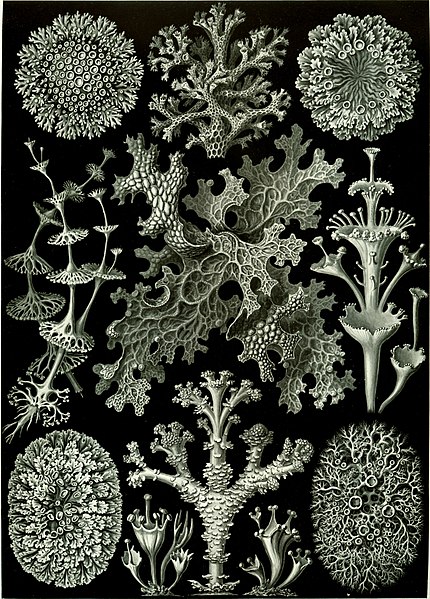
Lichens from Haeckel's Kunstformen der Natur (1904)
Ptak Science Books has a piece on Ernst Haeckel's Kunstformen der Natur (1904), a compendium of staggeringly lovely lifeforms found in nature.


Speaking of staggeringly lovely, have you seen BibliOdyssey's article on the Flora Sinensis, the first Western book (1656) to document the sub-tropical flora of China?

Why do people still insist that apes are not monkeys? It’s all down to an old taxonomy that is today quite obsolete, says PaoloV at Zygoma.


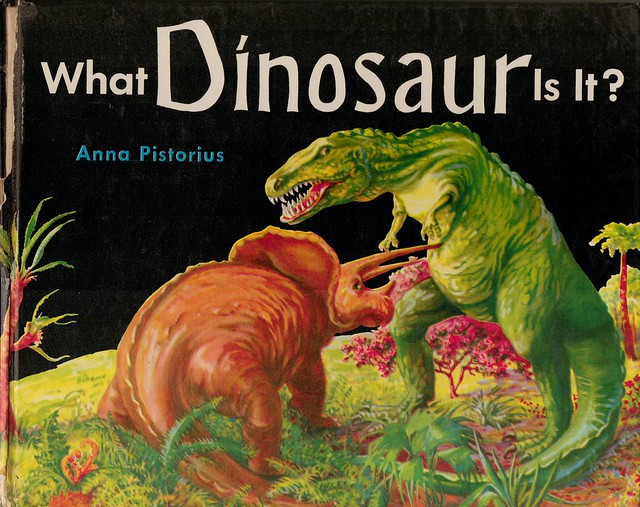
In the 1950s, Anna Pistorius created an illustrated book of dinosaurs for kids. Love in the Time of Chasmosaurs has some lovely scans and explanations from it.

Kristina Killgrove, a biological anthropologist at UNC Chapel Hill, recounts the story of the ill-fated Tudor ship Mary Rose and describes isotopic studies aimed to determine the origins of its sailors in Powered by Osteons.


[And that’s it for May 2011, folks! Thanks to all those who submitted articles (and especially to Thony C., indefatigable as ever, for finding fascinating tidbits in the scientific blogosphere). I hope this encourages you to write up your own pieces on science and its history and philosophy. Do consider submitting your blog article to the next edition of the giant's shoulders. You can use the carnival submission form. Past posts and future hosts can be found on the blog carnival index page.]

In 1572, a massive supernova lit up the sky, outshone Venus, and stayed visible during the day. Tycho Brahe recorded it in his Stella Nova, a compendium of new stars. Contemporary astronomers (the European ones, at least) were stunned by the event as it contradicted their long-held theories of the immutability of the stellar sphere.

Although Copernicus' treatise on the heliocentric universe had already appeared thirty years earlier, he too had thought that the stars were equidistant from the Sun, fixed with respect to each other, and moving at a constant speed in an enormous solar orbit. It took a Member of Parliament from Wallingford, England, named Thomas Digges, to postulate an idea of differing stellar distances 1.

"In 1573 Digges published Alae seu scalae mathematicae, a work on the position of the new star which is often called Tycho Brahe's supernova of 1572 since Brahe also observed the star and determined its position accurately. Digges' work includes observations of the position of the 'new star' and trigonometric theorems which could be used to determine the parallax of the star. The observations are particularly impressive making Digges one of the ablest observers of his time." 2

The appearance of a new star, while disturbing enough, was less worrisome than its gradual disappearance. Why did it begin to dim? Digges' foster-father, a natural philosopher called John Dee, suggested that the star had brightened as it approached the Earth, and dimmed as it retreated. This thesis alone put a spoke through the idea of an equidistant and unchanging shell of stars.


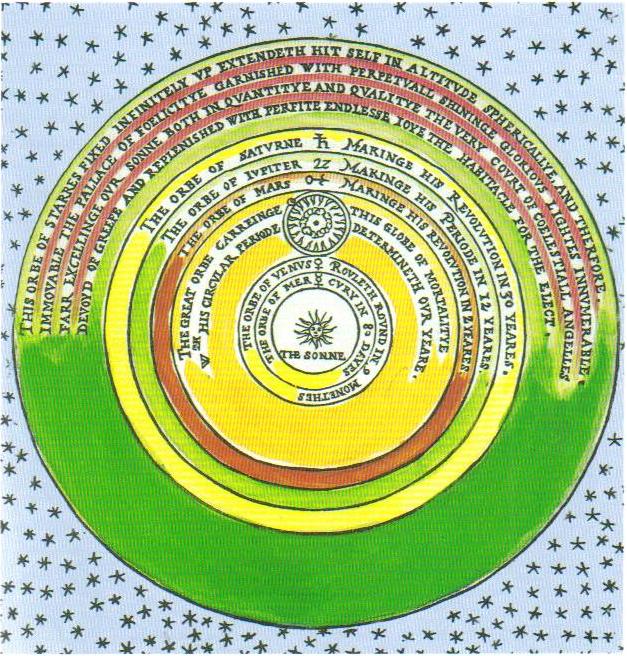
An illustration of the Copernican universe from Thomas Digges' book (Wikimedia Commons)
 Digges published an English version of Copernicus' treatise in 1576 (Perfit Description of the Celestiall Orbes) with some additions and elucidations of his own. His own contribution was the startling one of an infinite universe (crystallised into this one diagram), and possibly the first statement of what later came to be known as Olbers Paradox:

Clearly, if the universe was infinite and had an infinite numbers of stars, and had lasted for an infinity, every line of sight from Earth would end up in a star, and so the night sky should be completely lit up. Equally clearly, it isn't. Why?

Digges was unable to propose an entirely satisfying resolution to the problem. No shame falls to him, however, as it took nearly 350 years for the answer to emerge. With the discoveries of Edwin Hubble of the expanding universe, it became clear that the universe was not, in fact, infinite, and it hadn't existed forever, and that there were stars far out in the deep field whose light still hadn't had time to reach us.

And so we have the dark night sky.

References

1. Jim Al-Khalili, Everything and Nothing, BBC.
2. J J O'Connor and E F Robertson, Thomas Digges, MacTutor Biography.

After Charles Darwin's publication of the theory of evolution, many scientists took up the mathematical study of racial differences in mankind. Given large datasets compiled by anthropologists of measurements made of a wide variety of peoples, the question was to determine if there were objective metrics by which people could be classified into races. Such investigations were not only intellectual, but also in many cases driven by notions of racial superiority and eugenics.

The measurements themselves were copious and exhaustive, incorporating - for the head alone, for example - such characteristics as cephalic index, head length, head breadth, nasal length, nasal breadth, and nasal index. Simple statistics such as the average and the standard deviation were clearly not sufficient to distinguish between one group and another, particularly when the measurement error alone resulted in overlapping values for two classes. In a brilliant series of papers published in a new journal called Biometrika, Karl Pearson and associates showed there were multidimensional measures whereby anthropological data could be analysed. More specifically, they could be used to 'assess similarity or dissimilarity between two populations' 1.


An example of a prevalent question at the time was whether Ancient Egyptians had any social affinity with Hindus. Some researchers had claimed that the physical resemblance between the two peoples implied a partial colonisation from one country to the other. Karl Pearson introduced the coefficient of racial likeness, or CRL, to analyse this issue, 'one of the first quantitative procedures to measure the admixture proportions, or the proportions which 'hybrid' populations derive from their various ancestors'2.


Given two populations of size n and n', with the mean of the ith measurement in the first population mi, and that in the second population m'i, and si2 the pooled variance in the ith measurements, the CRL C is given by:


Almost immediately, the CRL was used by M. L. Tildesley in her analysis of Burmese craniums in 19213. Shortly thereafter, critiques of the methodology began to appear in the literature - not only by anthropologists but also statisticians. A chief criticism was that the method assumed that the various metrics (e.g. head length, head weight, nose length) were independent of each other, a rather generous assumption. Another complaint was that the CRL was dependent on the sample size of observations, and that it provided only a degree of certainty that there was divergence between the groups, but could not quantify exactly how much divergence there was.


In 1925, an Indian statistician named P. C. Mahalanobis began an investigation into the question of racial differentiation in his native state of Bengal. He looked at the results of an anthropometric survey of Anglo-Indians (people of mixed European and Indian ancestry) conducted in 1891 to answer (in his words) the following questions:
How are these 200 Anglo-Indians in Calcutta related to the different caste-groups in Bengal? Are they more closely allied with the Hindus or the Mohammedans? Do they show a greater affinity with the higher castes of Bengal or with the lower castes? ... 4
In order not to be swayed by size differences in the various characteristics he used, Mahalanobis computed standardised values for them.
The characteristics differed by scale and variability. That is, Mahalanobis might have considered a half-inch difference in nasal length between two groups of skulls a significant difference whereas he considered the same difference in head length to be insignificant. Mahalanobis normalized differences in each characteristic by the characteristic’s standard deviation and then squared and summed the normalized differences, thus generating one composite distance measure that was invariant to the variability of each dimension. 5
This first Mahalanobis metric suffered from the same defect as Pearson's as it didn't consider the correlation between the various characteristics. In 1936, he introduced his famous concept of statistical differentiation that came to be known after him, the Mahalanobis distance.


If the human skull can be described by n characteristics that are measurable, an individual's skull can be represented as an n-dimensional vector. Now take a set of measurements belonging to one anthropological unit (say, Calcutta Brahmins), and compute its centre, or mean vector m, and its covariance matrix S. Then, if we want to classify a hitherto unclassified skull measurement y, what we do is compute its Mahalanobis distance D from the Calcutta Brahmin set's centre:


And we compute the distance against the centres of other classes, say, Calcutta Muslims or lower castes, and we decide that our unknown skull falls into that class from which it has the least distance D.


To simplify, assume that a skull can be characterised by two metrics, skull length and skull breadth. Then each skull can be represented by a point in two-dimensional space. If we plot our data of Calcutta Brahmin skulls and Calcutta Muslim skulls, we might find (if these are indeed two distinct anthropological classes) that our graph has two distinct clusters in it (Figure 1 from Kritzman and Li (reference below)):


In Kritzman and Li's words, then:
Suppose we compare a skull of unknown origin, represented by the square in Figure 1, with the two groups and categorize it. In terms of Euclidean distance, it lies closer to the center of Group 2 than to the center of Group 1. The Mahalanobis distance, however, would consider this skull more similar to Group 1 because its characteristics are less unusual in light of the more inclusive scatter plot of Group 1’s characteristics.
So what did Mahalanobis conclude from his investigation? First of all, he said, the Anglo-Indians in his sample derived (on the Indian side) from Biharis, Lepchas (of Sikkim), possibly from the Punjab, and none at all from the Northwest Frontier or the Chotanagpur tribals. He also noted that they seemed to derive from unions of higher-caste Indians and Europeans, adding that 'cultural status evidently played a large part in determining Indo-European Union.'


From a broader investigation into the anthropological classes of Bengal, Mahalanobis was able to arrive conclude: 
Summing up we find that intermixture within Bengal, i.e. intra-provincial intermixture has varied with the degree of cultural proximity, so that for Brahmins the amount of intermixture with other castes has been in proportion to the social standing of the caste concerned. Influence from outside Bengal, i.e., inter-provincial intermixture has followed two well-defined and clearly distinguished streams, one from the castes of Northern India (chiefly from Bihar and the Punjab) and the other from the aboriginal tribes of Chotanagpur. The influence of the Northern Indian castes decreases and that of the aboriginal tribes of Chotanagpur increases as we go down to the social scale... . None of the castes analysed here show much resemblence with any of the aboriginal tribes of the east... . Mohammedans (also) show a highly mixed character. They appear to be originally largely derived from Bihar but have intermixed extensively in Bengal; they do not show any resemblance with the Punjab Pathans. 6
As it happens, not all the anthropological conclusions of that 1925 paper are held valid today. Mahalanobis was correct in his assertion that Bengal Brahmins resemble other Bengal castes more than Brahmins elsewhere in India. However, later datasets have invalidated his claim that only the Brahmins among the people of Bengal have admixtures from the Punjab. 'Moreover, as far as the Anglo-Indian community is concerned, it is now believed that Mahalanobis had probably confined his study to a sample from the upper stratum of the community, and hence his conclusion of resemblance to upper caste Hindus is applicable to the upper class Anglo-Indians only'. 7


These days, Mahalanobis is venerated by many people not for his anthropological research or its conclusions; rather, it is the methodology he developed that is considered his greatest contributions to the sum of human knowledge. Even today, the Mahalanobis distance is part of the armoury of every scientist who needs to classify multidimensional data. As you can probably infer from the reference list, this includes not just statisticians, but also anthropologists, social scientists, and financial engineers. 


Quite a lot of good, in short, has come out of what once was eugenics research.


References


1. S. Dasgupta, "Evolution of the D2-Statistic of Mahalanobis", Sankhyā: The Indian Journal of Statistics, 1993, Special Volume 55, Series A, Pt 3, p 442.
2. M. Tapper, In the Blood: Sickle Cell Anemia and the Politics of Race, University of Pennsylvania Press, 1999.
3. M. L. Tildesley, "A First Study of the Burmese Skull", Biometrika, 13, 1921, 247-251
4. P. C. Mahalanobis, "Analysis of Race-mixture in Bengal", Journal of the Asiatic Society of Bengal, 23, 301-333.
5. M. Kritzman and Yuanzhen Li, "Skulls, Financial Turbulence, and Risk Management", Financial Analysts Journal, 66(5), 2010.
6. S. Dasgupta, as above, p 447.
7. J. K. Ghosh, "Mahalanobis and the Art and Science of Statistics: The Early Days", Indian Journal of History of Science, 29(1), 1994.

Jan 29, 2011

The Sun is a Star

It is only fairly recently in human history that people realised that our Sun is a star. For this discovery, we have to thank Father Angelo Secchi, the Vatican’s Chief Astronomer, and his work in stellar spectroscopy.
Father Angelo Secchi
Spectroscopy involves passing light from a source through a prism to break it up into its constituent colours. If the light is absolutely ‘pure’, the spectrum observed will be continuous, with no breaks. But if the light has passed through any transparent medium (other than vacuum, of course), the medium will take out some portions of the spectrum in a very characteristic way: dark lines appear where the light was absorbed. Every element in the Universe has its own characteristic spectrum, and by studying the dark lines, we can identify the materials that the light went through.
Solar Spectrum
In the 19th century, Father Secchi used an observatory above his church in Rome to gather light from the Sun. He split the light into its components, and then magnified each portion to study it more clearly. He discovered – at the edge of the Sun – a revelation.
Secchi Observatory, Rome
Galileo, centuries earlier, had determined that the Sun was not an unblemished disc: it has spots that move, from which he inferred that the Sun rotates around its axis. But that was as far as the Sun’s imperfection went. Nobody had suspected that there were emanations from the Sun’s outer layers, prominences and flares. True, during eclipses, scientists had observed the solar corona before Secchi, but the brightness of the sunlight prevented closer study. Secchi found patterns and movement in the corona that nobody had seen before.
Edge of the Sun
With Secchi’s technique, astronomers could study not only the edges but also the body of the Sun. Galileo’s sunspots were revealed as Earth-sized tears in its surface. The surface itself bubbled before their eyes. Soon they were able to identify the chemicals that made up the Sun. Dark bands in the spectrum revealed the presence of hydrogen, calcium and iron, and also an element that had previously been unknown on Earth. It was named after the Greek Sun god Helios – helium.

In 1862, Father Secchi turned his spectroscope to the night sky to see what the stars were made of. He recognised the pattern of chemicals immediately. They were all but identical to the Sun’s.

And thus, one of the great mysteries of the heavens was resolved. Our Sun is a star.

(From Episode 5: Star of the BBC's superb 1999 series The Planets)