JOST A MON

The idle ramblings of a Jack of some trades, Master of none

Dec 4, 2012

Under 200

There are more than four hundred books on my To-Read list. It is a daunting number made especially so by attention deficit and a niggling feeling of restlessness. I have decided to put them aside for now. Maybe when I have that study I have been promised where I can reign like a potentate and reach out to grab a likely book from one of several floor-to-ceiling shelves - then, I'll get onto buying these books and reading them. Until then, to keep my mind ticking along its unexamined and un-introspected path, I have resolved to introduce an element of randomness to my reading.

Those four hundred books on my list range quite widely across genres of fiction and tropes of non-fiction. Most of them are on the list, however, because I read of them on some review or the other. As I do not browse bookstores anymore, there is no serendipity in my reading. So what better way to reintroduce an element of chance than by random grabs from the library's fiction shelves?

I don't want to spend hours on thick tomes that might prove enervatingly boring half-way through. I don't want to linger for hours on one paragraph and try to glean every manner of jewel from it. As I said - attention deficit. So here's what I am going to do: I'll go through the fiction shelves of my local library in alphabetical order and I'll pick up every book under 201 pages long. I will ignore the blurbs and I will get stuck into every book. I'll likely discover authors I had never heard of, never read, and - given any other trajectory in my life - would never attempt. 

The choice of 200 pages as the upper limit on size is quite arbitrary. After all, a book of 150 pages with small font is as chunky, word-wise, as another with 200 in big type. Still, it's an important psychological barrier. I can finish a two-hundred page book in a day (or at a sitting were it not for constant interruptions from sundry little imps and my own nervous energy). I needn't worry about wasting hours should the prose be impenetrable. And carrying the books from and to the library will not ruin my back. Good stuff.

So here I'll make (and keep updating) the list I'm ploughing over. I might blog about them. Or I might not.
  1. Wajdi Ahdal, A Land without Jasmine. [Yemen]
  2. Woody Allen (*), Mere Anarchy. [USA]
  3. Niccolò Ammaniti (*), Me And You. [Italy]
  4. Steven K. Amsterdam, Things We Didn't See Coming. [USA]
  5. Lin Anderson, Blood Red Roses. [Scotland]
  6. Margaret Atwood, The Tent. [Canada]
  7. Paul Auster, Timbuktu. [USA]
  8. Muriel Barbery, The Gourmet. [France]
  9. Lukas Bärfuss, One Hundred Days. [Switzerland]
  10. Djuna Barnes, Nightwood. [USA]
  11. Nicola Barker, Love Your Enemies. [England]
  12. H. E. Bates, The Darling Buds of May. [England]
  13. Georges Bataille, Story of the Eye. [France]
  14. M. C. Beaton, Deborah Goes to Dover. [Scotland]
  15. Alan Bennett (*), Smut: Two Unseemly Stories. [England]
  16. Louis de Bernières, Red Dog. [England]
  17. Alessandro Boffa, You're an Animal, Viskovitz. [Italy]
  18. Roberto Bolaño, Monsieur Pain. [Chile]
  19. Anne-Sophie Brasme, Breathe. [France]
  20. Theresa Breslin, Prisoner in Alcatraz. [Scotland]
  21. George Mackay Brown, Beside the Ocean of Time. [Scotland]
  22. Willa Cather, The Bohemian Girl. [USA]
  23. Truman Capote, Summer Crossing. [USA]
  24. Angela Carter, The Passion Of New Eve. [England]
  25. Robert Carter, The Gun-runners.
  26. Maxime Chattam (*), Carnage. [France]
  27. Janet Davey, First Aid. [England]
  28. Patricia Duncker, Hallucinating Foucault. [England]
  29. Marguerite Duras, Moderato Cantabile. [France]
  30. Ann Dee Ellis, This Is What I Did. [USA]
  31. Bret Easton Ellis, Less Than Zero. [USA]
  32. Jenny Erpenbeck, Visitation. [Germany]
  33. Janet Frame, The Lagoon: A Collection of Short Stories. [New Zealand]
  34. Alan Ford, Thin Ice. [England]
  35. Günther Freitag, Brendel's Fantasy: A Novel. [Austria]
  36. Jostein Gaardner, Through A Glass, Darkly [Norway]
  37. Damon Galgut, In a Strange Room. [South Africa]
  38. Jane Gardam, The Pangs Of Love. [England]
  39. Alan Garner, Thursbitch. [England]
  40. Pascal Garnier, The A26. [France]
  41. Hella Haasse, The Black Lake. [Netherlands]
  42. Hugo Hamilton, The Last Shot. [Ireland]
  43. Shirley Hazzard, Cliffs Of Fall. [Australia]
  44. Zoë Heller, Everything You Know, [England]
  45. Victoria Hislop, The Last Dance, and Other Stories. [England]
  46. Peter Hobbs, In the Orchard, the Swallows. [England]
  47. Alois Hotschnig, Maybe This Time. [Austria]
  48. Geoffrey Household, Face to the Sun. [England]
  49. Ted Hughes, Difficulties of a Bridegroom. [England]
  50. Helen Humphreys, The Lost Garden. [Canada]
  51. Rod Humphries, The Last Coal Trip to Tenby. [Wales]
  52. Samantha Hunt, The Seas. [USA]
  53. Jorge Ibargüengoitia, The Dead Girls. [Mexico]
  54. Yasushi Inoue, The Hunting Gun, [Japan]
  55. Robin Jenkins, A Very Scotch Affair. [Scotland]
  56. Ma Jian, Stick Out Your Tongue. [China]
  57. Andrew Kaufman, The Tiny Wife. [Canada]
  58. Michael Kimball, How Much of Us There Was. [USA]
  59. Katie Kitamura, The Longshot. [USA]
  60. Milan Kundera (*), Slowness. [France]
  61. Rodrigo de Souza Leão, All Dogs are Blue. [Brazil]
  62. J.M. Ledgard, Submergence. [Scotland]
  63. Stephen McGeagh, Habit. [England]
  64. Norman Maclean, Contracts. [Scotland]
  65. Tessa McWatt, Vital Signs. [Canada]
  66. Ernesto Mallo, Needle in a Haystack. [Argentina]
  67. Sándor Márai, Esther's Inheritance, [Hungary]
  68. Cornelius Medvei, Caroline: A Mystery. [England]
  69. David Miller, Today. [England]
  70. Alison Moore, The Lighthouse. [England]
  71. Alistair Morgan, Sleeper's Wake. [South Africa]
  72. Herta Müller, The Passport. [Romania/Germany]
  73. Irène Némirovsky, David Golder. [Russia/France]
  74. William Newton, The Two Pound Tram. [England]
  75. Raul Nuñez, The Lonely Hearts Club. [Argentina]
  76. Simon Okotie, Whatever Happened to Harold Absalon? [England]
  77. Anna Maria Ortese, The Iguana. [Italy]
  78. Julie Otsuka, The Buddha in the Attic. [USA]
  79. Chuck Palahniuk, Tell-All. [USA]
  80. Franck Pavloff, Brown. [France]
  81. Mervyn Peake, Letters from a Lost Uncle. [England]
  82. Per Petterson, It's Fine By Me. [Norway]
  83. Padgett Powell, Edisto. [USA]
  84. Annie Proulx, Brokeback Mountain. [USA]
  85. Atiq Rahimi, Earth and Ashes. [Afghanistan]
  86. Joan Riley, Waiting in the Twilight. [Jamaica/England]
  87. Mary Robison, Why Did I Ever. [USA]
  88. Knud Romer, Nothing But Fear. [Denmark]
  89. Meg Rosoff, How I Live Now. [USA]
  90. Leo Rosten (*), The Education of H*y*m*a*n K*a*p*l*a*n. [USA]
  91. Ambalavaner Sivanandan, Where the Dance is. [Sri Lanka/England]
  92. Elke Schmitter, Mrs Sartoris. [Germany]
  93. Alan Sillitoe, The Loneliness of the Long Distance Runner. [England]
  94. Ali Smith, Girl Meets Boy. [Scotland]
  95. Alexander Solzhenitsyn, One Day in the Life of Ivan Denisovich. [Russia]
  96. Simona Sparaco, About Time. [Italy]
  97. Muriel Spark (*), The Finishing School. [Scotland]
  98. Graham Swift, Learning to Swim and Other Stories. [England]
  99. Véronique Tadjo, As the Crow Flies. [Côte d'Ivoire]
  100. Mary M. Talbot, Dotter of Her Father's Eyes. [England]
  101. Pier Vittorio Tondelli, Separate Rooms. [Italy]
  102. Jáchym Topol, The Devil's Workshop. [Czech]
  103. Justin Torres, We the Animals. [USA]
  104. Kurt Tucholsky, Castle Gripsholm. [Germany]
  105. Fred Uhlman, Reunion. [Germany/England]
  106. Dimitri Verhulst, The Misfortunates. [Belgium]
  107. Sarah Webb, Behind Closed Doors. [Ireland][
  108. Nathanael West, The Day of the Locust. [USA]
  109. Rebecca West, The Return of the Soldier. [England]
  110. Jeanette Winterson, Weight: The Myth of Atlas and Heracles. [England]
  111. Taichi Yamada, Strangers. [Japan]
Okay, I felt compelled to add some genre stuff too. It's a rare crime or sci-fi book that comes in at less than 300 pages, but if you look closely enough, there are some sub-200 ones. Rare, but they're there.
  1. Ted Allbeury, Dangerous Arrivals. [England]
  2. Benjamin Black, The Lemur. [Ireland]
  3. Lilian Jackson Braun, The Cat Who Went Bananas. [USA]
  4. Max Brooks, Closure, Limited and other Zombie Tales. [USA]
  5. Tori Carrington, Queens Ransom. [USA]
  6. Judith Cutler, Silver Guilt. [England]
  7. Philip Daniels, The Inconvenient Corpse. [England]
  8. Francis Durbridge, Curzon Case. [England]
  9. Wolf Haas, The Bone Man. [Austria]
  10. Gerald Hammond, With My Little Eye. [Scotland]
  11. Alanna Knight, Deadly Beloved. [Scotland]
  12. Bill Knox, To Kill a Witch. [Scotland]
  13. Fritz Leiber (*), Swords and Ice Magic. [USA]
  14. Elmore Leonard (*), The Switch. [USA]
  15. Roy Lewis, An Assumption of Death. [Wales]
  16. Roger Ormerod, More Dead Than Alive. [England]
  17. Anne Perry, A Christmas Visitor. [England]
  18. Alexei Sayle, Mister Roberts. [England]
  19. Leopold Ritter von Sacher-Masoch, Venus in Furs. [Austria]
  20. Georges Simenon (*), Maigret Sets a Trap. [Belgium]
  21. Peter Turnbull, False Knight. [Scotland]
  22. Barry Unsworth, Morality Play. [England]
  23. Minette Walters, The Tinder Box. [England]
  24. David Wilson, The King's Park Irregulars. [Scotland]

The authors with stars against them are those I've read before. Onward!

Update: December 10: I'm beginning to think that with twenty-five books into this quixotic randomness, I've still not passed the first three letters of the alphabet. Too slow a progress! So, from the letter D, I'll only pick up books by authors I haven't read before - unless I really want to read that book.

Update: January 21: Incredible. There are books in this list that I cannot bear to continue reading. Sub-200? Pshaw. The books that defeat me are crossed out in the list above.

Update: January 31: I figured I might as well add the country of origin of each writer, so that I can keep track of the translated works.

Update: February 10: Letter 'I' and Inoue's doing my head in.

Update: February 18: Up to the letter 'K' with a slight detour towards Verhulst.

Update: February 28: Now nipping my way to 'O'.

Update: March 12: Decided to scan the crime/sci-fi/fantasy/horror shelves alphabetically as well.

Update: April 6: In the 'R' lot, with a couple of 'S' lying around too.

Update: April 16: Added the first graphic novel/memoir into the mix (Talbot's 'Dotter of Her Father's Eyes').

Update: May 8: Man, I'm really suffering now. I'm at the W's and it's a real drag to continue with this. Second wind, second wind...

Update: June 4: Haven't really made much progress with the W's, but rather liked Taichi Yamada's Strangers...
Nov 22, 2012

Subscribe Please

In the 18th century, to get a book published was an affair as fraught as it is today. Publishers were often unwilling to take a risk on a new author, printers wanted to be paid up front, and authors themselves were worried about getting remunerated for their work. The subscription model was invented then - authors would ask some notable wealthy sort to be a patron (often with a cringe-worthy and fulsome foreword), the patron might ask people in his or her circle to pay up-front a certain amount (a subscription), and the author with his publisher would then happily go ahead with the initial print run. Do this a couple of times and - if subscribers continued to be found, or the author gained enough name recognition - publishers and printers would be happy to promote him.

That eighteenth century venturesome man of India, Sake Dean Mohammed, published his epistolary travelogue under subscription: Irish gentry paid 2 shillings 6 pence for a copy of his work. As with many other publishing models, this ran its course over the following years and then died out.

Given the turbulence in the world of publishing these days, it is not entirely surprising that the earlier models are being revived. About a year or so ago, a fresh enterprise named And Other Stories came to my attention. They would offer readers inexpensive terms to collect their books: by subscription. Pay up-front to receive two or four books over a calendar year, and the books would be delivered to you ahead of mass distribution with your own numbered copy; to further whet your ego, if you were among the first three hundred subscribers in a given year, your name would appear in a list at the end of the book.

Once a critical mass of support was established, And Other Stories could show distributors that they had an audience and were worthy of promotion. They could also collaborate with long-established publishers to expand the scale of a production. This they did, for example, with Deborah Levy's Swimming Home, when they entered into a partnership with Faber.

And Other Stories is a specialist enterprise. They offer books in uniform jackets and typefaces, softcover and neatly produced, many of which are translated, all of which have received positive reviews. To add to the excitement, Deborah Levy's book was recently shortlisted for a Booker Prize, so their visibility has suddenly jumped manifold. They have books by Mexican, Argentinean, German, American and Russian writers. The collection is eclectic - some noir, some humour, some pathos, but always readable. I await their 2013 author list with some anticipation.

When I signed up and received my first book from them, I looked at the back to see who else had subscribed. I recognised a name or two: translators and reviewers. The rest were private citizens like myself.

Publishing ideas, like other ideas whose time has come, often pop up in the zeitgeist. So it is not a surprise to see that another boutique publisher - Peirene Press - has a similar subscription model. I haven't subscribed to their list, but they seem to have an equally interesting and eclectic set of authors. And, just as And Other Stories tries to get their readers involved by arranging reading circles and translation seminars and walks with authors in the woods, Peirene too likes to woo the clientele with salons and discussion nights with nibbles.

In a time of consolidation and increased conservatism, and indeed desperation on the part of traditional publishers, it is gladdening to see that innovators exist and that they are able to find sponsorship. The class of readers is not dead and may yet prove to be more forward-thinking and adaptable than the businessmen.


Oct 14, 2012

Rice

In the 80s, every so often Punjabi farmers would arrive in Delhi's residential colonies, phut-phutting away on their tractors and bearing large sacks of grain. They would knock on the doors and ask housewives if they'd like to buy wheat or basmati rice. They would offer these grains cheaper than at local stores, and they would expect the housewives to buy large quantities. Many families kept huge barrels to store the grain, and would not be averse to fifty or hundred kilogrammes. We had less storage space than most, but we too would buy the rice.

And what rice it was - fragrant and delicious! Quite different from the usual parmal that we ate, this was a grain fit for festivals and lordly occasions. Pulaos were more delicious with basmati, as were biryanis, and even plain rice with simple curries was tastier than usual. It would, therefore, be brought out only for special events. But eventually the Indian climate would begin to wear it down, weevils would appear in the dry grain, and we'd have to cook up the remainder in an orgy of fragrance and anticipation.

We would take trips to Kerala every so often, and there we would encounter the rich, red Kerala rice, unpolished and fat. Steaming ladlefuls on our plates accompanied by fish curry and every manner of coconut preparation tasted like heaven. 'This is the real rice,' the paterfamilias would say contentedly.

But he could only have it during those short few days of holidays - any more, and he'd complain of it sitting heavy in the stomach, difficult to digest. So we'd never bring any back to Delhi, and we'd go back to parmal and the infrequent basmati.

When I studied in Bangalore, the hostel messes were scenes of enormous piles of rice being cooked day and night. It is a staple in South India, after all, and it was consumed by the ton. I didn't stop to wonder what breed of rice it was, generic and flat and flavoured only because of the curries that we liberally mixed with it. Better yet was the stream of hot chapatis that the mess attendants would bring to the tables, and I began to lose my interest in rice.

Meanwhile, my family was in Japan, on my dad's final posting before retirement. They were staggered by the cost of the Japanese rice. The Japanese growers were a cartel that enforced high prices, which for whatever reason, the locals were willing to pay. This was a fine rice, sticky and chewy, but completely unsuitable for an Indian cuisine.

One year, the harvest of Japanese rice was worse than usual, and the prices shot up to levels that even the locals blanched at. In desperation, the government cast about for a replacement, and they settled on aromatic Thai rice. But the Japanese, conservative to the bitter end, refused to buy much of it, and the authorities had to offload it at throwaway prices. This was manna to the underpaid Third World types, and when I visited my folks, I was treated on a daily basis to the new grain.

It was superb, long grained and fragrant, intrinsically so flavourful it could be eaten without accompaniment. Mere dollops of coconut or jasmine would accentuate the taste. Unfortunately, this flavour would be completely subsumed by the spices of Indian cooking, and the rice would then take on the characteristics of parmal. Still, it was better than using Japanese rice for Indian cooking, and we managed rather well.

When I went to the US, I was amazed to find basmati everywhere. We had heard that the best basmatis were being exported from India - here I found not only Indian but Pakistani basmati as well. I couldn't tell the difference between the two, and consumed such quantities that before long the thrill was gone, and it became as pedestrian as any other.

I investigated other varieties - Mexican, for example, and short and long grained Californian. They were fine grains but with little novelty. Much better was the risotto, short and fat and creamy, while Spanish paella rice was remarkably thirsty, yet retaining its distinct grains when cooked.

Now I'm conducting a bit of an experiment. In the last few months, we've been trying different rices. First, our idea was to go back to that Kerala rice that the wife and I remembered so fondly. It has been a bit of a hit-and-miss experience. The red raw rice we first tried is spectacular in colour, but it doesn't quite match our memory of Kerala. I've also tried a parboiled red rice, which turns out to be a closer approximation. This is quite difficult to cook, though, requiring a pressure cooker and lots of water, and my green credentials are taking a bit of a beating.

Unfortunately, my experimentation has been without record-keeping, so I've forgotten all the varieties of rice I've recently tried. I do have vague recollections of Sri Lankan names and ponni and matta. These will have to do for the time being, until I discover the next great rice.


Jun 10, 2012

High Brow

I explained to the boy that I, unlike him and his mother, was special. I have only one eyebrow, a long one from one side of the face to the other. 

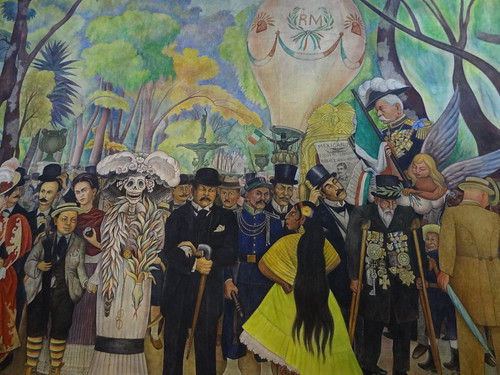
Like Frida Kahlo? he said. Does she have only one eyebrow as well?
Mural by Diego Rivera
Frida Kahlo in Diego Rivera's mural, to the right of the skeleton.

We were wandering about Mexico City when the conversation came up. Frida Kahlo, monobrowed woman, is everywhere in Mexico City. Her house has been converted to a museum. There is always a queue of tourists waiting to enter it. We too were there one warm day in April.

While we waited, I entertained the boy with eyebrow tricks. I raised one eyebrow and then the other. He screwed up his face attempting to emulate my dexterity. He squinted. He glared out of one eye.

******

Like nearly every other museum in Mexico, the Frida Kahlo museum allows visitors to take pictures upon payment of 45 pesos. We happily shelled out before entering the hallow of hallows. As the tourist throng snaked its way from one room to another, I caused minor jams every time I stopped to snap away.

There's always an officious bastard in every queue. One such specimen tapped me on the shoulder.

'You know you are not supposed take pictures in here,' he said.

I pointed wordlessly at my sticker that allowed me to take pictures.

He pointed wordlessly at the signs of crossed out cameras on the walls.

I looked around for a museum attendant. As expected, there was nobody around.

Seething with baffled fury, I put the camera away. Beautiful exhibits passed me by, unclicked. Three rooms later, I found an attendant.

'No, no,' he said when I pointed at the crossed-out-camera sign. 'These are ancient. You are allowed to take all the pictures you want.'

I turned to the officious bastard to crow triumphantly. Bugger wasn't there. Deflated, I continued along the tour.

******


[Watch the dancing eyebrows around 2:08]

Jack Black can make a wave with his eyebrows, I said to the boy. 

Who is Jack Black? he said.

The voice of Po, I said.

Can I see? he said.

Sure, I said.

Can you wiggle your eyebrows? he said.

No, I said.

Apr 15, 2012

Gina Figueroa

Ambling along Mexico City's Lincoln Park, the boy and I fell into a little art gallery. We had been fighting viciously, as only superheroes and villains can, and weren't looking where we were going. A little old woman who had been slumbering in solitude snorted awake and smiled at us. 

'Hola,' said the boy.

'Buenas tardes,' said the woman.

She gestured at the visitor book. I looked at it. There hadn't been visitors for a day or two at least.

I scrawled a pseudonym.

'Come on, acha,' said the boy. 'Let us fight.'

'In a moment, please,' I said. 'Let us look at these paintings.'

He sighed and shuffled behind me.

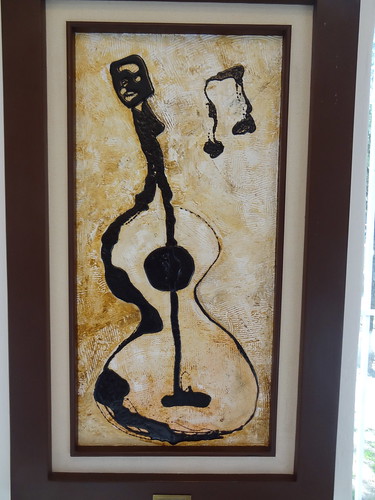
There were several works hanging on the walls, but I only liked these.

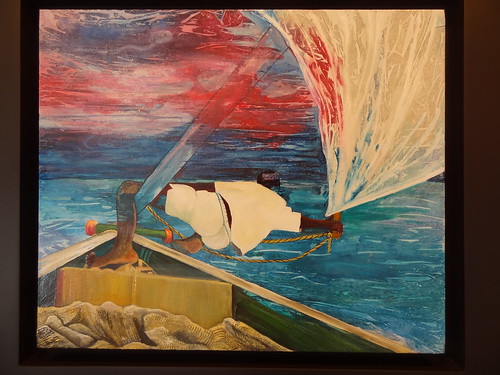
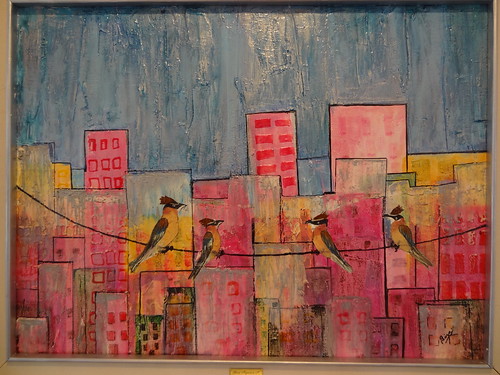
Mixoacan, by Gina F.

Man on the sea, by Gina F.

Camouflage, by Gina F.
The boy looked at the last one and yawned. I tried to explain why the painting was titled 'Camouflage'. He mentioned an orange dinosaur that, if it stood against an orange background, would be camouflaged. 

'Where would a dinosaur find an orange background?' I said.

'All the leaves at that time were orange,' he said.

'All the leaves?' I said.

'Okay, not all the leaves. But a lot, a lot, a lot, a lot of the leaves were orange.'

'So when it is not near those orange leaves, everybody could see it? Orange is a bright colour,' I said.

'Okay, so it did not have camouflage,' said the boy. 'I don't know. I wasn't there. It was a long time ago. Can we fight now?'

Apr 11, 2012

Leftwing Mexican

I've mentioned the excellent The Uncomfortable Dead by Subcomandante Marcos and Paco Ignacio Taibo II elsewhere, and it reminds me that one is not always faced with haute cuisine. There are times in fiction - just as in life - when the food is down-market, rustic, and possibly not all that great. Furthermore, the following just needs saying because, well, the gourmet detective is becoming such a cliché now, eh?
Although, actually, I think the Italian cook is only in the book because in mystery novels the detective usually winds up having culinary adventures. The other day, for example, I found Vittorio Francesco Augusto Luiggi (August Forbidden in our broken calendar) trying out a recipe that he said El Sup had given him. It was called Marcos's Special and he did it up just the way they told him: mince and fry one ration of beef; add a small can of Mexican salsa and cheese; mix thoroughly and serve hot. 
When August Forbidden finished his concoction, I told him, "It looks like dog barf." 
Then he tasted it himself and added, "It tastes the same as it looks." 
But August is one of those people who believes the Zapatistas are never wrong, so he claimed the problem was that the salsa brand he used was Herdez and "El Sup actually told me it had to be La Costeña." 
In any case, begging the pardon of Pepe Carvalho and Manuel Vázquez Montalbán, the fare in this novel is not going to be all that good. And now that I have discussed eating, give me a second so I can go to the john.

Jun 6, 2011

Tita in Tears

Onions make one weep, they do. Little green chillies make one's fingers burn, and nose water, and skin sweat. All this happens when one chops them. Or munches on them. For great-aunt Tita, tears, floods of tears over onions began early in life. So says Laura Esquivel in her Like Water For Chocolate.
Take care to chop the onion fine. To keep from crying when you chop it (which is so annoying!), I suggest you place a little bit on your head. The trouble with crying over an onion is that once the chopping gets you started and the tears begin to well up, the next thing you know you just can't stop. I don't know if that's ever happened to you, but I have to confess it's happened to me, many times. Mama used to say it was because I was especially sensitive to onions, like my great-aunt, Tita.
Tita was so sensitive to onions, any time they were being chopped, they say she would just cry and cry; when she was still in my great-grandmother's belly, her sobs were so loud that even Nacha, the cook, who was half-deaf, could hear them easily. Once her wailing got so violent that it brought on an early labor. And before my great-grandmother could let out a word or even a whimper, Tita made an entrance into the world, prematurely, right there on the kitchen table, amid the smells of simmering noodles soup, thyme, bay leaves, and cilantro, steamed milk, garlic, and, of course, onions. Tita had no need for the usual slap on the bottom, because she was already crying as she emerged; maybe that was because she knew then that it would be her lot in life to be denied marriage. The way Nacha told it, Tita was literally washed into this world on a great tide of tears that spilled over the edge of the table and flooded across the kitchen floor.

Apr 26, 2011

Carnivalesque 73

Welcome, folks, to the seventy-third Carnivalesque, the Ancient/Modern edition of the popular History blog carnival. Thanks to all those who contributed and sent suggestions.

To start with, take a look at this timeline (timelines being some sort of minor addiction for me) of historical events that occurred in years ending in 73. Trite, eh? There’s considerable uncertainty about the older dates, of course, but if there’s at least one source that speculates an event occurred in such a year, well, I’ve bunged it in.

Events in the years before Christ (or Common Era, to be less religious) appear against negative numbers in this timeline. If you click on any of the titles, a little window should open up with some extra information.


This is the week after Easter, and so a light Christian history thread runs through this carnival. But fear not – there’s lots of other stuff to whet your secular appetites.

And so, to begin:

Africa


Kemsit, the Nubian queen of the Egyptian King Mentuhotep II (2061-2010 B.C.), and her servants; from a painting in her tomb chamber wall; Metropolitan Museum of Art, New York; from Naville, The XI Dynasty Temples at Deir el-Bahri III (London: Egypt Exploration Fund, 1913), pl 3.
Kemsit, the Nubian queen of the Egyptian King Mentuhotep II (2061-2010 B.C.), and her servants; from a painting in her tomb chamber wall
Would you be willing to trek across the Egyptian desert all the way to Chad? Even today it’s a perilous journey, and yet there’s evidence that the Pharaoh Mentuhotep II (2061-2010 BC) organised an expedition to that western land. Read about it in Owen Jarus’ post in Unreported Heritage News.


*********


Europe


Around 3500 BC, the Neolithic inhabitants of the island of Jersey built a worship mound that came to be known as La Hougue Bie. Millennia later, a church was built atop it. The Neolithic mound was equinoctically aligned, and it turns out so is the church. Alun Salt tells the story.

You may have seen some racy news recently - First Gay Caveman Found! - etc. Bunkum. The Corded Ware (2900-2500 BC) burial site near Prague was not of cavemen; rather it's of pre-Bronze Age farmers.  Why do they think it was a gay caveman? John Hawks does a spot of debunking.


If you have wondered why Isocrates (436-338 BC) is not as well-known as, say, Plato, wonder no more. Michael Anderson has the scuttlebutt in his Ancient History Blog.

How likely is it that a list of survivors of the Battle of Marathon survived to this day? Or that such a list ever existed? Rogueclassicism has an overview of the affair of the Marathon tablet (403 BC ?) and its epigraphy.

What do Nerva, Trajan, Hadrian, Antoninus Pius, and Marcus Aurelius have in common? Adrian Murdoch’s series of podcasts on Gibbons’ “five good emperors” (AD 96-180) reveals all that you  might want to know. Get them at his blog Bread and Circuses.

Ivan Bilibin's Illustration to the Lay of Igor's Campaign (from Wikimedia Commons)
‘In AD 1185, as the Kievan Rus Empire was starting to deteriorate, a little known prince on the eastern Russian borders led his outnumbered men into battle against Mongolian invaders, the Polovtsians (Kumans). This battle and its aftermath would become the topic of the Russian literary epic, “The Lay of Igor’s Campaign.”’ Seesaw discusses the battle, the epic and its musical successors in Russia, Past and Present.


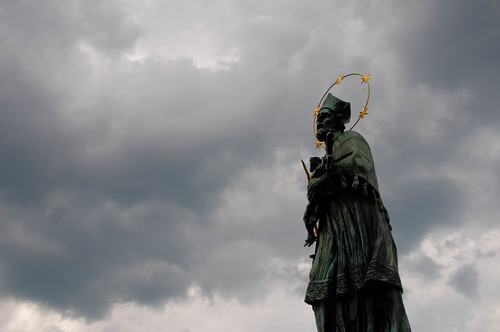
St. John of Nepomuk, Charles Bridge, Prague
St. John of Nepomuk, Charles Bridge, Prague by dlnwelch, on Flickr

If you wander about the Upper Palatinate in Germany, you might find yourself wondering – as Patrick Shrier did – why there are statues of St John of Nepomuk (d. 1398) on nearly every bridge in sight. What’s a Czech saint doing in Germany? Shrier investigates and reports in Patrick’s Military History Blog.


A oft-repeated statement is that the famous vegetarian Leonardo da Vinci (1452 - 1519) was 'ahead of his time' in sundry disciplines. While this may be somewhat true of his art, it doesn't apply to his technical work, says Thony C. in the Renaissance Mathematicus.

There’s no end to weirdness in Europe, and Vlad the Impaler is about as weird as a historical character can get. Soon after taking up the throne of Wallachia (1457), he invited the nobility to an Easter feast and – well, Executed Today has the story.

'Tis the 550th anniversary of the Battle of Towton (1461) - one among many in the Wars of the Roses in sunny England - and there are no pictorial representations extant of that battle. So what was Sheila Corr to do when she had to provide a suitable illustration for an article in History Today? Find out here.


Speaking some more of seriously weird things: there was much faith in putting one’s fate in the hands of chance (or God) – even secular arguments were sought to be settled by means of trial by fire. One of the last such trials occurred in Florence in 1498, as Beachcombing’s Bizarre History Blog reports in Barbecuing Friars in Late Medieval Florence.


*********

Middle-East


While it’s widely believed that the Abrahamic faiths are monotheistic, there is considerable evidence that Judaism, the oldest of them, was initially polytheistic. JK at Varnam explains the ins and outs of how god became God and acquired a wife, and other gods were consigned to oblivion (c. 8th century BC)

What’s up with physicists thinking they can contribute to historical analysis? Surely the age of the dilettante is past? Jona Lendering in New at LacusCurtius & Livius excoriates Colin Humphreys for his claim that Christ’s Last Supper took place on a Wednesday, and not – as historians agree – on Maundy Tuesday. “The trouble with the Jaubert-Humphreys Thesis is that it solves a problem that does not exist by using a method that is self-contradictory…Unfortunately, this is not an innocent, funny story about scientists who should not pretend they are historians.”

In the early days of Christianity, Easter was the chief religious festival. Birthdays were considered a pagan relic. So how did Christmas become the important festival it is today? Ranjith Kollanur explains in his blog A View From My Disjointed Laptop.

European depiction of the Persian (Iranian) doctor Al-Razi, in Gerardus Cremonensis "Recueil des traités de médecine" 1250-1260. (Wikimedia Commons)
European depiction of the Persian doctor Al-Razi, in Gerardus Cremonensis "Recueil des traités de médecine", 1250-1260. (Wikimedia Commons)
When and where was the definitive recognition of smallpox made? In Persia around AD 900, a medic called al-Razi wrote a treatise named al-Judari wa al-Hasbah (On Smallpox and Measles). Lapham’s Quarterly blog has a small write-up.

*********

Asia

74,000 years ago, human beings were passing the Malay peninsula on their great migration across the planet. Archaeological digs in Perak revealed a sumptuous burial of a man, which showed that Malaysia was no civilisational backwater. Judith Weingarten has the story of the digs and the feisty woman who conducted the research in her blog Zenobia: Empress of the East.


According to the Vedas, a mighty river called the Saraswati flowed through the plains of north India. There have been efforts to identify this river - which no longer exists (in its original size, at least) - and there are controversies galore about its history. Researchers in geology, linguistics, archaeology, history, and climate science have contributed, and Michel Danino has a post discussing some of this interdisciplinary work.

Emperor Wu dispatching Zhang Qian to Central Asia from 138 to 126 BCE, Mogao Caves mural, 618-712 CE (Wikimedia Commons)
Emperor Wu dispatching Zhang Qian to Central Asia (138 to 126 BCE), Mogao Caves mural, 618-712 CE (Wikimedia Commons)
Tired of horsemen attacking his villages, kidnapping the women and killing the men, and realising that they were untouchable until he obtained a powerful cavalry, in 103 BC the Chinese emperor Wu sent a taskforce to the land of the Wusun to bring back the heavenly horse. Heather Pringle tells the story and its later ramifications.

Japanese samurai boarding Yuan ships in 1281 (Wikimedia Commons)
In AD 1281, Kublai Khan sent a fleet to invade Japan. 730 years later, the History Channel purported to explain it all to unsuspecting aficionados of popular history.  Learn what really happened, and why you shouldn’t trust (ever!) the History Channel - in this piece by Tatsunoshi in Shogun-Ki.


*********

The Americas

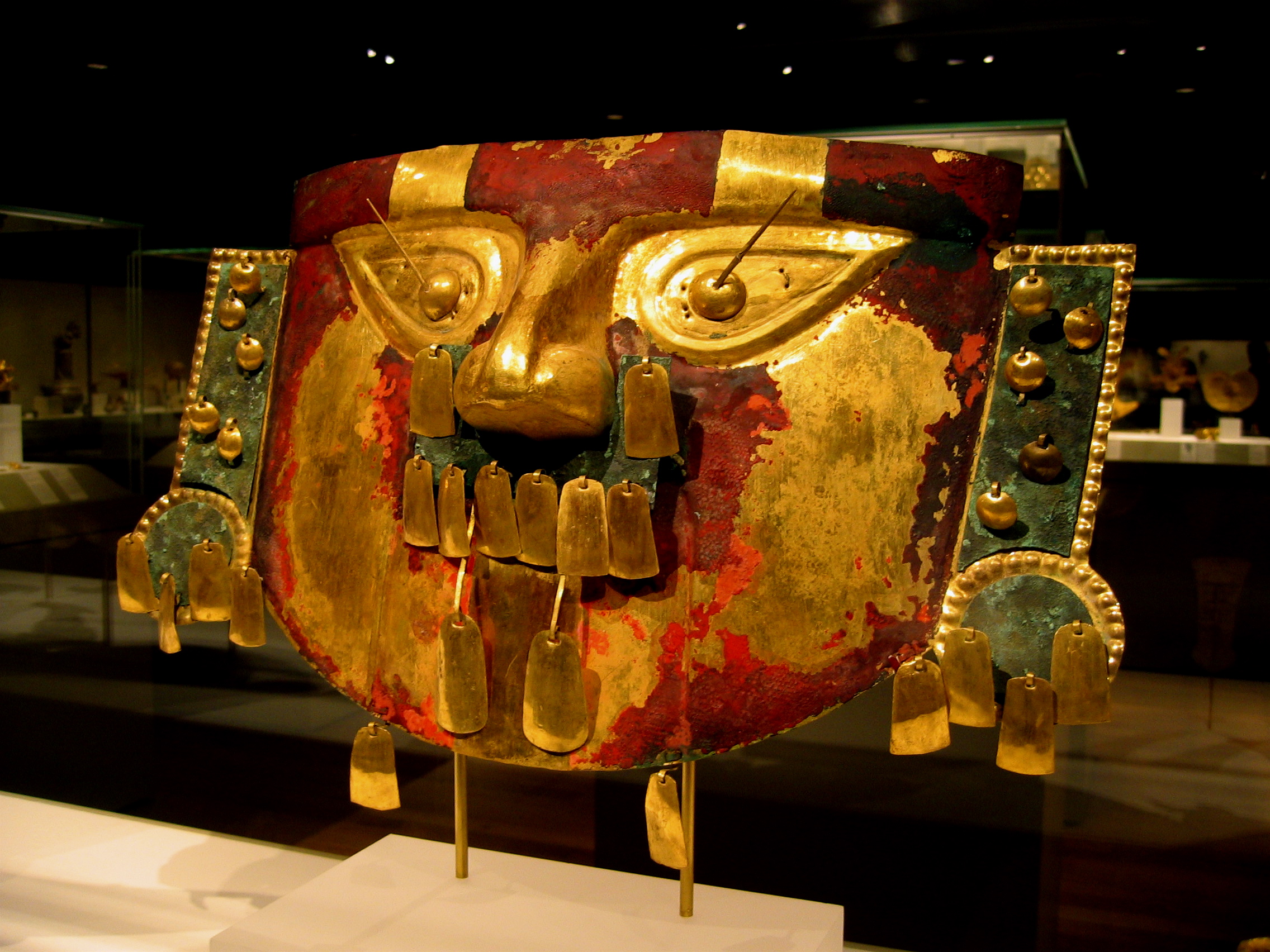
Funerary Mask, 9th-11th century Peru; (Lambayeque) Hammered gold with cinnabar and copper overlays, cinnabar; H. 11 1/2 in. (29.2 cm) Gift and Bequest of Alice K. Bache, 1974, 1977 (1974.271.35) (Wikimedia Commons)
Funerary Mask, 9th-11th century Peru; (Lambayeque) Hammered gold with cinnabar and copper overlays, cinnabar;  (Wikimedia Commons)
From the 8th century AD, the Lambayeque culture flourished in northern Peru. Like their more famous successors, the Incas, these were a people wont to fertility rituals and human sacrifices. How about combining the two by sacrificing women? Monty’s World has the story.

Archaeologists long thought that the cultures of Central America and North America had little or no interaction. Now it appears that there may have been thriving trade between them, lasting as long as five centuries from AD 900. The Pueblos of southwest USA drank cacao, which they could only have got from Mesoamerica. As Gregory LeFever reports in his blog Ancient Tides, they would have paid for the cacao with turquoise.

The 400-breasted Mayahuel Aztec Goddess of the maguey or agave (Wikimedia Commons)
Why not ponder the fate of the Aztecs (13th – 16th centuries) and their rabbits? Even before the sanguinary and Easter-loving Spaniards turned up at their doorstep, they celebrated the bunny by naming a day in its honour. And they got as drunk as 400 rabbits. Say what? Judugrovee reveals the story in the blog The Complete Mesoamerica … and more.

*********

And, to round things off, interdisciplinaryment:

Art

When a snake escaped the Bronx Zoo a few days ago, a contest was announced in some papers to name her. Why not Wadjet? Here’s a post by Madeleine Cody in the Brooklyn Museum’s blog about the ancient Egyptian snake goddess, her history, her mythology and some of the art based on her.

Have you heard of the Codex Aureus? It’s a beautiful 10th century parchment manuscript featuring the four gospels. Peacay at the ever wonderful BibliOdyssey has the scoop.

Allegoric figure of Fortitude from the Four Virtues by unknown artist (also attributed to Botticelli), c. 1490, fresco, Castle Chapel, Esztergom
Lovely Renaissance frescoes (1460s) were found in Esztergom, in Hungary. Zsombor Jékely in Medieval Hungary investigates - are they really by Botticelli?

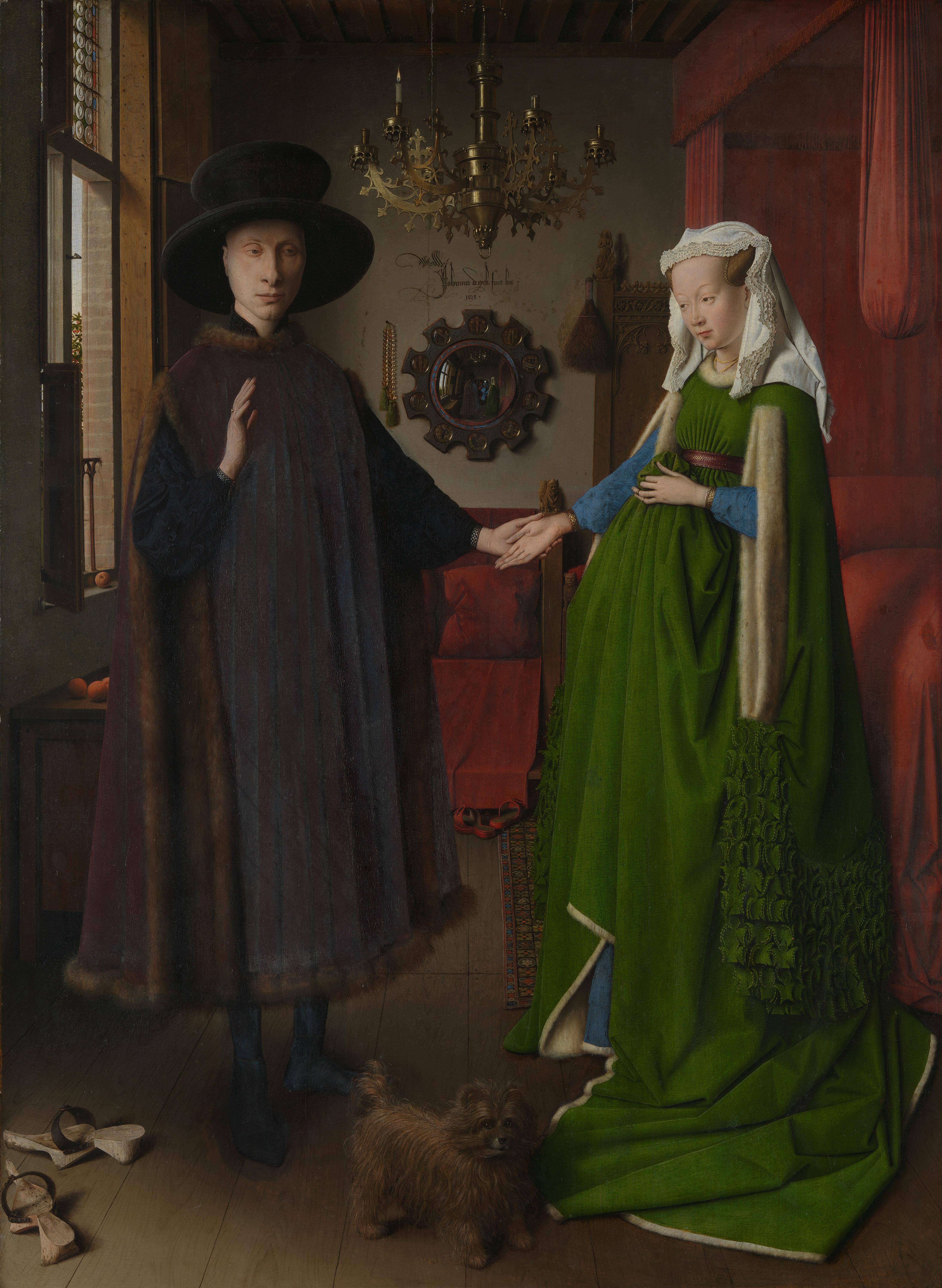
Untitled, by Jan van Eyck (or Portrait of Giovanni Arnolfini and his Wife) (Wikimedia Commons)
And we have another question: Is Van Eyck’s painting titled Arnolfini Portrait (1434) meant to portray Arnolfini’s wife? Considering there were five Arnolfinis in Bruges at the time, and we aren’t even sure which Arnolfini commissioned the painting, this might appear to be a fraught query. Alberti’s Window has a report.

*********

A Review or Two

Ever wondered about water and windmills? In Medieval History Geek, Curt Emanuel posts a review of Wind and Water in the Middle Ages: Fluid Technologies from Antiquity to the Renaissance. |The book is a scholarly compendium in ‘three general thematic sections with three papers having an archaeological focus, five concentrating on how mills "worked"; not physically but rather how they and their uses were integrated into society. The final three papers discuss how mills and milling were viewed by contemporaries through an examination of art and literature.’

While one Goth sacked Ancient Rome, a Vandal was its saviours. How’s that, you ask? That helpful Vandal was Stilicho. In Armarium Magnum, Tim O’Neill reviews at length a recent book by Ian Hughes titled Stilicho: The Vandal Who Saved Rome.

*********

That’s all for now, folks. Hope you enjoyed this round-up. The host of the next edition of this carnival will be announced shortly at the Carnivalesque website, and here’s a heads-up: it will cater to the Early Modern period, that is, AD 1500-1800.

[Cross-posted at Sundry Translations and Other Tangentialia. This is a translation of the Malaspina 1789 page on the Spanish National Research Council's website on the 2010 oceanographic survey, circling the globe in the wake of Alessandro Malaspina’s 1789-1794 exploratory voyage.]

In October 1788 King Carlos III approves the plan submitted by the naval officer Alejandro Malaspina with the intention of making a scientific and political trip around the world. Here begins the most daring naval exploration of those sponsored by Carlos III, which becomes known as the Malaspina expedition.


Two naval corvettes are put into service of the expedition: the Discovery and the Bold, commanded by Alexander and José Bustamante y Guerra. Preparations were made in record time. In less than a year, the boats are made ready, the crew recruited, naturalists hired, equipment purchased, and officers trained. On Thursday July 30, 1789 the ships moor in the port of Cádiz, the crew nervously anticipating their imminent departure.

Fifty-one days later, America is in sight. On September 19, the ships anchor in the harbour of Montevideo. Large streams, beautiful trees, and vast pastures with grazing cows and horses surround a city whose streets are dirty and badly paved. The Sugar Loaf Mountain overlooking the west side is turned into a magnificent botanical garden adorned with tiny hummingbirds.

From Montevideo, the expedition leaves the Atlantic Ocean to begin its reconnaissance of the Patagonian coast and the Falklands, skirting Cape Horn. In Pacific waters, Concepción, Valparaíso, Coquimbo and Arica are the ports of call for the expedition. The region has dazzling deposits of silver, gold, copper, and mercury, attracting the attention of the Crown.

At the end of May, the expedition arrives at the port of Callao. The impending bad weather provides an excuse for rest and recuperation. During this time, too, the ships are repaired, provisions are made for food and scientific equipment, and the local region explored. On 20 September, the expedition begins the next stage of its journey, this time along the coasts of Guayaquil, Panamá y Nicaragua, which are adorned with magnificent volcanoes. In order to speed up the survey of the region, the ships split up. They will rejoin later at the port of Acapulco, to be followed by the exploration of the Northwest Coast. They intend thence to seek the Northwest Passage between the oceans, which was described in 1588 in an apocryphal document by Ferrer Maldonado. It will turn out that the passage does not exist.

While the corvettes explore the icy waters of the North Pacific, the naturalists have been enjoying the hot weather in Mexico. They have explored Petaquillas, Chilpancingo, Tasco, Cantarrana, Mochitlan, Méjico, Cuernavaca, Guadalupe, Puebla. When the corvettes return, the expedition regroups and begins preparations ahead of their journey to the Marianas Archipelago and the Philippines, where they will stay during the monsoon season. Later, they will head for New Zealand and New Holland, and enjoy some rest in the Friendly Islands, entertained by the natives.

Check out these images of the drawings made by one of the expedition's illustrators at the Friendly Islands.

On the first of July, 1793, the ships hoist sails for the long return to Spain. After an extensive hydrographic survey of the American coastlines, they arrive at the port of Montevideo in the middle of February 1794. In anticipation of French attack, they join the frigate Gertrude to protect the homebound convoy from Lima. France and Spain are at war. Five years since their departure, the Discovery and the Bold dock at the harbour of Cádiz on 21 September 1794. They haven't circumnavigated the world, but they have conducted an ambitious and extensive exploration of the Americas, Oceania and the Pacific.

(For Alessandro Malaspina, the end proved dramatic. In view of his merit, he was raised to the rank of brigadier in 1795, but soon thereafter, his influence and achievements earned him the enmity of Manuel de Godoy, then Foreign Minister in the Spanish court. Accused and convicted of revolutionary conspiracy, Malaspina was sentenced to ten years imprisonment in the fortress of San Anton. In 1803, the sentence was commuted to exile, and he moved to Genoa. He died in Pontremoli on April 9, 1810.)