JOST A MON

The idle ramblings of a Jack of some trades, Master of none

Aug 21, 2014

Hrabal Pub Crawl

The Circle Line Pub Crawl is one of the most famous antics in the binge-drinking business. You have a pint of beer, choose a station on London Underground's Circle Line, choose a direction in which to take the train, get off at the next station, find a pub, have a pint, get back on the Circle Line, repeat - till all 27 stations are complete and 28 pints have been downed. 

The Circle Line, of course, is a misnomer these days. A little while ago, instead of the circular loop it had been running on for decades, it became a yo-yo. Still, the pub crawl remains an important rite of passage for Antipodeans with more bravado than sense. I'm looking at you, Andy.

Now, were you to find yourself in Prague - another great city for beer - you can try to repeat  Haňťa's drinking escapade. Bohumil Hrabal's hero from Too Loud A Solitude starts the Grand Slalom, a course he and his friend had attempted many times before but successfully only once.
It was so long ago I had forgotten most of the course, so my friend, whose name I had also forgotten, launched into an impassioned description of it to win me over: we'd start off at the Vlachovska and move on to the Little Horn, then down to Paradise Lost and then to Myler's and the Coat of Arms, and at each place we'd order only a large beer, because we had to have time to make it to Jarolímek and Ládá's and round the bend to the Charles IV and, after a detour down to the World Cafeteria, we'd go over to Hausmann's and the Brewery, and then across the tracks to the Good King Wenceslas and on to Pudil's or Krofta's, and finally Douda's or the Mercury before coming into the home stretch at the Palmovka or Scholler's Cafeteria, and if it wasn't too late, we'd cross the finish line at either Horký's or the Town of Rokycany. Running through the course, he clung to me drunkenly, but I finally shook him off and left Čížek's, crossing the luxuriant periwinkle patches of Charles Square, where the sun worshipers had moved from benches that were now in the shade to benches that were now in the setting sun. On my way back to the Black Brewery I had a glass of rum and then a beer and then another rum. Not until we are totally crushed do we show what we are made of.
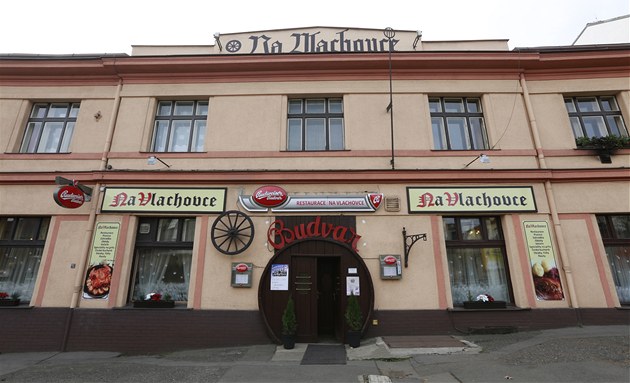
Vlachovka restaurant, pub, winery

Apr 26, 2011

Carnivalesque 73

Welcome, folks, to the seventy-third Carnivalesque, the Ancient/Modern edition of the popular History blog carnival. Thanks to all those who contributed and sent suggestions.

To start with, take a look at this timeline (timelines being some sort of minor addiction for me) of historical events that occurred in years ending in 73. Trite, eh? There’s considerable uncertainty about the older dates, of course, but if there’s at least one source that speculates an event occurred in such a year, well, I’ve bunged it in.

Events in the years before Christ (or Common Era, to be less religious) appear against negative numbers in this timeline. If you click on any of the titles, a little window should open up with some extra information.


This is the week after Easter, and so a light Christian history thread runs through this carnival. But fear not – there’s lots of other stuff to whet your secular appetites.

And so, to begin:

Africa


Kemsit, the Nubian queen of the Egyptian King Mentuhotep II (2061-2010 B.C.), and her servants; from a painting in her tomb chamber wall; Metropolitan Museum of Art, New York; from Naville, The XI Dynasty Temples at Deir el-Bahri III (London: Egypt Exploration Fund, 1913), pl 3.
Kemsit, the Nubian queen of the Egyptian King Mentuhotep II (2061-2010 B.C.), and her servants; from a painting in her tomb chamber wall
Would you be willing to trek across the Egyptian desert all the way to Chad? Even today it’s a perilous journey, and yet there’s evidence that the Pharaoh Mentuhotep II (2061-2010 BC) organised an expedition to that western land. Read about it in Owen Jarus’ post in Unreported Heritage News.


*********


Europe


Around 3500 BC, the Neolithic inhabitants of the island of Jersey built a worship mound that came to be known as La Hougue Bie. Millennia later, a church was built atop it. The Neolithic mound was equinoctically aligned, and it turns out so is the church. Alun Salt tells the story.

You may have seen some racy news recently - First Gay Caveman Found! - etc. Bunkum. The Corded Ware (2900-2500 BC) burial site near Prague was not of cavemen; rather it's of pre-Bronze Age farmers.  Why do they think it was a gay caveman? John Hawks does a spot of debunking.


If you have wondered why Isocrates (436-338 BC) is not as well-known as, say, Plato, wonder no more. Michael Anderson has the scuttlebutt in his Ancient History Blog.

How likely is it that a list of survivors of the Battle of Marathon survived to this day? Or that such a list ever existed? Rogueclassicism has an overview of the affair of the Marathon tablet (403 BC ?) and its epigraphy.

What do Nerva, Trajan, Hadrian, Antoninus Pius, and Marcus Aurelius have in common? Adrian Murdoch’s series of podcasts on Gibbons’ “five good emperors” (AD 96-180) reveals all that you  might want to know. Get them at his blog Bread and Circuses.

Ivan Bilibin's Illustration to the Lay of Igor's Campaign (from Wikimedia Commons)
‘In AD 1185, as the Kievan Rus Empire was starting to deteriorate, a little known prince on the eastern Russian borders led his outnumbered men into battle against Mongolian invaders, the Polovtsians (Kumans). This battle and its aftermath would become the topic of the Russian literary epic, “The Lay of Igor’s Campaign.”’ Seesaw discusses the battle, the epic and its musical successors in Russia, Past and Present.


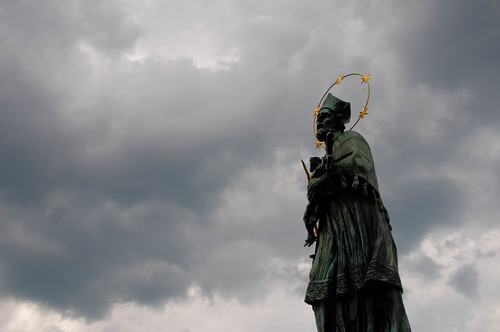
St. John of Nepomuk, Charles Bridge, Prague
St. John of Nepomuk, Charles Bridge, Prague by dlnwelch, on Flickr

If you wander about the Upper Palatinate in Germany, you might find yourself wondering – as Patrick Shrier did – why there are statues of St John of Nepomuk (d. 1398) on nearly every bridge in sight. What’s a Czech saint doing in Germany? Shrier investigates and reports in Patrick’s Military History Blog.


A oft-repeated statement is that the famous vegetarian Leonardo da Vinci (1452 - 1519) was 'ahead of his time' in sundry disciplines. While this may be somewhat true of his art, it doesn't apply to his technical work, says Thony C. in the Renaissance Mathematicus.

There’s no end to weirdness in Europe, and Vlad the Impaler is about as weird as a historical character can get. Soon after taking up the throne of Wallachia (1457), he invited the nobility to an Easter feast and – well, Executed Today has the story.

'Tis the 550th anniversary of the Battle of Towton (1461) - one among many in the Wars of the Roses in sunny England - and there are no pictorial representations extant of that battle. So what was Sheila Corr to do when she had to provide a suitable illustration for an article in History Today? Find out here.


Speaking some more of seriously weird things: there was much faith in putting one’s fate in the hands of chance (or God) – even secular arguments were sought to be settled by means of trial by fire. One of the last such trials occurred in Florence in 1498, as Beachcombing’s Bizarre History Blog reports in Barbecuing Friars in Late Medieval Florence.


*********

Middle-East


While it’s widely believed that the Abrahamic faiths are monotheistic, there is considerable evidence that Judaism, the oldest of them, was initially polytheistic. JK at Varnam explains the ins and outs of how god became God and acquired a wife, and other gods were consigned to oblivion (c. 8th century BC)

What’s up with physicists thinking they can contribute to historical analysis? Surely the age of the dilettante is past? Jona Lendering in New at LacusCurtius & Livius excoriates Colin Humphreys for his claim that Christ’s Last Supper took place on a Wednesday, and not – as historians agree – on Maundy Tuesday. “The trouble with the Jaubert-Humphreys Thesis is that it solves a problem that does not exist by using a method that is self-contradictory…Unfortunately, this is not an innocent, funny story about scientists who should not pretend they are historians.”

In the early days of Christianity, Easter was the chief religious festival. Birthdays were considered a pagan relic. So how did Christmas become the important festival it is today? Ranjith Kollanur explains in his blog A View From My Disjointed Laptop.

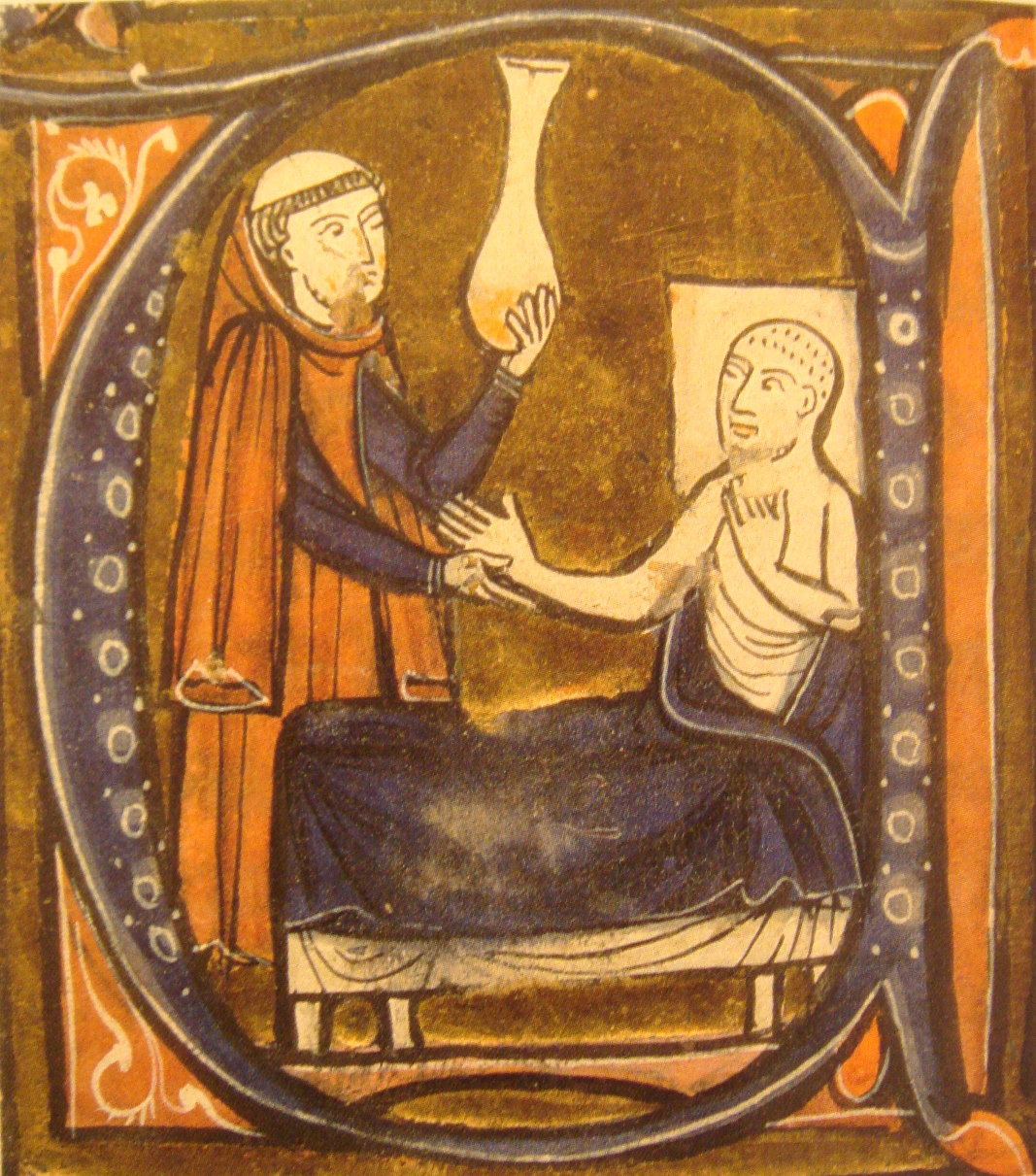
European depiction of the Persian (Iranian) doctor Al-Razi, in Gerardus Cremonensis "Recueil des traités de médecine" 1250-1260. (Wikimedia Commons)
European depiction of the Persian doctor Al-Razi, in Gerardus Cremonensis "Recueil des traités de médecine", 1250-1260. (Wikimedia Commons)
When and where was the definitive recognition of smallpox made? In Persia around AD 900, a medic called al-Razi wrote a treatise named al-Judari wa al-Hasbah (On Smallpox and Measles). Lapham’s Quarterly blog has a small write-up.

*********

Asia

74,000 years ago, human beings were passing the Malay peninsula on their great migration across the planet. Archaeological digs in Perak revealed a sumptuous burial of a man, which showed that Malaysia was no civilisational backwater. Judith Weingarten has the story of the digs and the feisty woman who conducted the research in her blog Zenobia: Empress of the East.


According to the Vedas, a mighty river called the Saraswati flowed through the plains of north India. There have been efforts to identify this river - which no longer exists (in its original size, at least) - and there are controversies galore about its history. Researchers in geology, linguistics, archaeology, history, and climate science have contributed, and Michel Danino has a post discussing some of this interdisciplinary work.

Emperor Wu dispatching Zhang Qian to Central Asia from 138 to 126 BCE, Mogao Caves mural, 618-712 CE (Wikimedia Commons)
Emperor Wu dispatching Zhang Qian to Central Asia (138 to 126 BCE), Mogao Caves mural, 618-712 CE (Wikimedia Commons)
Tired of horsemen attacking his villages, kidnapping the women and killing the men, and realising that they were untouchable until he obtained a powerful cavalry, in 103 BC the Chinese emperor Wu sent a taskforce to the land of the Wusun to bring back the heavenly horse. Heather Pringle tells the story and its later ramifications.

Japanese samurai boarding Yuan ships in 1281 (Wikimedia Commons)
In AD 1281, Kublai Khan sent a fleet to invade Japan. 730 years later, the History Channel purported to explain it all to unsuspecting aficionados of popular history.  Learn what really happened, and why you shouldn’t trust (ever!) the History Channel - in this piece by Tatsunoshi in Shogun-Ki.


*********

The Americas

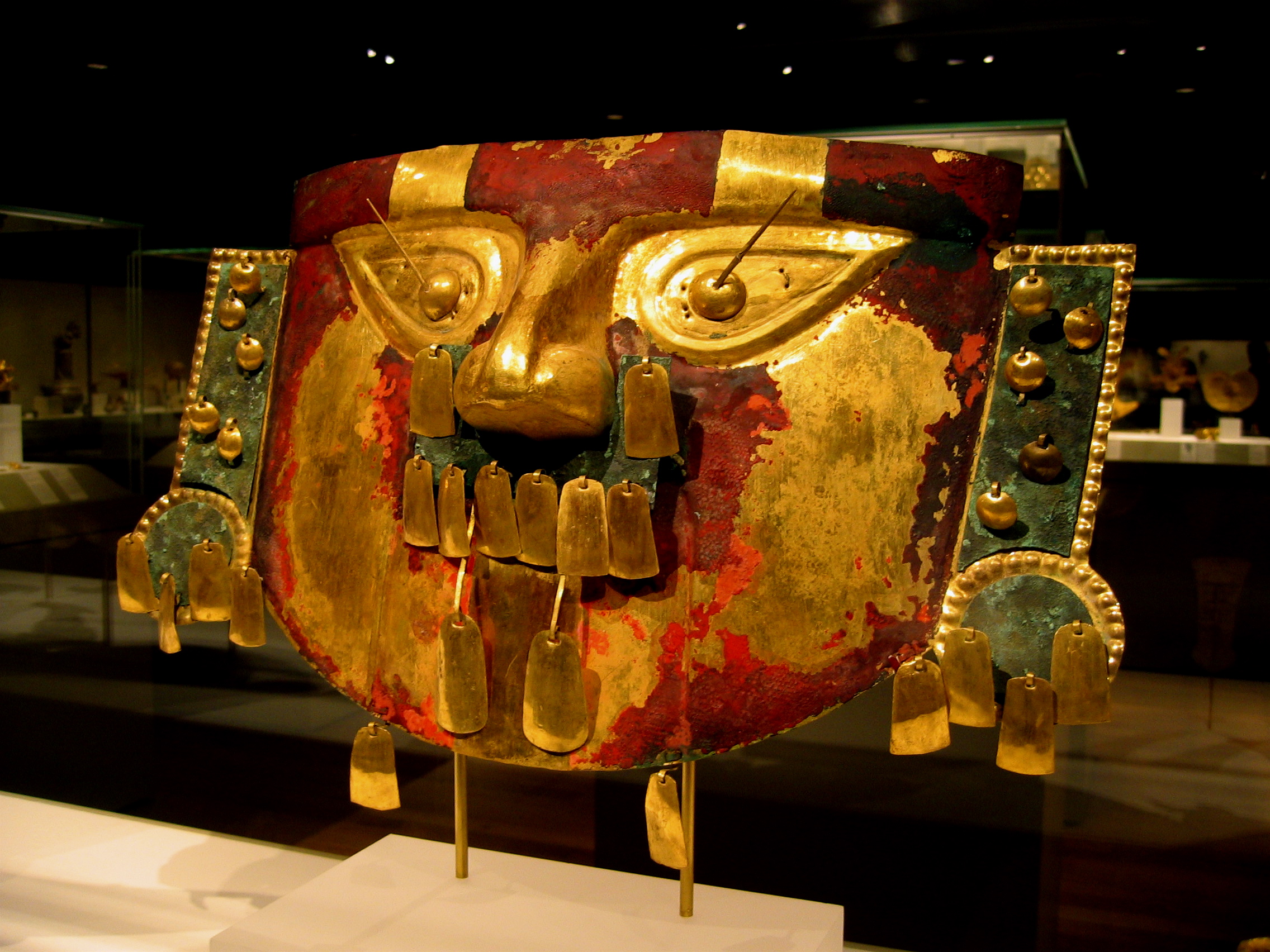
Funerary Mask, 9th-11th century Peru; (Lambayeque) Hammered gold with cinnabar and copper overlays, cinnabar; H. 11 1/2 in. (29.2 cm) Gift and Bequest of Alice K. Bache, 1974, 1977 (1974.271.35) (Wikimedia Commons)
Funerary Mask, 9th-11th century Peru; (Lambayeque) Hammered gold with cinnabar and copper overlays, cinnabar;  (Wikimedia Commons)
From the 8th century AD, the Lambayeque culture flourished in northern Peru. Like their more famous successors, the Incas, these were a people wont to fertility rituals and human sacrifices. How about combining the two by sacrificing women? Monty’s World has the story.

Archaeologists long thought that the cultures of Central America and North America had little or no interaction. Now it appears that there may have been thriving trade between them, lasting as long as five centuries from AD 900. The Pueblos of southwest USA drank cacao, which they could only have got from Mesoamerica. As Gregory LeFever reports in his blog Ancient Tides, they would have paid for the cacao with turquoise.

The 400-breasted Mayahuel Aztec Goddess of the maguey or agave (Wikimedia Commons)
Why not ponder the fate of the Aztecs (13th – 16th centuries) and their rabbits? Even before the sanguinary and Easter-loving Spaniards turned up at their doorstep, they celebrated the bunny by naming a day in its honour. And they got as drunk as 400 rabbits. Say what? Judugrovee reveals the story in the blog The Complete Mesoamerica … and more.

*********

And, to round things off, interdisciplinaryment:

Art

When a snake escaped the Bronx Zoo a few days ago, a contest was announced in some papers to name her. Why not Wadjet? Here’s a post by Madeleine Cody in the Brooklyn Museum’s blog about the ancient Egyptian snake goddess, her history, her mythology and some of the art based on her.

Have you heard of the Codex Aureus? It’s a beautiful 10th century parchment manuscript featuring the four gospels. Peacay at the ever wonderful BibliOdyssey has the scoop.

Allegoric figure of Fortitude from the Four Virtues by unknown artist (also attributed to Botticelli), c. 1490, fresco, Castle Chapel, Esztergom
Lovely Renaissance frescoes (1460s) were found in Esztergom, in Hungary. Zsombor Jékely in Medieval Hungary investigates - are they really by Botticelli?

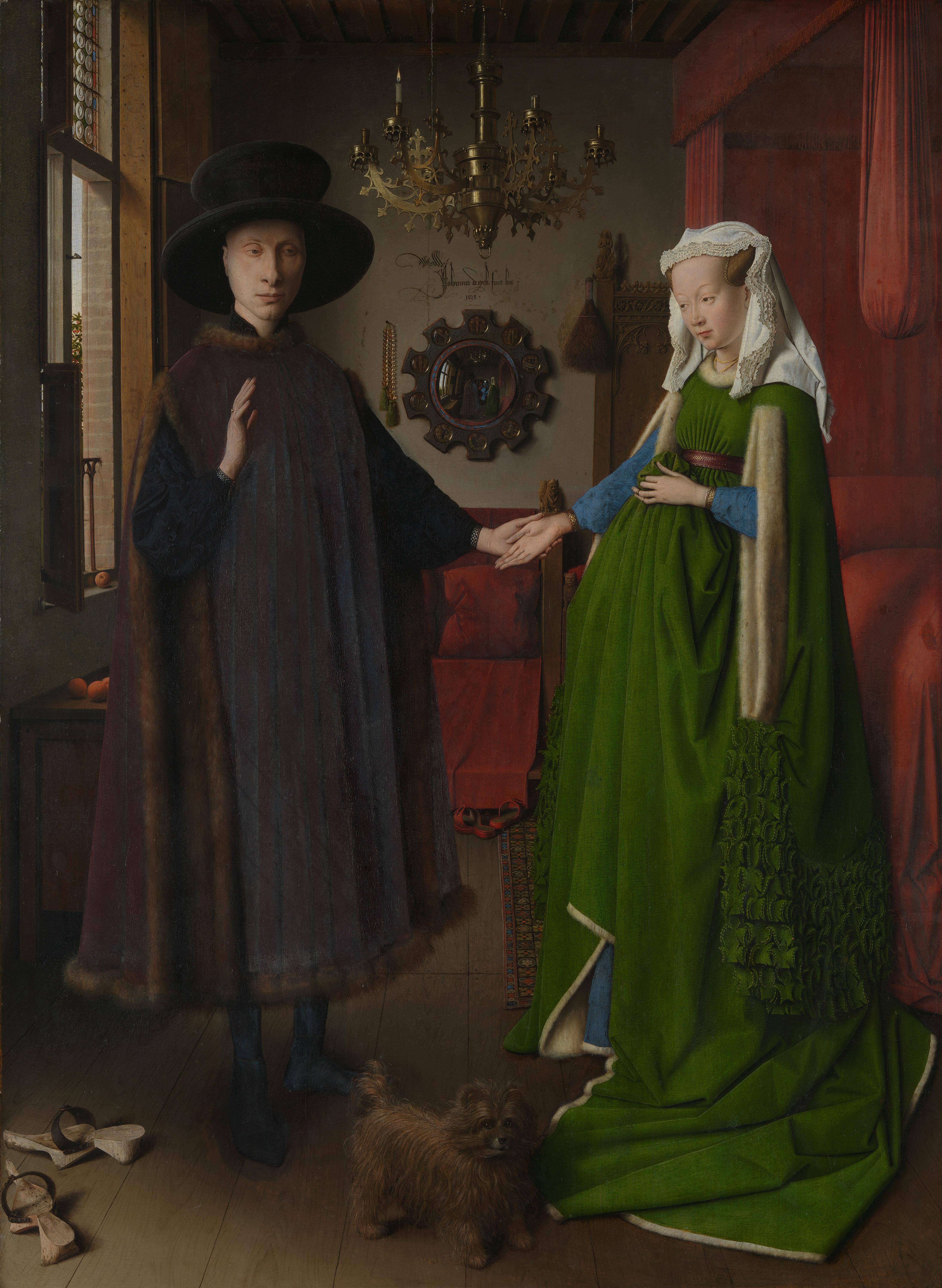
Untitled, by Jan van Eyck (or Portrait of Giovanni Arnolfini and his Wife) (Wikimedia Commons)
And we have another question: Is Van Eyck’s painting titled Arnolfini Portrait (1434) meant to portray Arnolfini’s wife? Considering there were five Arnolfinis in Bruges at the time, and we aren’t even sure which Arnolfini commissioned the painting, this might appear to be a fraught query. Alberti’s Window has a report.

*********

A Review or Two

Ever wondered about water and windmills? In Medieval History Geek, Curt Emanuel posts a review of Wind and Water in the Middle Ages: Fluid Technologies from Antiquity to the Renaissance. |The book is a scholarly compendium in ‘three general thematic sections with three papers having an archaeological focus, five concentrating on how mills "worked"; not physically but rather how they and their uses were integrated into society. The final three papers discuss how mills and milling were viewed by contemporaries through an examination of art and literature.’

While one Goth sacked Ancient Rome, a Vandal was its saviours. How’s that, you ask? That helpful Vandal was Stilicho. In Armarium Magnum, Tim O’Neill reviews at length a recent book by Ian Hughes titled Stilicho: The Vandal Who Saved Rome.

*********

That’s all for now, folks. Hope you enjoyed this round-up. The host of the next edition of this carnival will be announced shortly at the Carnivalesque website, and here’s a heads-up: it will cater to the Early Modern period, that is, AD 1500-1800.

If you want to practise French, you might well be better off doing so in a country like Belgium or Canada, rather in France. The French, we are told, are less accepting of casual mangling of their language. So goes common wisdom. In my experience, speaking a language one is not fully fluent in requires so much effort, confidence, and self-will that the disdain of a native is only a marginal irritant. And, anyway, the French have been as kind to my attempts at their language as the Walloons.

One’s choice of language to use in a country is paramount, though. Woe betide you if you try your French on a German-speaker in Switzerland, or Russian on a Czech granny, or English on any self-important bureaucrat in Europe. A few years ago, in Zurich, I needed to extend my visa’s validity by a day, and I went to the relevant police office, where, seeing large signs in English, I thought the officer would be able to respond to my questions in that language.

“Good morning,” I said, grinning winningly. “Could I have my visa extended by a day, please?”

“Ahrwehrgrrbrrssachnach. Ptooey,” spat the flunky snootily.

“Sorry, I don’t understand,” said I. Do you speak English?”

“That’s better,” said the flunky. “If I were to come to America and speak German, would you understand me?”

I pointed wordlessly at the signs. The flunky sniffed. He then extended the visa by stamping hard on my passport, and waved me away.

My Swiss pals were outraged when I recounted this story. “Some of these police are Nazis,” said one of them.

A while earlier, tramping around Prague, I stopped to buy water from a little old lady. She spoke no English, as was made amply clear by her irritated muttering when an Australian chappie stopped to ask her for directions. She was not happy with German either. When I – recognising the similarity between Czech and Russian numbers – pronounced 20 as ‘dvadzat’, she snapped, “Nyet Russki.” So I left.

More fun was to be had in Luzern where I waylaid sundry strangers and attempted to engage them in French conversation. (Basically, I wanted directions to the Lion.) All of them shook their heads, replied in German, and then noting my confusion, switched to English. Clearly the Germanic areas of old Suisse are not too fond of their French compatriots. This is entirely understandable, given the way tempers rise in Madras when I speak Hindi to the locals. Linguistic chauvinism is always great fun, except when it turns violent and people get stabbed in the kidneys.

I took an autorickshaw once from Madras Central Station to the IIT, and when the autowallah tried to bargain up the fare, I replied magnificently, “Kannada gothilla.” He gaped superbly, and I seized the moment to slip away.

In Brussels, I had a representative conversation at the railway ticket office.

“Je voodray un bilyay allay sample à Delft,” I said.

“Witsongtrongfrong,” said the ticket man.

There was a pause a few seconds long as we looked expectantly at each other.

“Err, pardon?” I said.

He burst out laughing.

“830 francs,” he said.

“See voo parlay longtemong, je peh voo comprongdrr,” I said, stiffly.

“Huit. Cent. Trente. Francs.” said the man, grinning from ear to ear. “That’s the problem with guidebooks. It tells you what to say in a language, but you never understand when they reply, eh?”