There are more than four hundred books on my To-Read list. It is a daunting number made especially so by attention deficit and a niggling feeling of restlessness. I have decided to put them aside for now. Maybe when I have that study I have been promised where I can reign like a potentate and reach out to grab a likely book from one of several floor-to-ceiling shelves - then, I'll get onto buying these books and reading them. Until then, to keep my mind ticking along its unexamined and un-introspected path, I have resolved to introduce an element of randomness to my reading.
Those four hundred books on my list range quite widely across genres of fiction and tropes of non-fiction. Most of them are on the list, however, because I read of them on some review or the other. As I do not browse bookstores anymore, there is no serendipity in my reading. So what better way to reintroduce an element of chance than by random grabs from the library's fiction shelves?
I don't want to spend hours on thick tomes that might prove enervatingly boring half-way through. I don't want to linger for hours on one paragraph and try to glean every manner of jewel from it. As I said - attention deficit. So here's what I am going to do: I'll go through the fiction shelves of my local library in alphabetical order and I'll pick up every book under 201 pages long. I will ignore the blurbs and I will get stuck into every book. I'll likely discover authors I had never heard of, never read, and - given any other trajectory in my life - would never attempt.
The choice of 200 pages as the upper limit on size is quite arbitrary. After all, a book of 150 pages with small font is as chunky, word-wise, as another with 200 in big type. Still, it's an important psychological barrier. I can finish a two-hundred page book in a day (or at a sitting were it not for constant interruptions from sundry little imps and my own nervous energy). I needn't worry about wasting hours should the prose be impenetrable. And carrying the books from and to the library will not ruin my back. Good stuff.
So here I'll make (and keep updating) the list I'm ploughing over. I might blog about them. Or I might not.
- Wajdi Ahdal, A Land without Jasmine. [Yemen]
- Woody Allen (*), Mere Anarchy. [USA]
- Niccolò Ammaniti (*), Me And You. [Italy]
- Steven K. Amsterdam, Things We Didn't See Coming. [USA]
- Lin Anderson, Blood Red Roses. [Scotland]
- Margaret Atwood, The Tent. [Canada]
- Paul Auster, Timbuktu. [USA]
- Muriel Barbery, The Gourmet. [France]
- Lukas Bärfuss, One Hundred Days. [Switzerland]
Djuna Barnes, Nightwood. [USA]- Nicola Barker, Love Your Enemies. [England]
- H. E. Bates, The Darling Buds of May. [England]
- Georges Bataille, Story of the Eye. [France]
- M. C. Beaton, Deborah Goes to Dover. [Scotland]
- Alan Bennett (*), Smut: Two Unseemly Stories. [England]
- Louis de Bernières, Red Dog. [England]
- Alessandro Boffa, You're an Animal, Viskovitz. [Italy]
- Roberto Bolaño, Monsieur Pain. [Chile]
- Anne-Sophie Brasme, Breathe. [France]
- Theresa Breslin, Prisoner in Alcatraz. [Scotland]
- George Mackay Brown, Beside the Ocean of Time. [Scotland]
Willa Cather, The Bohemian Girl. [USA]Truman Capote, Summer Crossing. [USA]- Angela Carter, The Passion Of New Eve. [England]
- Robert Carter, The Gun-runners.
- Maxime Chattam (*), Carnage. [France]
- Janet Davey, First Aid. [England]
- Patricia Duncker, Hallucinating Foucault. [England]
- Marguerite Duras, Moderato Cantabile. [France]
- Ann Dee Ellis, This Is What I Did. [USA]
- Bret Easton Ellis, Less Than Zero. [USA]
- Jenny Erpenbeck, Visitation. [Germany]
- Janet Frame, The Lagoon: A Collection of Short Stories. [New Zealand]
- Alan Ford, Thin Ice. [England]
- Günther Freitag, Brendel's Fantasy: A Novel. [Austria]
- Jostein Gaardner, Through A Glass, Darkly [Norway]
- Damon Galgut, In a Strange Room. [South Africa]
- Jane Gardam, The Pangs Of Love. [England]
- Alan Garner, Thursbitch. [England]
- Pascal Garnier, The A26. [France]
- Hella Haasse, The Black Lake. [Netherlands]
- Hugo Hamilton, The Last Shot. [Ireland]
- Shirley Hazzard, Cliffs Of Fall. [Australia]
- Zoë Heller, Everything You Know, [England]
- Victoria Hislop, The Last Dance, and Other Stories. [England]
- Peter Hobbs, In the Orchard, the Swallows. [England]
- Alois Hotschnig, Maybe This Time. [Austria]
- Geoffrey Household, Face to the Sun. [England]
Ted Hughes, Difficulties of a Bridegroom. [England]- Helen Humphreys, The Lost Garden. [Canada]
- Rod Humphries, The Last Coal Trip to Tenby. [Wales]
- Samantha Hunt, The Seas. [USA]
- Jorge Ibargüengoitia, The Dead Girls. [Mexico]
- Yasushi Inoue, The Hunting Gun, [Japan]
- Robin Jenkins, A Very Scotch Affair. [Scotland]
- Ma Jian, Stick Out Your Tongue. [China]
- Andrew Kaufman, The Tiny Wife. [Canada]
Michael Kimball, How Much of Us There Was. [USA]- Katie Kitamura, The Longshot. [USA]
- Milan Kundera (*), Slowness. [France]
- Rodrigo de Souza Leão, All Dogs are Blue. [Brazil]
- J.M. Ledgard, Submergence. [Scotland]
- Stephen McGeagh, Habit. [England]
- Norman Maclean, Contracts. [Scotland]
- Tessa McWatt, Vital Signs. [Canada]
- Ernesto Mallo, Needle in a Haystack. [Argentina]
- Sándor Márai, Esther's Inheritance, [Hungary]
- Cornelius Medvei, Caroline: A Mystery. [England]
- David Miller, Today. [England]
- Alison Moore, The Lighthouse. [England]
- Alistair Morgan, Sleeper's Wake. [South Africa]
- Herta Müller, The Passport. [Romania/Germany]
- Irène Némirovsky, David Golder. [Russia/France]
- William Newton, The Two Pound Tram. [England]
- Raul Nuñez, The Lonely Hearts Club. [Argentina]
- Simon Okotie, Whatever Happened to Harold Absalon? [England]
Anna Maria Ortese, The Iguana. [Italy]- Julie Otsuka, The Buddha in the Attic. [USA]
Chuck Palahniuk, Tell-All. [USA]- Franck Pavloff, Brown. [France]
- Mervyn Peake, Letters from a Lost Uncle. [England]
- Per Petterson, It's Fine By Me. [Norway]
Padgett Powell, Edisto. [USA]- Annie Proulx, Brokeback Mountain. [USA]
- Atiq Rahimi, Earth and Ashes. [Afghanistan]
Joan Riley, Waiting in the Twilight. [Jamaica/England]- Mary Robison, Why Did I Ever. [USA]
- Knud Romer, Nothing But Fear. [Denmark]
- Meg Rosoff, How I Live Now. [USA]
- Leo Rosten (*), The Education of H*y*m*a*n K*a*p*l*a*n. [USA]
- Ambalavaner Sivanandan, Where the Dance is. [Sri Lanka/England]
- Elke Schmitter, Mrs Sartoris. [Germany]
- Alan Sillitoe, The Loneliness of the Long Distance Runner. [England]
- Ali Smith, Girl Meets Boy. [Scotland]
- Alexander Solzhenitsyn, One Day in the Life of Ivan Denisovich. [Russia]
- Simona Sparaco, About Time. [Italy]
- Muriel Spark (*), The Finishing School. [Scotland]
- Graham Swift, Learning to Swim and Other Stories. [England]
- Véronique Tadjo, As the Crow Flies. [Côte d'Ivoire]
- Mary M. Talbot, Dotter of Her Father's Eyes. [England]
- Pier Vittorio Tondelli, Separate Rooms. [Italy]
- Jáchym Topol, The Devil's Workshop. [Czech]
- Justin Torres, We the Animals. [USA]
- Kurt Tucholsky, Castle Gripsholm. [Germany]
- Fred Uhlman, Reunion. [Germany/England]
- Dimitri Verhulst, The Misfortunates. [Belgium]
- Sarah Webb, Behind Closed Doors. [Ireland][
- Nathanael West, The Day of the Locust. [USA]
- Rebecca West, The Return of the Soldier. [England]
- Jeanette Winterson, Weight: The Myth of Atlas and Heracles. [England]
- Taichi Yamada, Strangers. [Japan]
Okay, I felt compelled to add some genre stuff too. It's a rare crime or sci-fi book that comes in at less than 300 pages, but if you look closely enough, there are some sub-200 ones. Rare, but they're there.
The authors with stars against them are those I've read before. Onward!
Update: December 10: I'm beginning to think that with twenty-five books into this quixotic randomness, I've still not passed the first three letters of the alphabet. Too slow a progress! So, from the letter D, I'll only pick up books by authors I haven't read before - unless I really want to read that book.
Update: January 21: Incredible. There are books in this list that I cannot bear to continue reading. Sub-200? Pshaw. The books that defeat me are crossed out in the list above.
Update: January 31: I figured I might as well add the country of origin of each writer, so that I can keep track of the translated works.
Update: February 10: Letter 'I' and Inoue's doing my head in.
Update: February 18: Up to the letter 'K' with a slight detour towards Verhulst.
Update: February 28: Now nipping my way to 'O'.
Update: March 12: Decided to scan the crime/sci-fi/fantasy/horror shelves alphabetically as well.
Update: April 6: In the 'R' lot, with a couple of 'S' lying around too.
Update: April 16: Added the first graphic novel/memoir into the mix (Talbot's 'Dotter of Her Father's Eyes').
Update: May 8: Man, I'm really suffering now. I'm at the W's and it's a real drag to continue with this. Second wind, second wind...
Update: June 4: Haven't really made much progress with the W's, but rather liked Taichi Yamada's Strangers...
- Ted Allbeury, Dangerous Arrivals. [England]
- Benjamin Black, The Lemur. [Ireland]
- Lilian Jackson Braun, The Cat Who Went Bananas. [USA]
- Max Brooks, Closure, Limited and other Zombie Tales. [USA]
- Tori Carrington, Queens Ransom. [USA]
- Judith Cutler, Silver Guilt. [England]
- Philip Daniels, The Inconvenient Corpse. [England]
- Francis Durbridge, Curzon Case. [England]
- Wolf Haas, The Bone Man. [Austria]
- Gerald Hammond, With My Little Eye. [Scotland]
- Alanna Knight, Deadly Beloved. [Scotland]
- Bill Knox, To Kill a Witch. [Scotland]
- Fritz Leiber (*), Swords and Ice Magic. [USA]
- Elmore Leonard (*), The Switch. [USA]
- Roy Lewis, An Assumption of Death. [Wales]
- Roger Ormerod, More Dead Than Alive. [England]
- Anne Perry, A Christmas Visitor. [England]
- Alexei Sayle, Mister Roberts. [England]
- Leopold Ritter von Sacher-Masoch, Venus in Furs. [Austria]
- Georges Simenon (*), Maigret Sets a Trap. [Belgium]
- Peter Turnbull, False Knight. [Scotland]
- Barry Unsworth, Morality Play. [England]
- Minette Walters, The Tinder Box. [England]
- David Wilson, The King's Park Irregulars. [Scotland]
The authors with stars against them are those I've read before. Onward!
Update: December 10: I'm beginning to think that with twenty-five books into this quixotic randomness, I've still not passed the first three letters of the alphabet. Too slow a progress! So, from the letter D, I'll only pick up books by authors I haven't read before - unless I really want to read that book.
Update: January 21: Incredible. There are books in this list that I cannot bear to continue reading. Sub-200? Pshaw. The books that defeat me are crossed out in the list above.
Update: January 31: I figured I might as well add the country of origin of each writer, so that I can keep track of the translated works.
Update: February 10: Letter 'I' and Inoue's doing my head in.
Update: February 18: Up to the letter 'K' with a slight detour towards Verhulst.
Update: February 28: Now nipping my way to 'O'.
Update: March 12: Decided to scan the crime/sci-fi/fantasy/horror shelves alphabetically as well.
Update: April 6: In the 'R' lot, with a couple of 'S' lying around too.
Update: April 16: Added the first graphic novel/memoir into the mix (Talbot's 'Dotter of Her Father's Eyes').
Update: May 8: Man, I'm really suffering now. I'm at the W's and it's a real drag to continue with this. Second wind, second wind...
Update: June 4: Haven't really made much progress with the W's, but rather liked Taichi Yamada's Strangers...
 (selected and translated by Pritham Chakravarthy), and those lovingly referred to in Patricia Melo's
  . Both Brazil and India are roughly at the same level of economic development as far as the vast majority of people are concerned, and both countries have an enormous thirst for light reading and sensationalism. (One can see this in the wide reach of daytime soap operas on television in both countries.) The English translation of the original Tamil stories serves to include a more middle-class audience for what is essentially vernacular fiction; likewise Patricia Melo discusses the popularity of Brazilian noir among the socially downtrodden, and the cut-throat competition to serve it.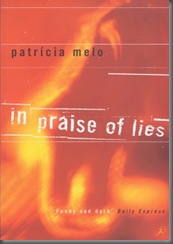

 Being obvious is possibly the worst comment a reader can make on a crime novel, but what is obvious to one person may be opaque to another. In Tefcros Michaelides's
  , the twist at the end depends for its surprise entirely on whether the reader knows the history of mathematics or not. The plot is rather straightforward - a Greek mathematician is found murdered and his best friend (the narrator) looks back on his career, hoping to find clues to his death in his past. The description of this past is possibly the weakest part of the book: Michaelides evidently believes that describing the excitement and fervour of early 20th century mathematics is insufficient to drive the book forward, so he throws in a long section on the development of modern art in the back alleys of Paris, introducing Picasso and his coterie, and claiming that Picasso's art was much informed by his own fascination for the foundations of logic. The plot hinges on an important question on the underlying consistency of mathematics, but surely it defies logic that the resolution to this question should verily be a life-and-death matter?
 is, as far as thrillers go, fairly faithful to the genre: a rich young woman thinks she has seen her long-dead brother on TV, her house is firebombed, she buys the services of a top-notch bodyguard (named Lemmer) who helps her in her search for her brother. Of course, the enemies are many and vicious, and when both get injured in an attack, Lemmer decides to go on the offensive himself. He is a man with a short fuse and can be indescribably vicious himself, so when the villains meet their comeuppance, they don't go gently into the unknown. Meyer throws in social commentary on present-day South Africa as well.
 is a narrative from the viewpoint of a mentally-unbalanced girl desperate to locate her mother. This is an exploration of the lush mindscape of the fifteen year-old Rose who adores her mother and is baffled and upset by her father's seeming lack of anxiety when her mother vanishes. She seeks answers in her mother's past, uncovering details of old loves and past crimes. This is a slim book set in a sunny coast of France completely at odds with Rose's anguish, and it drags the reader into her world of 'immeasurable loss' more surely and heartbreakingly than weightier tomes by less assured writers. Well worth a read.
 proves no different. Perhaps, though, we should believe Falcones - he is, after all, a lawyer himself, and he quotes Catalan legal documents (the Usatges) that purport to grant such rights. The novel, a sweeping history of the construction of the magnificent Cathedral of Santa María del Mar by indigent labourers as an act of love and devotion, starts with the violation of a woman on the night of her wedding. The story then follows the fortunes of the woman's husband, and then their son, against the background of the rise of Barcelona's maritime power. It is a gripping tale, incorporating miracles, internecine feuds, pogroms against Jews, naval battles, detailed explanations of construction techniques, sex and strife between diabolically devious women and inhumanly good men, envy between brothers, religious schisms, class struggles, and, if all this were not enough, the Inquisition. I'm well pleased with this, especially because there was nary a mention of the Templars.
 is a tale of the fall of a brilliant Swiss detective. The denouement is somewhat pat, but the analysis of the detective's psyche is very good. A little girl is savagely murdered and the detective makes a promise to her mother that he will find the killer. When a suspect is arrested and he subsequently commits suicide, everybody is satisfied that the case is closed, even the victim's parents. But the detective is not convinced, and against all evidence and in the face of his superiors' disapproval, he lays an intricate trap to catch the killer. He is so obsessed with this plan that he doesn't mind sacrificing everything he has - his reputation, his relationships, even his 'adopted' family - to fulfil his pledge. The plan fails and he loses his mind, and when the explanation arrives (a bit contrived and convenient), it is far too late to save the detective. This is a small book, a quick but agonising read, and well worth for its insight into the extremes of human nature.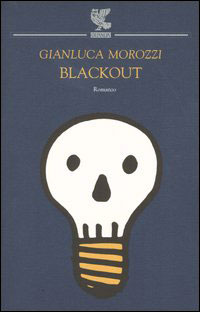
 , three individuals, strangers to each other, enter the lift. Shortly thereafter, the power goes out and the trio is trapped between floors. Their back-stories are filled in between chapters that describe the continuously rising paranoia and terror within the cramped quarters of the lift. I’m not giving anything away when I say that one of the three is vicious serial killer, and his is the only background that is really relevant to the story. The other two could have been pilots or scuba-divers for all their lives had any consequence up to the point they are trapped. So far, so good. True to the genre, the innocents have to escape. How though? And is that all to the story? This is where Morozzi cranks up the unlikeliness factor, and the story – to my mind – degenerates to droll fantasy. It is written in that arch, self-consciously-talking-to-the-reader fashion that might grate on some; the staccato sentences might alienate others, but it is a thin book, trying a bit to be too clever, and will serve as a decent page-turner on a short trip to work.
 is another such. Geeraerts doesn’t have much time for organised religion, I gather from this fable, or for money-grubbing men or women, most of whom end up perishing in some gruesome fashion or the other. The protagonist of this parody of the paranoid thriller genre is the Public Prosecutor of Antwerp, a man who owes his position to his wife’s noble family. He leads the usual life of an alpha male – he has a beautiful young mistress; his wealth does not stop him from seeking more; and, of course, he detests his wife, and hardly has any time for his sons. The wife is a deeply religious Catholic who wants one of her sons to enter Opus Dei, the usual villain in books involving religious skullduggery, and to that end is willing to sacrifice everything, including her husband. There are other unsavoury Opus Dei operatives with connections at the highest reaches of power – both financial and administrative – and there are sundry criminals out for revenge. None of the characters has any redeeming qualities but the Prosecutor, harried and hassled, ends up being strangely sympathetic. This is so earnest a book I cannot imagine Geeraerts wasn’t grinning ironically all the while he was writing it; good fun.
 is a rollicking dissection of Cuban life, where years of Communism have only served to drive the capitalist fervour of the masses to feverish pitch and materialism rules above all. Unlike the corruption and drug-addled misery limned in Leonardo Padura’s Havana series, Chavarría’s book is far too good-humoured. It is also a sexy romp with the pneumatic bottom of the wondrously bright and beautiful Alicia running riot, trying to ensnare rich foreigners who might then take her away to their own rich lands where she could lead a life of luxury. Her modus operandi is to ride her bike, wiggling her alluring bottom to attract a rich man in a fancy car, and then falling spectacularly before the sucker, prompting him to come to her rescue. Her mother aids and abets her schemes,
 , as harrowingly graphic as any lesbian crime author’s work (as
  , which is taut, gripping and eminently true to life.