JOST A MON

The idle ramblings of a Jack of some trades, Master of none

Oct 24, 2013

The Muslim Detective

A passing comment by Zoë Ferraris got me thinking about the lack of Muslim detectives in crime fiction. Casting my mind back on the books I've read, I couldn't recall a single one (other than Ferraris' own Nayir ash-Sharqi and Katya Hijazi). But then my facility with names is particularly fraught, so I had to depend on the web to locate some names.

It turns out that I've read crime fiction featuring Muslim detectives in at least two books - one (The Bethlehem Murders) by Matt Rees and the other (Kismet) by Jakob Arjouni. There may be more, but I'm not in a position to say so.

Of course, as soon as I saw Arjouni's name, I recalled Kayankaya, as brilliant a creation as you can ask for. Wise-cracking, to boot! Indeed, a few years ago when I was ploughing my way through foreign crime fiction, I had noted this wonderful detective.

To be honest, 'Muslim' is far too broad a brush. There's much that differentiates a Turkish-German detective from, say, a poor Palestinian teacher-turned-investigator or a Saudi desert guide-turned-detective; and even more that differentiates any of those mentioned above - all men - from a Saudi forensic pathologist-turned-detective as well, a superbly etched Katya Hijazi. And though they are all Muslims, they run the gamut from secular to deeply devout, from people for whom religion has almost no impact on their daily lives to those whose every waking moment is governed by the Shariah. 

So I'd say that merely giving a detective a Muslim name doesn't make him one. Just as pointed out by those who deprecate underwritten and token minorities in speculative fiction, creating a run-of-the-mill character and tossing him or her a particular name does not make a difference. Chris Culver, a self-published author who recently found much success in the genre with The Abbey said he hadn't encountered many Muslim detectives in his reading, and, tired by the popular depictions of Muslims as terrorists, he had decided to feature a recovering alcoholic, Ash Rashid, an Indianapolis detective. How much Culver knows about Islam and whether Rashid is even a tiny bit coloured by Islam is something I can't answer, not having read the book. I'd be glad to hear from anyone who has.

And then there's the Canadian ad-man-turned-writer Scott Thornley whose Erasing Memory has a Muslim woman, Fiza Aziz, as a member of the detective team. I hope I'm not giving anything away when I say she supposedly suffers a bit of a burn-out in the first novel, but then comes back a-rearin' in the second The Ambitious City.

Zoë Ferraris, though, is absolutely top-notch. My knowledge of that most stifling of countries, Saudi Arabia, comes from the reading of two or three books (non-fiction, mainly) and the experiences of my wife in the neighbouring Kuwait. Ferraris is brilliant and insightful. Her characters (the very conservative Nayir and the struggling-against-the-patriarchy Katya) are deeply sympathetic; her understanding of the family dynamic in a traditional culture is nuanced; her depiction of the claustrophobia and the suffocation felt not just by women but also men in Saudi is eye-opening. I've only read the first of her trilogy featuring these detectives, The Night Of The Mi'raj, but I haven't been so moved by such an astute insight into character and motivations since I read Katie Kitamura's The Longshot.

The web search also revealed other detectives in the Islamic lands. It turns out that there was an entire Turkish golden age of crime fiction between 1928-50, and it was Turkey-centric, there were papers written on the depiction of foreigners in these books. What were these books? Are there any translations into English? All good questions.

The Moroccan-French writer Driss Chraïbi's Inspector Ali series features a Muslim detective. To be honest, Chraïbi was a social critic more than a genre writer, and how these books stand up as crime fiction, I can't say, not having read any of them.

I wouldn't be surprised if among the teeming volumes of pulp fiction published in Hindi, Urdu and other Indian languages, there weren't a few in which Muslim investigators do go after the villain. (I should take a look once again at my copy of The Blaft Anthology of Tamil Pulp Fiction.) Many writers of these works are socially activist and often point an accusing finger at the hypocrisies and tragedies of life in South Asia. Some works may very well be steeped in the Muslim milieu as well, offering yet another perspective on a demonised community. On the other hand, if action and plot trump characterisation, the 'Muslim' detectives may just turn out to be tokens.

Serendipitiously, I came across this review of four detective books by the Urdu writer Ibne Safi (published, hurrah hurrah, by Blaft), in which the perfect and cold Colonel Faridi, accompanied by the witty and dashing Captain Hameed, are counterespionage agents who do a bit of detection on the side. The reviewer goes on to say: But fun as they are to read, they are not particularly satisfying as detective stories: plot developments can be arbitrarily motivated; there are long stretches of inane dialogue; there are convenient coincidences, hasty endings. As a quick read in discardable pulp format, this probably acquit themselves admirably; they will not rival Zoe Ferraris's works for mastery, perhaps.

Who are the others? Am I missing any obvious ones?


Aug 15, 2012

Ottoman Yumyum

In Jason Goodwin's books on the exploits of Yashim Lala, much time is spent by the eunuch in seeking out fresh produce to produce delectable delights that he would then graciously share with the Pole, Palewski. In The Bellini Card, the two are separated, but that doesn't stop the Ottoman from cooking up interesting little dishes. This time he is armed with a kitchen knife of Damascene steel, and he has just had it polished and sharpened, and it balances perfectly in his hand.
He had known what he wanted to do the moment he saw the artichokes on George's stall: the appearance of the first tiny artichokes always made up, he felt, for the disappearance of asparagus. 
'Is summer!' George waved a bunch of the greeny-purple artichokes under his nose. 'Not more to wait, Yashim efendi. You wants?' 
Yashim, who felt he'd been waiting weeks already if not for summer then at least for Palewski to come home, seized a dozen. He bought broad beans, fresh onions, lemons and a fistful of dill and parsley. 
At home, he halved a lemon and squeezed the juice of both halves into a bowl of water. He set an onion on the board and chopped down on its spiralled top, wondering how many hands had held this knife, and how many times it had been asked to perform the same simple function in Damascus, or Cairo. 
Smiling to himself, almost dancing around the blade, he sliced the onion in half. He sliced each half lengthways and sideways, watching his fingers while he admired the fineness of the blade.
He set a pan on the coals, slopped in a gurgle of oil, and dropped in the finely chopped onion. He reached into a crock for two handfuls of rice. He cut the herbs small and scraped them into the rice with the blade. He threw in a pinch of sugar and a cup of water. The water hissed; he stirred the pan with a wooden spoon. The water boiled. He clapped on a lid and slid the pan to one side. 
He began to trim the artichokes. 
Summer was good. The knife was even better. 
He smiled as he slid the blade smoothly across the tough tips of the leaves; inside was the choke, which he lifted with a spoon. One by one he dropped the artichokes into the lemony water. 
[...] 
The rice still had bite, and he took it off the heat. As it cooled, he ran his thumb down the soft fur inside the bean pods, ... 
He sighed, and dipped a finger into the rice. He took an artichoke out of the water, shook it dry and stuffed it, scooping the rice in his fingers, and pressing it in. As each one was finished with a little mound of rice, he put it upright in an earthenware crock. 
When the crock was full he sprinkled the artichokes with the beans and a few chopped carrots. He drizzled them with oil, round and round, then threw in a splash of water and the rest of the dill and parsley, roughly chopped. Over the top, he squeezed another lemon. 
He covered the pan with a smaller plate, to weight the artichokes down, and settled the earthenware onto the coals. He set the rice crock on top of the plate. It would be done in an hour or less. He and Malakian would eat it later, cold.

May 29, 2011

Coffee, the Right Way

In 1854, John Henry Wilton published a book titled The First Crime; Or True Friendship, which, he claimed, was upon the importunations of his friends who wished to learn all about his peripatetic life. I haven't read the book, but this passage seems par for its course.
Harry stopped short the tale, and bid Bothwick and his friend partake of some refreshment. " Come," said he, "let us have a cup of mocha, friends. Mr. Wilding," added Harry, "you must be getting peckish; allow me to offer you a cup of coffee and a crust. I'll answer for both being good, for the bread is home-made, and the coffee Richard makes himself in the best style, for he has had much practice ; I taught him myself. The method I learnt in Turkey and France. The Arabs have a mode of making coffee that I don't like. They, like the Egyptians, boil it until it is quite thick, and to me unpleasant. I am very particular as to the way my coffee is made, and have, after much trouble, succeeded in hitting upon an excellent method. I carry with me my own apparatus to make it, which may be called eccentricity. Well, be it so; nevertheless, I do, for I despise nine-tenths of the coffee, or coloured water called coffee, one generally meets with in travelling; for I hold it that a cup of really good coffee is one of the greatest luxuries."
So there you go. Travel might broaden one's mind, but not if one's a Victorian gentleman, full of oneself and the supposed superiority of one's civilisation.

Feb 25, 2011

Medieval Credit

In Hawala and Honour, I discussed various ways that medieval businessmen and private individuals and even the state (or royalty) obtained finance, and how they enforced contracts. In an about-turn to today's perceived view that the Protestant ethic is more conducive to financial innovation, in the medieval period, it was the Roman Church that enforced contracts in its jurisdictions. Bankers such as the Medici had a horror of lending money to the Germans because Catholic law didn't apply in German courts, and they often couldn't recover money from German debtors.

While the principles of money as a store of value and medium of transaction had long been established, coin or bullion was not always easily portable. Much of historical trade was on the basis of silver or gold in exchange for goods, of course, although this was never really secure. Long-distance trade didn't explode, therefore, until the development of the bill of exchange in the thirteenth century.

Here's how it worked [1]. An English exporter would send his goods to his Florentine counterparty. The importer would receive the goods and pay the agreed amount of florins to his bank, who would furnish him with a bill of exchange. He would then send the bill of exchange to his payee in England, while - in parallel, the bank would send a notification to its agent in London. When the exporter received the bill, he would approach the agent, hand over the bill and obtain his monies in sterling.

The exchange rates would, I surmise, have been as agreed between the exporter and importer. The importer would know how much his bank would charge to convert florins to sterling at some future delivery date; this rate would determine the amount of florins he would hand over to the bank upon receipt of the English goods. There were problems that could arise from the transit time between the shipment's departure and arrival, and the departure of the notification to the banker's agent, and his receipt of the bill of exchange from the English exporter. The determination of future rates was upon the assessment of the banker on the risks of the journey and the distance to be covered; the future payment date was often standardised, at usance: between Florence and London, this was set at 3 months.

This schematic is after Spufford [2].

International Trade and Credit Flow
The system of double-entry book-keeping that was invented at about the same time helped keep track of the various credits and debits in all these transactions. The exporter would write in his book's debit column an entry for goods sold. The importer would enter a credit to the payee upon receipt of the goods, and a debit to the banker for the delivered florins, thereby immediately balancing his book. The banker would enter a credit of florins from the importer. When the English exporter produced the bill of exchange at the banker's agent's, the agent would enter a debit for the bill to the banker, and the exporter himself would enter a credit for the payment received. The exporter's books would be balanced at that point. The bank and the agent would settle their books at their own convenience.

What did a typical bill of exchange look like? A treasure-trove of such information was revealed when, in 2000, the Borromeo-Arese family allowed academics from Queen Mary College to study two full ledgers from the medieval Borromei Bank of Bruges and London (estabished in 1434). Here is a description from the Queen Mary website [3]:
The acceptance or payment of a bill was usually set out in a complex sentence that indicated who had delivered the bill, who had taken it up, who had agreed to pay it and who was to be paid.[2] In the following example the Bardi of Bruges were takers of a bill of exchange for 800 scudi or flemish écus at an exchange rate of 7s 5d of the £ Barcelona per écu. The Deliverer sent the bill to the Payee in Barcelona; the Taker would write to the Payor in Barcelona with instructions to pay it to Payee at usance, that is 65 days from the writing of the letter. The Italian entry reads:

Ubertino de’ Bardi e compagni deon havere … sono per una lettera ne fecie a Barzalona di scudi 800 a s7 d5 per scudo per dì 65 fatta insino a dì 5 di questo in Antonio de Pazi e Francesco Tosinghi i quali rimettemo a Bernardo da Uzano e compagni per loro conto a loro, fo 168.

By the 15th century, bills of exchange were the commonest form of international monetisation in Europe. With the increasingly lucrative trade between the Ottomans and the Europeans, one would have expected this innovation to take hold in the East as well. This didn't always progress happily. There is an example of a letter of exchange drawn in Pera (Turkey) to be settled in Chios (Crete) that was rejected by the payer at Chios. Still, agents in Constantinople of European banks were quite happy to accept these letters. In 1437, a Cretan named Dimitri Argiti travelled to Gelibolu taking with him a letter for 1177 aspers. [4]

By 1460, credit in the form of letters of exchange was important even in Eastern commercial centres such as Bursa.

Check out:

1. Norman Biggs, 'Mathematics of Currency and Exchange: Arithmetic at the end of the 13th century', Gresham College, April 2008.

2. Peter Spufford, Handbook of the Medieval Exchange.

3. The Borromei Bank Research Project, Queen Mary, University of London.

4. Kate Fleet, European and Islamic Trade in the early Ottoman state.

Nov 25, 2010

George Magnus at Lunch

UBS organised a lunchtime session yesterday with George Magnus, their Senior Economic Advisor, and author of the recent Uprising: Will Emerging Markets Shape or Shake the World Economy. While Mr Magnus spoke, several investment managers nibbled delicately on Poached and smoked Loch Duart salmon rillete with buckler sorrel, Classic lamb navarin with autumn root vegetables and ratte potato puree, finishing off with White and dark chocolate mousse with chocolate sable, and some coffee. Magnus himself had to pass on his starter, barely got into his main course, and smacked his lips only once upon the dessert.

The question he sought to answer in his book was its subtitle: ‘Will Emerging Markets shake or shape the world economy?’

He broke up the prognosis into 3 indicators:

1. Demographic change: while many Emerging Market (EM) countries are aging rapidly, others (e.g. India, Indonesia, Turkey) are having a boost in working age populations that will continue to last over the next 10-20 years, and can provide a big increase in growth and productivity if they are all gainfully employed. If they aren’t employed, of course, there can be serious social problems.

2. Technological catch-up in EM: some EM countries attain excellence in some aspects of technology (e.g. green tech in China, biotech in India, …). But there isn’t that depth of cultural and social infrastructure that enables them to consistently beat the developed world at all aspects of technical prowess. The catch-up means – for the most part – that the revenues will likely continue to flow into the developed market countries that produce most of the technical knowhow.

3. Climate change: while the worst affected countries by climate change are all EM, they will possibly spend large amounts to develop infrastructure to resist the worst of its effects.

The EM world has developed its manufacturing capacity to supply a world growth rate of about 6% p.a, which was the sort of growth seen in the two decades before the credit crunch. If world growth slows, then this overcapacity can lead to economic problems in the EM as well. And if developed world begins to save more, EM needs to spend more, otherwise we will end up with de-globalisation, protectionism, … As Magnus points out, despite noises at G20 meetings supporting globalisation and open markets, there has been a trend in protectionist measures over past two/three years already impacting about 2% of world trade.

The Chinese seem to understand that they have a part to play in the rebalancing of the world economy, but whether they will actually do anything other than mouth platitudes at 5-year plan announcements remains to be seen.

I got a copy of his book (signed, but not addressed to me) and stepped back into the cold streets of the City. At that same time, another demographic challenge was revealing itself. Students had taken to the streets of London too - only they were protesting increases in their tuition fees as part of UK's fiscal austerity. It's a sad truth: the babyboomers have enjoyed a long, long boom, and will continue to reap its dividends long into retirement, while their children and grandchildren face years of unemployment and relative indigence.

The generational struggle can only get worse.

Sep 20, 2010

Saving Souls

Sometime before 1653, a Dutchman named Willem Lithgouw was seized of a religious afflatus to go to the Grand Turk and save a Christian soul - preferably a virgin, or, failing that, a widow. In cahoots with a French naval officer, he arrived in Stamboul 'to render service unto God.' With great interest he and the Frenchman inspected one 'staerk naked' soul after another at the 'Weibermarket'. After having checked out the wares on offer, they sadly decided that a virgin was beyond their means, and settled for a Dalmatian widow, purchasing her for thirty-six ducats.

They took her across the Bosphorus to the far shore and put her up for the night. The next morning, the Dutchman was incensed to discover that the 'old lecher', the dastardly French Papist had happily bonked the woman all night, and, indeed, was plotting to sell her on again.

Infuriated, Lithgouw created a major scene, threatening to involve the French ambassador to the Ottoman court. He managed to extricate the woman, and even found her a job in a tavern. He earned her everlasting gratitude, but didn't presume to accept any favours in kind, and went back to Holland feeling rather pleased with himself.

Being a Protestant, Lithgouw's stereotypical view of Catholics was very likely vindicated by the perfidy of the Frenchman. But what brought him even more satisfaction was the knowledge that that one 'night of fornication' had cost his erstwhile partner the heavy sum of thirty-six ducats.

From 19 jaarige lant-reyse, by Willem Lithgouw (Amsterdam 1653), reported in Geert Mak's The Bridge: A Journey Between Orient and Occident.

The mass murder of Armenians at the end of the Ottoman empire is fairly well-known, and I'm surprised that an Oxbridge graduate such as de Bellaigue was unaware of it. By his own admission, he only realised it after a work of his, influenced by the Turkish academe, was savaged by an American professor. To salvage his dignity and also filled with curiosity, he decided to spend time in Eastern Turkey where some of the most brutal acts of ethnic cleansing had occurred. The book under review, Rebel Land: Among Turkey's Forgotten Peoples, is the result of his investigation and travel through that region, where he met not only the (converted to Islam) descendants of the Armenians, but also Kurds, Alevis, and Turks.

There appears to be some amount of diminution there of ethnic identity. Most people identify themselves initially as Turks, speak fluent Turkish, and are wary of de Bellaigue. The fault-lines are not only ethnic, however, or even inter-religion. The Kurds themselves are divided by sect - Shiite or Sunni - and they despise each other only slightly less than they hate the heretic Alevis. Meanwhile, the Armenians in 1915 were slaughtered not just by the Turks, but by many of their coreligionists in the region, including the Kurds.

So closely are the subsequent fates of these minorities, though, that all of them make claims to victimhood. de Bellaigue segues from the Armenians to the Kurds. He discusses their long-standing fight for independence via means both political and terrorist. He then moves on to the most despised group of all, the Alevis, and their struggle for identity.

The problem with all these groups, besides the mutual suspicion, is also the innate corruption and megalomania of their own political elite. When they are not fighting the Turks, they are destroying each other. de Bellaigue has written a well-researched (and poetic, even) study of the tensions and psychological pressures these folks live under. Recommended.

May 18, 2010

Parochial Hatreds

If people who have lived amongst each other for centuries can scarcely abide each other, what hope is there for more recent admixtures? The Turks and Kurds and Armenians have cohabited for at least a millennium, and to this day they are suspicious of and condescending to their neighbours. An excellent example comes from Christopher de Bellaigue's recent exploration of eastern Turkey titled Rebel Land: Among Turkey's Forgotten Peoples, where he mentions Ismail Besikci, one of those rare Turks who actually was a Kurdophile, and who wrote a series of sociological treatises about eastern Turkey and its people that led to his imprisonment for well nigh on fifteen years. Besikci's crime was to discuss the Kurds as a people distinct from the Turks, with their own traditions and language. To a government adhering to the fierce 'one land, one people, all equal' ideology inherited from Kemalism, this was treason.
Part of the trouble, of course, is that many Turks' stated commitment to equality and integration is a fiction. These Turks are the first to concede, through unguarded expressions of superiority, the existence of a regrettable subspecies, the Kurds. Once, as Besikci sat in the office of a publisher in Istanbul, 'a translator entered, a woman charged with translating a novel from the English. The action takes place in Spain. There is a Turkish character, the sort of character who incarnates all that is bad about human nature. Theft, fraud, drug smuggling, murder, prostitution; he's involved in the lot. "He's guilty of every bad thing under the sun. He's a very bad man. I thought at length about this," the translator said, "and I decided to turn the word 'Turk' into 'Kurd', because I couldn't impute to a Turk so much ill." '

Jul 29, 2009

Blue Moon in Rajasthan

Stephanos Stephanides, editor and poet, wrote a poem (available here) after a trip he made to Pushkar and Ajmer in 2004. Here is how it begins:


Once only did I see a blue moon
Shedding a light as pure as the look of a goddess
In Rajasthani skies.
Her blueness shimmers and insists
Wreaking havoc from another realm
Beyond life’s certainties
Lending me her sound


Check out as well the prose and poesy of Cypriots at the same site.

When women in England were bemoaning the emasculation of their men who spent most of their time drinking coffee, reading papers, gossiping about the latest market trends, and possibly even smoking, Sultan Murad the Fourth was roaming the streets of Istanbul, ordering the executions of those he found flouting a smoking ban he had put into place.

That was about 350 years ago. Today, Reuters reveals that Turkey is shortly to impose yet another smoking ban on that macho country. Erdogan, the main man at the helm of Turkish affairs, is likely to now face the brunt of popular displeasure. How dare they ban an aspect of our national culture, goes the cry. What next? No hubbly-bubblies?

May 26, 2009

Crime - Fourth Month

This month I'm a tad late with the round-up of non-English crime fiction consumed and I blame the weather for this. It's been remarkably good. But all good things must end, and today we have a tremendous downpour, I'm off to Luxembourg, and I'm shooting off this post.

So, where were we? Ah, yes. War crimes in Pavel Hak's Sniper was the last book in last month's survey, and we segue into governmental oppression with Imre Kertész's
Detective Story. Imre Kertész is, of course, a Nobelist. He is also an emigre Hungarian author (having been based in Berlin for decades), which is why this book strikes me as a bit of a cop-out. To explain: he sets the novel in an unnamed Latin American police state where the internal security apparatus wields its power of arrest and terror with impunity. To my mind, he is excoriating the arbitrariness of dictatorial power, and his book would make as much sense in Mexico as in Hungary - so why did he not just base it on his homeland? For some reason, he preferred to report on the action at a remove, through the confession of Martens, a man who was once an enforcer (and police spy) for the previous regime. Now that that regime has been overthrown, and its apparatchiks are in prison, Martens awaits the kind of tortured death that he indirectly laid upon innocents in his youth. In any country, especially in one that is as insecure as Martens, there will always be scapegoats for perceived or imagined political threats. Surveillance and arbitrary arrest and torture is a logical concomitant. The torture can be physical as well as psychological; Martens explains how his organisation systematically destroyed an innocent father and a son. After all, even the most innocuous cannot be ignored, for the slightest threat is a danger to an absolutist regime, and every operative can hide behind the excuse of merely following orders. Detective Story is spare prose at its best, a small book concentrated in its chilling horror.

Entirely accidentally, I also picked up another Nobel Prizewinner's book. An Austrian, Elfriede Jelinek's
Greed is supposedly her most accessible work. At least, it says on the blurb. If this is accessible, I don't know what her other novels are like. It completely defeated me. Jelinek's prose is dense, long (paragraphs extending for pages), frequently unpunctuated; it roars in places, quivers with ferocious disdain for its characters (many of whom are unnamed). Nominally, this is about a country policeman who wants to amass property and so seduces every middle-aged landowning woman in his village; there is much furious and seedy coupling and complete lack of understanding between men and women; there is a murdered girl and her mother who is often terrified by her absence and at other times relieved. I could make neither head nor tail of this novel. Perhaps it is one to be grappled with, treated as an adversary? A reviewer in the Guardian, who has no patience with people demanding easy reads, called it daredevil, risk-taking prose (What is killing the novel is people's growing dependence on feel-good fiction, fantasy and non-fiction. With this comes an inability or unwillingness to tolerate any irregularities of form, a prissy quibbling over capital letters, punctiliousness about punctuation. They act like we're still at school! Real writing is not about rules. It's about electrifying prose, it's about play.) But I made no headway. If any of you read it and understand it, please be sure to explain it all to me.

To lighten up (both emotionally and muscularly), I zipped through the very delightful
The Fairy Gunmother. Set in Belleville, a district of Paris where drug-runners and muggers and deliciously human characters all dwell, it is the second of a quartet of ironic and merry novels by Daniel Pennac. Ably translated by Ian Monk, this one deals with old women who go around murdering policemen and other old women, and has a voluptuous investigative journalist who is the beloved of a literary scapegoat (a chap who is hired to stand around looking depressed and thus deflect the fury of disgruntled authors who come to their publisher to vent and complain) with a fecund mother and many siblings, and a strangely empathetic policeman who manages to extract confessions from even the most hardened criminals, and a hearty Yugoslav who drives old ladies around historically important parts of the country, and drug-addled grandfathers who are taken in and cared for by the scapegoat's family. What a novel! It hums along at frantic pace, filled with lovely wordplay and clever mots and a joie-de-vivre. Several thumbs way, way up.

We continue to be light-hearted with Mehmet Murat Somer's tale of a transvestite detective in
The Prophet Murders. The idea of a murderer using some literary or religious concatenation to commit serial crimes is, of course, very old. It has been variously attempted in the 'Christian' world by the likes of Matthew Pearl (The Dante Club) and Arnaud Delalande (The Dante Trap), and in the 'Hindu' world by Ramesh Menon (The Hunt for K). It is now the turn of the Islamic world, and how unlikely a source for it? In any Muslim country other Turkey (or possibly Indonesia), Mehmet Murat Somer himself would not have survived long - a flamboyantly gay transvestite is not exactly the most welcome of people even in his native land. His detective appears to be very like him, a likeable no-nonsense martial-arts expert who runs a transvestite club and is a foodie and expert oenophile. The other 'girls' look up to him for support and protection, even as one by one they are killed off by some crazed maniac. The club owner, whose name escapes me now, decides to go on the hunt, and of course ends up - in true slasher stereotype - in the maws of the villain, but not before conducting a stellar tour of the gay underbelly of Istanbul and introducing us to its very witty and frothy and dark and troubled denizens.

Massimo Carlotto went on the run when falsely implicated in a crime in his native Italy, but he returned eventually to serve out his term. The miscarriage of justice that he faced colours his perception of the ruling classes in his country, and his
The Master of Knots is filled with revulsion for the entire legal and investigative establishment. Carlotto is a left-wing activist, which informs the novel considerably: the juxtaposition of a crime procedural with Communist politics might appear a bit contrived, but the main characters in this novel manage to straddle both worlds with equal facility. At any rate, this is an exploration of yet another underbelly: the extreme S&M scene, very disturbingly graphic at times. Women willing to be dominated are a rare and prized commmodity in those circles, so it is somewhat puzzling to find that one of them has been murdered; shortly thereafter, her husband and another woman he dominated also go missing. Carlotto describes the extreme precautions members of the S&M tribe take to avoid trouble with the law and suspicion with their 'normal' families; he goes into considerable detail about 'snuff' porn; he throws in an anti-globalisation demonstration in which the police viciously club protesters to pulp; amidst all this, the three protagonists stalk their prey in the shadowy underground. An uneven read, and often troubling.

Unwilling investigators are not very common in crime fiction, as far as I can tell, but Carlotto offers one example of the type. Another is Bernard Schlink, whose
Self's Deception is the story of one man's principled search for a missing girl, although he suspects (and is soon proven right) that his generous patron has reasons other than familial concerns to locate her. Gerhard Self is a one-time Nazi prosecutor; now he is a middle-aged man struggling to decide whether or not to marry his younger girlfriend. He is an introspective man of principle, very thoughtful, mordant in his analysis. Such a man spends much of his time examining his own motives (and piling on the calories with rich food wherever he goes), and when he acts, by his own estimation, irrationally, it only serves to add richness to his own complexity. Meanwhile, there's a convoluted plot involving eco-terrorists and an American military base and frequent appearances of extraneous characters that do nothing to aid the plot, but do add to an overall atmosphere. This is a slow-paced story underneath a frenetic superstructure - short chapters, lots of information - good stuff.

If you want to practise French, you might well be better off doing so in a country like Belgium or Canada, rather in France. The French, we are told, are less accepting of casual mangling of their language. So goes common wisdom. In my experience, speaking a language one is not fully fluent in requires so much effort, confidence, and self-will that the disdain of a native is only a marginal irritant. And, anyway, the French have been as kind to my attempts at their language as the Walloons.

One’s choice of language to use in a country is paramount, though. Woe betide you if you try your French on a German-speaker in Switzerland, or Russian on a Czech granny, or English on any self-important bureaucrat in Europe. A few years ago, in Zurich, I needed to extend my visa’s validity by a day, and I went to the relevant police office, where, seeing large signs in English, I thought the officer would be able to respond to my questions in that language.

“Good morning,” I said, grinning winningly. “Could I have my visa extended by a day, please?”

“Ahrwehrgrrbrrssachnach. Ptooey,” spat the flunky snootily.

“Sorry, I don’t understand,” said I. Do you speak English?”

“That’s better,” said the flunky. “If I were to come to America and speak German, would you understand me?”

I pointed wordlessly at the signs. The flunky sniffed. He then extended the visa by stamping hard on my passport, and waved me away.

My Swiss pals were outraged when I recounted this story. “Some of these police are Nazis,” said one of them.

A while earlier, tramping around Prague, I stopped to buy water from a little old lady. She spoke no English, as was made amply clear by her irritated muttering when an Australian chappie stopped to ask her for directions. She was not happy with German either. When I – recognising the similarity between Czech and Russian numbers – pronounced 20 as ‘dvadzat’, she snapped, “Nyet Russki.” So I left.

More fun was to be had in Luzern where I waylaid sundry strangers and attempted to engage them in French conversation. (Basically, I wanted directions to the Lion.) All of them shook their heads, replied in German, and then noting my confusion, switched to English. Clearly the Germanic areas of old Suisse are not too fond of their French compatriots. This is entirely understandable, given the way tempers rise in Madras when I speak Hindi to the locals. Linguistic chauvinism is always great fun, except when it turns violent and people get stabbed in the kidneys.

I took an autorickshaw once from Madras Central Station to the IIT, and when the autowallah tried to bargain up the fare, I replied magnificently, “Kannada gothilla.” He gaped superbly, and I seized the moment to slip away.

In Brussels, I had a representative conversation at the railway ticket office.

“Je voodray un bilyay allay sample à Delft,” I said.

“Witsongtrongfrong,” said the ticket man.

There was a pause a few seconds long as we looked expectantly at each other.

“Err, pardon?” I said.

He burst out laughing.

“830 francs,” he said.

“See voo parlay longtemong, je peh voo comprongdrr,” I said, stiffly.

“Huit. Cent. Trente. Francs.” said the man, grinning from ear to ear. “That’s the problem with guidebooks. It tells you what to say in a language, but you never understand when they reply, eh?”

Mar 1, 2009

Crime First Month

Well, it's been a month since I came up with the plan to slash and burn through Eurocrime, and believe you me, it's been tough putting it into practice. Relentless blood, gore, bleakness does tend to get a bit monotonous after a while. You know, gory and tedious. I have half a mind to switch to Mills and Boon for the next month. But no, I'm made of stronger stuff. I shall go down fighting.

It should be admitted that I've had to change the conditions of my plan a tad. Not all authors listed at the Eurocrime site are available in my local library, and I'm hanged if I'm going to use up valuable shelf space on purchased paperbacks. So I've broadened the crime fiction spectrum to translated fiction from anywhere in the world. And so we have our first month's list here.
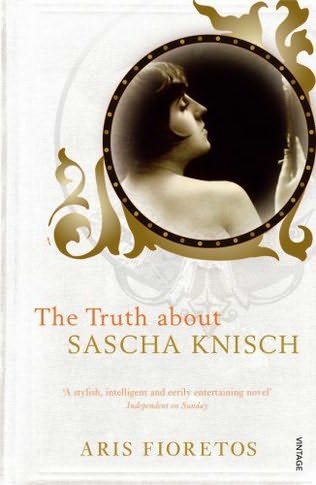
Surely Aris Fioretos should be onto a winner. Imagine: a Greek-Austrian author who writes fiction in Swedish about sexual high jinks and extravagance in Weimar Germany, and then translates it himself into English. The implied versatility is mind-boggling. His The Truth About Sascha Knisch defeated the best efforts of the Complete Review, so I'm rather smug about having blundered my way through it. It is a strange admixture of wry humour and somewhat overblown prose. Sascha Knisch is a projectionist at a theatre in Berlin in 1928, freshly arrived from Vienna. His childhood buddy is now in the Berlin underworld. He has a peculiar fetish for dressing up in elegant women's outfits, and develops a relationship with a Dora Wilms. She dominates him but they also develop an affectionate understanding, which prompts him to begin investigating her murder (it doesn't help that he was in a closet in her room changing into a fancy dress when she is killed). Several pseudo-scientific societies promoting eugenics enter the story; their clashes and struggles for political domination, and competition between homicide and vice squads in the Berlin police all blend together into a strangely atmospheric novel. It feels almost like alternative history, is overly convoluted, baroque even, and none of the characters is particularly sympathetic, and it stretches on and on, but I must say I finished it with a feeling of achievement, if not satisfaction.
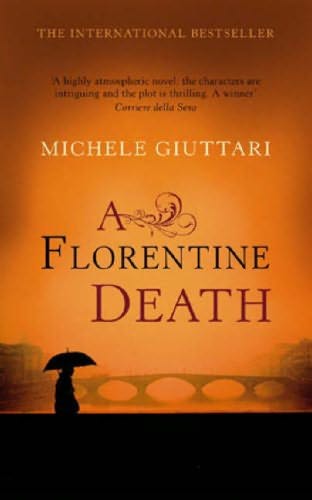
Michele Giuttari used to be a cop in Florence and he puts his experience of solving gritty crime to use in the rather formulaic police procedural A Florentine Death. Michele Ferrara is his chief detective, head of a group of investigative specialists based out of Florence, but whose remit extends across Tuscany. I'm not entirely sure if this book is based on a real-life case that Giuttari was involved in. He makes references to a well-known Tuscan serial killer whose murderous spree remains unsolved to this day, and who is being followed (fictionally) by Ferrara. But the main plot of this book is that of a person sending literary clues to Ferrara ostensibly describing the homosexual victims that pile up as the book progresses. Then there are subplots involving stolen Velazquez paintings, gratuitous inclusions of a lesbian who wants to get it on with a troubled man, and descriptions of a rather comfortable family life (all too rare for detectives, eh?) for Ferrara himself. Add political interference, bureaucratic clashes, a rather plodding and impulsive investigation, and you have it. Not the best example of Italian crime fiction that I've seen.

Juan Gómez-Jurado has written the religio-political thriller God's Spy, set in the Vatican at the time of Pope John Paul II's death and the conclave that elected Ratzinger. In true thriller style, there are italicised passages that provide the back story for the killer and various characters. (I kept recalling Robert Ludlum's constant use of "Madness!" in the Bourne novels whenever he referred to uncovered plans for world domination.) Of course, no detective can be truly sympatico unless she has severe character flaws, and Paola Dicanti is no different. One of a few highly trained profilers in the world, but one whose knowledge is entirely theoretical, she is called in to investigate the brutal murder of a cardinal in the build-up to the conclave. Then another cardinal is butchered, and others barely escape with their lives. It's all very hush-hush, and she has to collaborate with the Vatican's secret police, unedifying characters every one of them, sexist even, and struggle with her own fatal fascination for older unsuitable men (e.g. priests and married heads of department). About the only thing that stuck in my mind after reading the book was that petrol prices in the Vatican are way lower than in Rome, so every one of the handful of fuel stations in the Papal State is crawling with cars from over the border trying to fill up - although only cars with appropriate permits (people of influence, naturally) are allowed to buy petrol in the Vatican... Clearly, Gómez-Jurado aims to write a topical novel - he manages to include both the child abuse scandals that rocked the Catholic church a few years ago, and the pious skullduggery and politicking that occurs during the election of a Pope. Not sure if the effort is worth it, though. Just like Ludlum's pulp, this can be read on a long flight and consigned quickly to the dustbin and out of one's mind upon arrival at one's destination.

There's only so much serial killing a man can take before he wants to switch to something less grim, and he falls smack into politics. Paco Ignacio Taibo is one of Mexico's most famous writers, and in The Uncomfortable Dead, he collaborates with another famous Mexican, Insurgent Subcomandante Marcos, to produce one of the most satisfying books I've read in a while. The two authors write alternate chapters, and who would have thought that the Zapatista leader had such a deft touch, such a feeling for language? The Investigative Commission, as the Zapatistas call their main detective, Elias Contreras, is an Indio plodder, a man who worries and worries at problems until their solutions are harassed into revelation. He is uneducated and unliterary, but he has a simple intuition and a mind that can cut through obfuscation essentially because it is so simple. He spends his chapters dealing with petty crime, missing persons, and a murder in Chiapas. Meanwhile, Taibo's detective, Hector Belascoaran Shayne, is a man in Mexico City investigating one Morales, who was said to have involved himself in sundry political murders, enriched himself, and then vanished without a trace. As the book progresses, Contreras' and Shayne's investigations converge, but not before major diversions into Mexican political history, and trenchant critiques of the Americans and the Mexican conservatives. Good stuff, especially if you avoid all the political diatribes.
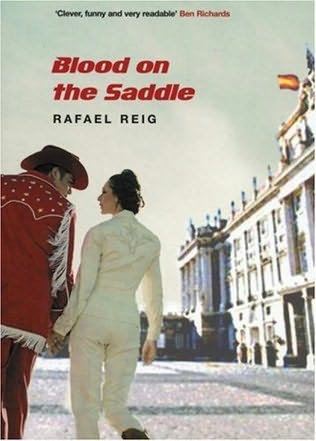
Readers of Jasper Fforde's Nursery Crime series will find much that is familiar in Rafael Reig's Blood on the Saddle. Based in a Spain where petroleum has run out and the Americans invaded, there are broken families and escaped literary characters from books. There's a company that appears to dominate the economic skyline by owning the patent on virtually every genetic modification around. There is some sad, sad, shagging. There's alcoholism, and there's some sparkling humour. This is a rather peculiar novel, not entirely crime fiction, and not quite social criticism, and not quite science fiction. The detective is a man named Clot (why Clot? I didn't quite figure that out.) is the usual laconic PI, a loner. He appears to solve crimes entirely by accident, but hey, however you do it, it's good, right? There's a novel (also called Blood on the Saddle) which cannot be finished until Clot recovers a character who has leapt right out of the pages of the book and escaped: the author is collapsing with alcohol poisoning. It's all heady and surreal and ironic, and doesn't lose much in translation. Neat stuff.
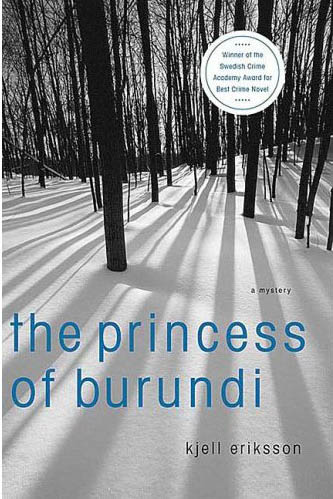
There ought to be a law against over-dramatised blurbs on books. In Kjell Eriksson's The Princess of Burundi (for some reason, several of this man's crime novels have an African reference in their titles), the blurb talks about a silent killer who holds an entire city in the grip of his terror. Bollocks. Other than the relatives of the man who is killed, nobody in Uppsala really gives a damn. His brother is out for revenge, his lovely wife is ravaged by grief, his son is falling apart as a result of it all. It is sombre and dark as almost all of Scandinavian crime fiction, and is rather good as a study of the effects of violent crime on a family. Why was the man killed? There are rumours of a large winnings at poker; although he has been on the straight-and-narrow for years, his brother (to whom he was very close) has continued a life of crime; was it revenge? The book is rather slow to take off, and the solution when it finally arrives is not very satisfying, but the book adds yet another dimension to one's understanding of Swedish life, which is all to the good, what?

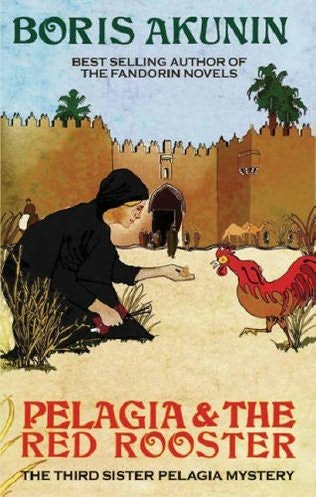
Boris Akunin's last of his Pelagia trilogy - Pelagia and the Red Rooster - is out. As I have mentioned earlier, I haven't taken to this intrepid nun as much as to Erast Fandorin, Akunin's other great hero. But Akunin's declared that he is done with this series, and its ending is more bitter than sweet, for Pelagia, with her red hair and freckled face, her keen mind and impetuous enthusiasm, is a sympathetic character, and perhaps I have developed an affection for her. This book is more serious and polemic than Akunin's others, darker, and he paints a broad sweep of politics, religion, xenophobia, and the beginnings of the long war between Jews and Arabs in the Holy Land. It is written from the point of view of several characters: Pelagia, an assassin, the chief Prosecutor of Zavolsk (where Pelagia is from), and sundry other minor people who add considerable colour to the tale. Although Pelagia has been accused of betraying her spiritual vows with her constant seeking out of detective thrills, and despite her promise to desist, she is unable to give up the investigation of a series of murders that seem to be associated with a self-proclaimed messiah. An assassin, meanwhile, has been dispatched to kill both her and the messiah. True to the genre, the rot obviously starts at the top, but here it's not really corruption that's spreading across the Russian establishment but conservatism and religious fervour. Several myths combine in this tale. Pelagia makes a grand tour down the Volga and into Palestine where she finds the messiah, as one would expect of a heroine.
Where historical crime fiction is concerned, clearly Akunin is in the stratosphere with a large tail of wannabes struggling man(or woman)fully behind him. The effort by Jean-François Parot, The Phantom of Rue Royale, is at the bottom of this long tale. I'm not sure if this is a particularly French trait, but there's so much didacticism and exposition that it appears the writer is more keen to show off his knowledge of the period than actually provide meat to the plot. The plot? Ha. It is the marriage of the Dauphin of France to Marie Antoinette in celebration of which a large fireworks is organised for the edification of the populace. It is grossly mismanaged and, tragically, many people are killed in the crush. Some unsavoury characters decide to use the general mayhem to commit a few crimes of their own, and it is the noble-bastard-who-renounced-his-title detective Nicolas Le Floch who has to sort out the mess. For all his renunciation, this man has the ear of the King and is thrilled by it; when he is not detecting, he is telling stories to the King, or eating in various taverns (obligatory description of meals padding up the already thick book). An entirely unnecessary demonic possession and exorcism is tacked on. The plot reels like a drunk. Dear God, why did such execrable stuff win positive reviews? The Independent - quite laughably, I think - said: "A little pruning might have been applied to that besetting sin of historical fiction, characters telling each other things they already know, and a supernatural element may be a genre-shift too far for some. But such is the momentum of the storytelling, few will worry." Unbelievable.

altun I have ranted elsewhere about Selçuk Altun's anti-moustache tirade, but his book Songs My Mother Never Taught Me is interesting in many ways. It's not much of a crime novel, although there are several murders. The scion of a wealthy family who has been dominated by his mother all his life rejoices at her death and slowly falls into passivity and ennui. A poor man becomes a hired killer and realises by and by that the assassinations he performs, ostensibly in the service of a higher morality and in the name of the Qur'an, are nothing more than in the cause of selfish vendettas of his masters. Naturally, the paths of both protagonists converge (entirely by means of a deus ex machina, a character in the book who is often called odious and is also named Selçuk Altun). What remains at the end? A rather delicious tour around the wonderful city of Istanbul, many references to mother-hating poetry by various authors, and a state of befuddlement in yours truly's mind.
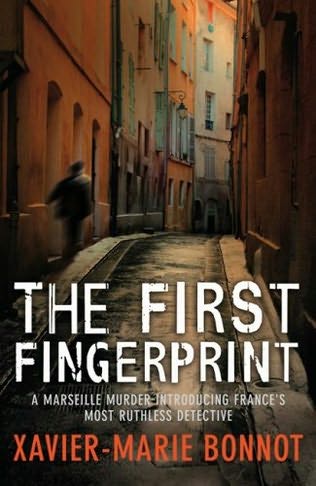
I had been worried at the outset of this grand tour through crime fiction that I would end up suffused with paedophiles, serial killers, killers of paedophiles, and other low-life, complete with graphic descriptions of the torture and bloodshed that ensues. Well, Xavier Marie Bonnot's The First Fingerprint certainly takes the cake. More than a novel with a linear plot, it is a bit of an episodic police procedural, drawing on multiple crimes (including those of children, beautiful (but cold) women, crooks and reformed criminals). Ever since the success of the Da Vinci Code, people have tried to write books that combine some age-old mystery with modern sickness, and Bonnot (a qualified anthropologist) goes farther back than most - all the way to the early Cro-Magnon man. Amidst academic politics (a small anthropological school in Aix gains prominence to the envy of the more established schools in Paris when Lascaux-like fine art is discovered underwater near Marseille), and police politics (murder squad has been sidelined by the gendarmerie), thuggish drug-smugglers and retired mafiosi, a killer is stalking is victims, killing them and ritually disembowelling them with stone-age weaponry. But there are some other murders as well, so are they all connected? The chief detective growls his way through the story assuring everyone that he is the best and that he always gets his man. Of course he does.

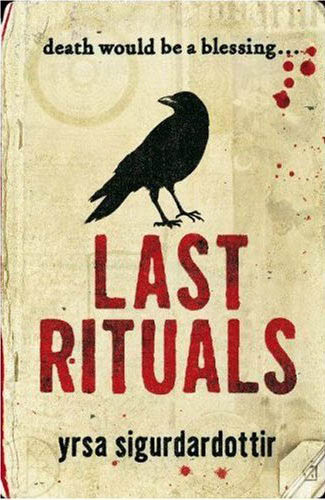
If bleak Scandinavian crime gets to you, switch to the Icelandic Yrsa Sigurdardottir for some black humour. At least, she tries to inject some jocose banter among her characters in the otherwise tiresomely detailed Last Rituals. The connection with Dan Brown is not rejected at all here - again, we have medieval manuscripts and witch-hunts that somehow have a bearing on the ghoulishly mutilated death of a student at a college in Reykjavik. The author wastes no opportunity to fill us in on the history of Icelandic witch-hunts (unlike Europe where most witches burnt were women, mainly men were persecuted in Iceland for the black arts) and the conflict with the Danish imperium. Academic politics in that country seems to be no less bitchy than political politics anywhere else. Supplementing all this mayhem is an impoverished divorced lawyer Thóra Gudmundsdôttir who is recruited by the dead student's family to poke holes in the police case and possibly find the real killer. A German ex-policeman (who, the blurb - rather misleadingly - blames for putting obstacles in her way) assists in her investigation. Their relationship is the source of most of the wit. And, of course, Thora has family troubles of her own, which are 'resolved' in a wryly funny part of the book. Everything else is dark, dank, bloody. If all the medieval guff was elided, this book would have been shorter and much the better for it.
Right. Andrea Maria Schenkel's debut novel The Murder Farm is an attempt at multiple perspective again, and it succeeds in most part. A one-time resident of a little village in Germany returns home to investigate the gruesome murder of a family. It is scarcely a decade since the end of the second world war, and the village is riven by old rivalries and hatreds. Erstwhile Nazis are still in positions of authority and brook no investigation into the past. Meanwhile, the murdered family is loathed by almost everybody in the village, and various grim rumours circulate around village of their sordid predilections. The narrative is split into straightforward narrative, offering perspectives not available to the cast of characters, and interviews of various villagers who offer their own opinions, hesitant or antagonistic, puerile or appropriate. The story unfolds spine-chillingly and the reader soon discovers the grisly truth that has eluded both the police and the neighbours. And it's a pip.

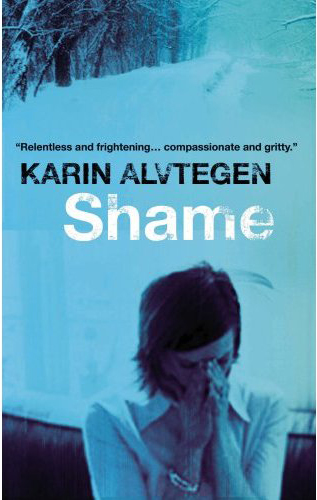
And we have one more Swede this month. Karin Alvtegen's Shame is an excellent character study marred by a loose denouement. As long as the character development proceeds, it is engrossing enough, although I found it rather difficult to empathise with the motivations of the deeply flawed doctor, who is one of the two women whose lives eventually intersect in tragedy. Monika has lived under the suppurating, slowly strangling shadow of her dead brother and her mother's hatred; to compensate for the inadequacy and incompleteness she has felt, she has overachieved professionally, and run away from every relationship that could have salved her. Meanwhile, Maj-Britt, morbidly obese and curdling with poison, has been ruined by her upbringing by fundamentalist Christian parents, and sees people as nothing better than targets of her venom. Very like the guilt and grief felt by Ben Affleck's character in the film Bounce, Monika tries to make amends to the family of an acquaintance who had taken her place in a car journey and died in an accident on the way. She is unable to distinguish selfless help and interference, and gets more and more deeply involved in the victim's family. When Maj-Britt figures out Monika's motivations, she likes nothing better than to blackmail Monika, and from that point, the book begins to lose its power. Still, it was good going until that point.
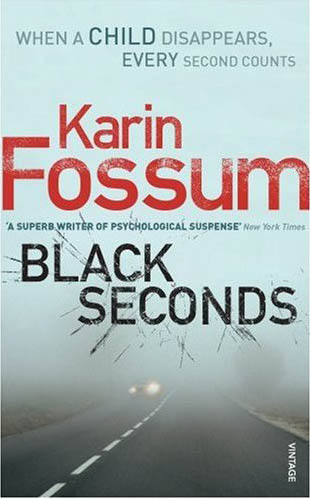
Finally, another Karin, a Norwegian - Karin Fossum - provides yet another family tragedy. In Black Seconds, a little girl loved by everybody vanishes and the family collapses in anguish and bitterness. Her cousins are marked by the sorrow and can barely cope with their own lives; the mother, whose entire life revolved completely around the girl, can scarcely breathe. The police is puzzled - why hasn't the body reappeared? Very like Jill Dawson's Watch Me Disappear, there's mentally deficient man whom people suspect, and very like in that atmospheric book, here too the eventual discovery of the criminal is heart-rending. An excellent book, very empathetic and richly nuanced.

I've decided to forgive Selçuk Altun, despite his protagonists assassinating other mustachioed characters. Towards the end of his tongue-in-cheek and somewhat trying-hard-to-be-clever novel, Songs My Mother Never Taught Me, is a quest for a murderer, which ends up involving visits and researches into six parts of Istanbul that I had never previously heard of. My first thought was that Altun made up these venues and their back histories. I was wrong - and, really, what need is there to concoct such wonders when the city itself is a miracle? So here you go - six visits to hidden parts of Stamboul, mosques and graveyards in equal measure.

Kariye Museum

 kariye Over fifteen hundred years old and surrounded by some truly ugly buildings, this edifice used to be a church, converted to a mosque during the years of Ottoman rule, and finally became a secular museum from about 1948. Supposedly, foreigners are charged three times the entry rate as locals, but that's par for the course for those of us from India where such discrimination is even more overt. Altun's protagonist, Arda's murdered father once claimed that the thematic frescoes on the ceiling were 'Byzantium's most astounding visual works'.

When the church became a mosque in the sixteenth century, the eyes of the Blessed Jesus were made null and void. (But in the right wing, one can sense the dim foreknowledge in the concerned eyes of the Virgin Mary fixed on her baby.)


Cellatlar, The Executioners' Graveyard

Arda couldn't find anything on the Cellatlar (Executioners') Graveyard in encyclopedias or the Internet. He has a point - I am unable to dig anything out about it, other than what's described in the book. The graveyard is on a slope by the historic Pierre Loti Coffee House on the ridges of Eyüp Sultan district.

Over the graves were erected thick stones of human height. Even though these executioners only fulfilled state orders, they have always been universally detested, buried separately, and never admitted into public cemeteries.

The coffee-house was named after the French writer, Loti, who, for no reason other than that he was a foreigner, was treated with exaggerated hospitality by the Ottomans. The view of the city and the Golden Horn is supposedly rather good from here. The coffee is said to be tasteless.

Although the executioners were ostracised even in death, there is a reason why they were buried in the holy grounds of Eyüp. The gratitude of the State, perhaps? Roughly carved gigantic gravestones mark their burial spots. Right by this ghoulish graveyard is the more salubrious burial ground of elite Ottomans. Sultan Beyazit II's Grand Mufti (who fathered 99 children, each given, no doubt, one of the equally numerous names of Allah) has his remains interred there. Also, Field Marshal Çakmak's large gravestone graces the area, I am quite pleased to announce.


Kıztaşı, The Maiden Stone

In the Fatih district of Stamboul is the fifth century Kıztaşı monument, named the Maiden Stone after the sculpture of Nike, the Greek goddess of victory, on the northern face of the pedestal. The obelisk itself, made from a single block of grey stone, was erected in honour of the Emperor Markianos (451-457) by his lackey Tatianus, then governor of the city. In 1908, the surrounding area was torched in a fire, and the column could no longer be hidden in private grounds. It is said that a statue of Markianos once stood on the column; it had the interesting ability to tell if girls walking by were virgins or not. When Justinian II played the trick on his sister-in-law, the statue broke.

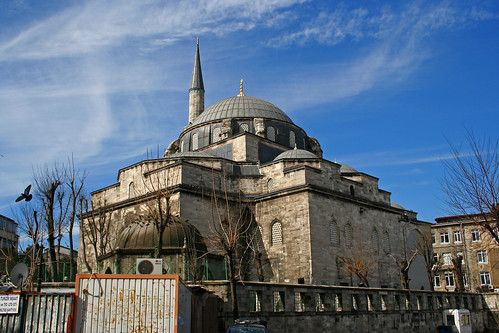
Kıztaşı lies on a quiet street in a genteel area, and the Byzantine buildings seem to have hypnotized the neighbouring buildings and city-dwellers... While not surprised that disgusting weeds had embraced the pillar, concealing it till it became a rubbish dump for plastic bottles, I couldn't come to terms with the abandonment of a stone column, thus depriving history of an inscription that summarized 1,500 years of its past. At a time of column vandalism, I hated to see a campaigning poster for local government elections hanging at a height that only a giraffe could reach.


İmrahor Camii, Mosque of the Stablemaster

The Holy Church of St. John the Baptist, the oldest sacred building in Istanbul, dating from the fifth century, had been open for worship for a millennium. Then it was reopened as a mosque, and dubbed İmrahor Camii. It is by Çamlıca, and is a high-walled building, converted for Islamic worship in 1468 by a Sultan's stable-manager, a post known as İmrahor. An enormous fig-tree spreads across the courtyard. At the south wing, I followed the henna-coloured bricks of a powerful wall, and saw with pleasure the west wing embellished with the names of heroes from the eastern provinces, opposite a park with red-tiled paths that matched the colour of the secluded museum... Like an unfinished Kahn project, the museum with its geometrical floor design as enchanting as a silk carpet was a remarkable monument. It had survived the 1782 fire and the earthquake of 1894, but in 1908 the roof had collapsed under heavy snow and now it would never be repaired. I walked through the main gate feeling uneasily that I was a citizen of a country that didn't even have the sensitivity of an Ottoman stable-master.

Oh, and feel free to have a cake soaked in syrup, called a tulumba, at the nearby Rumeli cakeshop.


Atik Ali Paşa Mosque

  The philanthropic donor who converted the Kariye church into a mosque also bequeathed a large complex of buildings in the district of Çemberlitaş. Hadım Ali Paşa was twice the Grand Vizier of Sultan Beyazit II, and in contemporary sources, referred to as Atik Ali Paşa. Now Hadım means Eunuch, while Atik means Energetic (There can't be a more suitable word than atik to describe someone who can rise from pimping to becoming prime minister, Arda's father might have said), and clearly this man knew where his allegiance lay, building the mosque in 1502 in tribute to the Ottomans.

The mosque has five domes; opposite the three-gated entrance to it is a lovely old fountain. Arda saw a notice on it: PLEASE DO NOT TAKE LARGE CANFULS OF WATER, and it turned his stomach when he saw the subtitle Pest Extermination Service stuck prominently on the notice. The environs were peaceful; supposedly there were diamond and silver workshops in the neighbourhood, all operating miraculously in silence.

The mosque's facade is of cut sandstone. There are four attached buildings to the left of the courtyard. It was interesting to see cobblers and grocery-stores creating income for the mosque complex under the old buildings rented out to silver wholesalers. Were the construction date and the architect of this geometrically simple and architecturally attractive monument deliberately kept unclear?


The Sadeddin Efendi Fountain in the Karacaahmet Cemetery

A fountain now used for ablutions is situated on the axis of the mosque, graveyard and tomb of the man who built it. (Istanbul is famous for its fountains, which not only provided water for ablutions before prayer but also for drinking; many date from Byzantine times, although several philanthropists established some during the Ottoman era.)  Arda discovered that this was the only Su Güzeli (Water Beauty) engraved by the orientalist artists Eugene Flandin and W.H. Bartlett.

It lies on the right side of the street that leads to Tunusbağı, following the angle of the Karacaahmet tomb. It was built in 1741 (AH 1154) by Sadeddin Efendi, son of Kazasker Feyzullah Efendi, and grandson of Şeyhülislam Hodja Sadeddin Efendi - who wrote Tacü' t-Tevarih (The Domain of Islam) - to bless the soul of his dying daughter Zübeyde. Sadeddin Efendi was a lecturer; during his post as a mullah in Egypt he acted as judge in Mecca and Istanbul and died in 1759. He lies in an open tomb behind the fountain...


Take it away, Szerelem!

Feb 17, 2009

Turkish Whiskers

I was enjoying Selçuk Altun's Songs My Mother Never Taught Me very much until I came across this passage:

I was nauseated by the unpleasant image of a thirty-year-old man with his thin, pointed moustache, grinning maliciously at his prey. Why does the Anatolian male insist on the moustache habit? If it is a symbol of manhood, why is it forbidden in the army and police force? Whenever a disastrous crisis erupts in our country, there's always somebody with an ugly moustache involved.

To add insult to injury, the wielder of said moustache is unceremoniously bumped off shortly after this description. I've lost all respect for Mr Altun. As a (at one time) bearer of fungus on my upper lip, I object to this vilification, and demand an unreserved apology. At once.

Dec 18, 2008

The Magnificents

At the zenith of Ottoman power, a young man named Suleiman, whom the Europeans called Magnificent, wielded mighty sword and delicate pen. While Belgrade and Hungary fell to his rampaging forces, he himself was writing poetry of love and adoration. To his beloved wife, he said:


All of a sudden, my glance fell upon her

Like a cypress, she was standing slender;
Right then and there,
tears rushed out of my eyes like a river.
Ah, her gold-embroidered robe,
and the unruly horse she was riding!
The arrows out of my quiver got nowhere:
they fell into far-off Iraq trailing her.
My beloved, if those slashing locks of your hair
strike me down and wound me, is it any wonder?
I sucked your lips which are so used to kisses:
All that gave my soul health and vigor.
If, Lover, your tears stream down,
there is nothing to ponder:
After all, suddenly my glance fell upon her -
like a cypress, she was standing slender.
My heart, be satisfied
with one morsel to eat and a simple cloak to wear;
Don't you see how possessions
drag the people of the world into warfare.
[Translated by Talât Sait Halman 1]

A half-century before Suleiman, another young man named the Magnificent forced his way into history. Scion of the famous house of the Medici, Lorenzo, as ugly of face as beautiful of mind, wrote some of the loveliest songs of the Renaissance.


Sonnet
I saw my Lady by a purling brook
With laughing maidens, where green branches twined;
O never since that primal, passionate look
Have I beheld her face so soft and kind.
Hence for a space my yearning was content
And my sad soul some consolation knew;
Alas, my heart remained although I went,
And constantly my pain and sorrow grew.
Early the sun sank down in western skies
And left the earth to woeful hours obscure,
Afar my sun hath also veiled her ray;
Upon the mind first bliss most heavily lies,
How short a while all mortal joys endure,
But not so soon doth memory pass away.
[Translated by Lorna De'Lucchi 2]

References
1. An Anthology of Turkish Literature, Edited by Kemal Silay, The University, 1996.
2. Lorenzo De' Medici: Selected Poems and Prose, Edited by Jon Thiem, Penn State Press, 1991.

Nov 15, 2008

Silk Road Photos

Check out the rivetting photographs by Christopher Herwig. Here's one from his Turkey-Caucasus collection.

(c) Christopher Herwig

Oct 30, 2008

Hungarian Black Soup

The Financial Times is always filled with delicious gems. Consider this one from today's Lex Column.

"Hátravan még a feketeleves" was a phrase muttered around Hungary yesterday as details of a massive $25 billion lifeline emerged. Literally, this means "the black soup is yet to come" - a way of saying that, after a pleasant interlude, bad times lie ahead. It dates from the 150 year Ottoman occupation when, after a meal with their new rulers, out would come coffee, a previously unknown beverage in Hungary, and the unpleasant business of tributes and taxes would be broached.

Lovely bit of history, and an even finer tribute to Magyar acerbity.

This is the sort of interdisciplinary thing that I find fascinating. Murat Iyigun of the University of Colorado has written a paper titled Lessons from the Ottoman Harem (On Ethnicity, Religion and War), in which he brings several ostensibly disparate disciplines into one in his work. Politics, economics, history and statistics are blended with considerable panache.

The Ottomans, a Turkic people who, under the leadership of Osman, conquered much of Anatolia and established one of the great empires of the world, were also inveterate keepers of records. This treasure trove is available to researchers in all sorts of areas. But Dr Iyigun picks up some of the information he requires from the Conflict Catalog, a comprehensive dataset of violent conflicts in all regions of the world from the 1400s to date, and data on the imperial family from such sources as Turkish Wikipedia.

There appear to be two not quite mutually exclusive theories to explain Ottoman conflicts with their neighbours. The Gaza theory states that religion was a driving force for Ottoman bellicosity, leading them to initiate war against Europe, whereas eastern conflicts were started by others, their co-religionists for the main part. What fueled the energies of the early Ottoman conquerors was essentially their commitment to Gaza, and 'ideology of Holy War' in the name of Islam. Ottoman power was built on that commitment... (Paul Wittek.) Another theory is that as the Ottomans became a multiethnic empire, the Imperial Harem wielded considerable influence on the Emperor and determined to a large extent the direction of his wars. Various historians averred that members of the Harem with different ethnic or religious backgrounds often lobbied the Sultan to influence the geography of Ottoman conquests.

Dr Iyigun finds that the Gaza theory was an important but not sufficient cause for Ottoman war, but that the ethnicity of the Valide Sultan was an important and independent determinant of whether the Empire engaged in military conquests in Europe versus North Africa or the Middle East.

It appears that conversions into Islam, even among the elite in the Harem who were influential in policy matters, was insufficient to promote the cause of holy war. The ethnic roots seemed to dominate over the religious, and subverted the Sultans' ambitions toward the Middle East and North Africa.

A look at the genealogy of the Ottomans shows the varied maternal ancestry of many of them. [Source: Shaw, Peirce, Turk Vikipedi, http://turkboard.com]

Name Period of Reign Mother's Name Ancestry
Beyazit I 1389-1401 Gulcicek Hatun Greek
Mehmet I 1413-1421 Devlet Hatun Turkish
Murad I 1421-1444, 1446-1451 Emine Hatun Turkish
Mehmet II 1444-1446,1451-1481 Huma Hatun Turkish
Beyazit II 1481-1512 I. Gulbahar Hatun Albanian
Selim I 1512-1520 II. Gulbahar Hatun Turkish
Suleyman I 1520-1566 Ayse Hafsa Sultan Turkish
Selim II 1566-1574 Hurrem Sultan Polish
Murad III 1574-1595 Nurbanu Sultan Venetian
Mehmed III 1595-1603 Safiye Sultan Venetian
Ahmed I 1603-1617 Handan Sultan Greek
Mustafa I 1617-1618,1622-1623 ? Albanian
Osman II 1618-1622 Mahfiruz H. S. Serbian
Murad IV 1623-1640 Kosem Sultan Bosnian
Ibrahim I 1640-1648 Kosem Sultan Bosnian
Mehmed IV 1648-1687 Turhan Sultan Russian
Suleyman II 1687-1691 Saliha D. Hatun Serbian
Ahmed II 1691-1695 Hatice Muazzez Sultan Polish
Mustafa II 1695-1703 Emetullah R. G. S Venetian

The Conflict Catalog comprises violent conflicts on five continents, with Richardson ratings exceeding 1.5 (a logarithmic scale, such that a value of n implies 2n fatalities). The number and identities of the participants in each listed conflict, the common name for it, and its date and geographical location are the primary data in the catalog. The duration of the conflict, and the number of fatalities are also available for about a third of the sample.

The crux of the paper is the following linear regression, used to estimate the impact of ethnic identities on Ottoman military operations.

OTTOWARt = L0 + L1 EUROMOMt + L2 Xt + et

where OTTOWAR is one of four alternative dependent variables, EUROMOM is a dummy variable for whether the sultans had a European maternal link, and X is a control variable including trend (TIME), the lagged variable OTTOWARt-1, estimates of Ottoman and European populations (OTTOPOPt, EUROPOPt), and an indicator variable for each of the three centuries (CENTURYt). 300 annual observations in the period 1401-1700 are used in the regression.

What are these four alternative dependent variables? 1) the number of newly initiated conflicts between the Ottoman Empire and European powers at time t, OTTOMANt; 2) the count at time t of the newly initiated number of Ottoman conflicts with its non-European neighbours, OTHEROTTOMANt; 3) the aggregate number of conflicts the Ottoman Empire had with continental Europeans at time t, both that began at t and began earlier, AGOTTOt; 4) the aggregate number of Ottoman conflicts with non-European foes, AGOTHERt.

The reason for including 3) and 4), of course, is that medieval warfare was a seasonal affair: hostilities would be postponed at the onset of winter. Therefore, all unresolved military confrontations were renewed every year. Also, Dr Iyigun wanted to know if matrilineal ancestry determined not only the short-running wars, but also the longer ones.

What conclusions can be derived if we assume that the Valide Sultan's ancestry mattered for the patterns of Ottoman conquest? Well, we would expect L1 to be negative and statistically significant when 1) and 3) are the dependent variables; and L1 should be positive and significant, or insignificant and of any sign, if 2) and 4) are dependent variables.

Dr Iyigun uses other control variables as well, e.g. the Sultan's age at ascendancy to the Sublime Porte, the length of his reign, and whether he reigned before or after the great military defeat of the Ottoman navy at Lepanto. For the most parsimonious specification, though, he finds indeed that L1 is negative and statistically significant at the 5% level. Hence, statistically at least, the sultan's tie to Europe via his mother reduced his military ventures in Europe by more than 70%. In fact, a subsequent regression implies that having a Venetian mother resulted in almost no aggression towards Europe on the part of the Sultan concerned. Meanwhile, on the other front, there is almost no relation between the maternal ancestry of a Sultan and his conflicts with his Oriental neighbours. In fact, having a European mum didn't affect an Ottoman's fights with his coreligionists to his east. A truly remarkable finding.

Couple of minor points: the older a Sultan was on ascending the throne, the likelier he was to engage the Europeans rather than other Muslims in battle. Likewise, the longer he reigned ,the less likely he was to fight on his Eastern fronts.

Dr Iyigun addresses all sorts of subtleties in his paper. One interesting point: considering that the average age of ascension was 22 years, the reason that the younger Sultans were less likely to engage the Europeans in battle could have been because their mothers had been absorbed into the Harem two decades earlier upon a previous Ottoman victory. By a suitable lagged variable in his regression, Dr Iyigun is able to show that this effect is negligible.

A very enjoyable paper, indeed.

References

1. Shaw, S (1976). History of the Ottoman Empire and Modern Turkey, Vol 1, (Cambridge University Press).

2. Peirce, L. P. (1993). The Imperial Harem: Women and Sovereignty in the Ottoman Empire (Oxford University Press).