JOST A MON

The idle ramblings of a Jack of some trades, Master of none

In 1854, John Henry Wilton published a book titled The First Crime; Or True Friendship, which, he claimed, was upon the importunations of his friends who wished to learn all about his peripatetic life. I haven't read the book, but this passage seems par for its course.
Harry stopped short the tale, and bid Bothwick and his friend partake of some refreshment. " Come," said he, "let us have a cup of mocha, friends. Mr. Wilding," added Harry, "you must be getting peckish; allow me to offer you a cup of coffee and a crust. I'll answer for both being good, for the bread is home-made, and the coffee Richard makes himself in the best style, for he has had much practice ; I taught him myself. The method I learnt in Turkey and France. The Arabs have a mode of making coffee that I don't like. They, like the Egyptians, boil it until it is quite thick, and to me unpleasant. I am very particular as to the way my coffee is made, and have, after much trouble, succeeded in hitting upon an excellent method. I carry with me my own apparatus to make it, which may be called eccentricity. Well, be it so; nevertheless, I do, for I despise nine-tenths of the coffee, or coloured water called coffee, one generally meets with in travelling; for I hold it that a cup of really good coffee is one of the greatest luxuries."
So there you go. Travel might broaden one's mind, but not if one's a Victorian gentleman, full of oneself and the supposed superiority of one's civilisation.

5.23.2011

What Cheek!

The boy got into a slanging match with a couple of little fellows at school. One of them turned around and slapped him roundly on the cheek. The mother rushed up to the aggressor to expostulate. Wherefore physical violence? etc. The fellow - all of six years old - snapped rudely at her and stomped off to class.

It is the school's practice to send an email around to the parents whenever similar episodes of violence occur. Dear Parent, goes a sample mail. We regret to inform you that one boy defenestrated another. There was minor concussion in one boy and a sudden loss of musical ability in the perpetrator, but no serious damage to school property. To prevent such occurrences in the future, we have decided to post armadilloes at every window. Yours etc., Headperson Smythe.

So we weren't surprised to receive an email from the school office today. The subject read : A Case of Slapped Cheeks. Whoa, said the wife. That was quick.

A quick perusal of the contents quickly disabused us. It turns out that Slapped Cheeks are something else entirely.

We learn something new everyday.

In an otherwise rather pedestrian book, there's a small glimmer of understanding. Check out Elaine Viets' Accessory to Murder.
Some people say it with flowers. Joanie said it with food. She believed in comfort food - if you ate, she felt better. Josie didn't think she could eat anything after Alyce's frittata, but she took a small nibble of the corned beef. Then she took a big bite. Soon she'd downed several slabs of meat.
The turkey looked as if it had been sliced off a real bird. Josie hated the processed junk that tasted like wet Kleenex. She helped herself to a small piece. Yum. Juicy. She tried a little more. Then a lot more.
How can I eat like this when a woman had been murdered? Josie thought.
Because death makes you hungry for life, she decided. She piled life-giving salami on rye.

5.20.2011

Math Tales #7

Last weekend, the boy and I sat down to do some homework. It dealt with paying for purchases and calculating the change due. This tied in neatly with the boy's inability to collect change from his weekly 'Tuck Shop' purchases.

'But the Tuck Shop is free,' he protested.

'Why do you say that?' I said.

'Because they don't give me any money back,' he said.

At this point, we needed to established definitions.

'If you give money for something, then it is not free,' I said. 'Do you give money at the Tuck Shop?'

'Yes,' he said.

'Well then, it's not free,' I said.

We then looked at his exercise sheet.

'Okay,' I said. 'Suppose I am a shopkeeper and you come into my shop to buy an apple.'

'I want to be the shopkeeper,' said the boy.

'All right,' I said, being an agreeable sort. 'I come to your shop to buy an apple.'

'What shop is it?' asked the boy. 'Is it Marks, or is it Tesco, or is it Sainsbury's?'

'It doesn't matter,' I said.

'I like Sainsbury's,' said the boy, with some relish.

'The apple's price is 5p,' I said. 'How much should I pay you for it?'

The boy looked at me, puzzled. I had a vivid recollection of Swami from Malgudi Days asking his father how big the fruit was when asked to work out its price.

'I should pay you the price of the apple, shouldn't I?' I urged.

He nodded.

'I can't pay you less than 5p, can I?' I asked.

He shrugged in a noncommittal way.

'If I paid only 3p and took the apple, that would be stealing, wouldn't it?' I said.

He sat up, interested.

'You must not steal,' he intoned. 'Otherwise, the police will come.'

'Yes,' I said.

'Let them come,' he said, seized with a sudden fit of bravado. 'I'll punch them on the nose.'

I sighed.

'Try to focus,' I said. 'Do you agree that if something costs 5p, you should not pay less than that?'

He yawned. He nodded.

'Okay,' I continued. 'Now what if I pay you more than 5p? Suppose I paid you 10p? What will you do?'

He stared.

'You should give me some money back, shouldn't you?' I said.

'I don't have any money,' he said.

'You are a shopkeeper. Of course you have some money,' I said.

'Did I get it from the bank?' he said.

'And from the other customers who came to buy things before me,' I said.

'Did they buy oranges, or did they buy sweets, or did they buy a Munch Bunch?' he said.

'It doesn't matter,' I said, feeling as though I had walked into a cloud. 'Let us worry about the apple I'm trying to buy, shall we?'

'I don't like apples,' whispered the boy in my ear.

'I know,' I said. 'So, anyway. The apple costs 5p, and I paid you 10p. I paid you more than I should have, so you should give me some change back. How do we work out the change?'

'Suppose you gave me 1 pound?' said the boy, his eyes as round as a pound.

'We'll worry about pounds later,' I said. 'Shall we stick to pence for now?'

'Pens?' said the boy, completely confused.

'Pence,' I said. 'You know, pennies.'

'Okay,' said the boy.

We looked at each other.

'I don't know,' he said, agonised. 'It's too hard.'

'Don't worry,' I said. 'I'll explain. If I pay you 10p for something that costs 5p, you should give me some money back. How much money? Well, you should return to me what I paid you minus the price.'

'What is minus?' said the boy.

'I meant 'take-away',' I said, correcting myself.

'Take-away' is the modern English method of teaching subtraction.

We looked at each other again.

'Did you get that?' I said. 'You give me back what I paid you take away the price.'

'Okay,' he said.

'So - what did I pay you?'

His eyes glazed over.

'I forgot,' he said.

'I paid you 10p. Please pay attention,' I said. 'How much did the apple cost?'

'5p,' said the boy.

'So what do you do?' I said.

After some more to-ing and fro-ing, the boy finally said, 'Ten take-away five.'

It took him several seconds to work this out in his head and on his fingers.

'I will give you 5p,' he said.

'Excellent,' I said.

I don't think he has quite got it yet. Even when he does, it will probably strike him as some kind of magic formula. How do I explain it to him so it appears natural and reasonable? I have no idea.

Exhausting stuff.

What do you know, it’s that time of the month anew when birds chirp and the minds of bloggers turn to things festive and carnival-like. And so here we have the 35th instalment of the popular carnival of science. It promises to be a beaut. (Is it a beaut or is it a beaut? I’d say it is a beaut.)

History of Science

The first documented automaton is a flying dove from Greece in the 5th century BC. That knowledge transmitted itself subsequently to the Arab world. Medievalists.net have a short explanation.


If you were setting out to write a book about science and how it began, how and where would you begin? The question exercised Patricia Fara, who discusses it at Soapbox Science in Science: A Four Thousand Year History.

Down House (photo by Mario Modesto)
Have you been to Down House, where Charles Darwin and his family dwelt from 1842? If not, do so vicariously via John Graham-Cumming’s Geek Weekend: Charles Darwin’s Home.

Continuing the vicarious pleasures of armchair travel, check out Urban Ramblings, a post by Rupert Baker on the Royal Society’s connections with London at the History of Science Centre’s blog.

The teaching of evolution in the USA has long been a cauldron of political and religious trouble. In Political Descent, Piers Hale talks about the Scopes trial and other legal ramifications of what, essentially, should be a scientific issue.

Continuing on the theme of evolution, Asa Gray was Darwin’s supporter in America just as Thomas Huxley was in England. In Wired Science, David Dobbs recounts the story of Gray’s debates with Louis Agassiz that led to the respectability of evolutionary theory in the US. And – as a bonus – you can even read Gray’s review of the Origin of Species in the Atlantic Magazine.


Still on the topic of evolution, Dispersal of Darwin has a video charting the image of Charles Darwin over the years.


After Newton and Leibniz, a new rational philosophy took over the world of science, and people began to deride their predecessors (such as Athanasius Kircher) as scientific incompetents. BOOKTRYST has an article about a 1715 book that poked fun at Kircher and his fellows.


In the 1870s, the Dutch government decided to blow a ton of money on improving their scientific infrastructure, and assigned a million and a half guilders to Leiden University for, among other things, a new natural history museum. Where is that museum now? Collect and Connect explores.


Earth Sciences


In the Great War, the Austro-Hungarians created a special force called Kriegsgeologen, tasked with the use of geology for war. History of Geology describes them in War Geology.


Highly Allochthonous discusses whether large temblors beget more large temblors in The Many Faces of Earthquake Triggering.

 
Mathematics and Computing

The Osborne Company produced the first laptop computer way back in 1981. Have you ever heard of it? How to be a Retronaut tells you all about it.

Ravi Kannan recently won the 2011 Knuth prize for outstanding contributions to the foundations of computer science. Dick Lipton celebrates the achievement and discusses some of Kannan’s work at Gödel’s Lost Letter and P=NP

Physics

James Maxwell is the genius extraordinaire responsible for the first great unifying theory of physics. 150 years ago, he published the first of four papers that comprised his tour de force. The Economist’s Babbage blog tells the story.

If you are interested in the early scientific history of fission, you can do no better than to read the review by Louis Turner; Ptak Science Books discusses it.

Whipple Library has an article about the Nernst lamp, an innovative light source brighter than filament lamps and not requiring the use of vacuum.


Pyro Optical Pyrometer
And, in the vein of lamps, can you use re-radiated heat to measure temperature? A Pyro Optical Pyrometer can come to your rescue, as Sebastian Assenza reveals at the University of Toronto's Scientific Instruments Collection.

There was a young lady named Fisk
Whose fencing was exceedingly brisk
    So fast was her action
    That the FitzGerald contraction
Reduced her rapier to a disk.

FitzGerald who? Skulls in the Stars talks about one of the first explainers of the famous Michelson-Morley experiments.

Astronomy and Space

In 1572, an English member of Parliament speculated - for the first time - on why (if the universe were infinite) the night sky was not fully lit up with stars in every line of sight.  Jost A Mon (in other words, me) tells the story.


The Earth and Moon as seen from Mercury (for some cosmononplusation; credit NASA)
Einstein’s general theory of relativity predicts that light is bent as it passes near a gravitating object. What cosmological discoveries have been made by using this property of space? 365 Days of Astronomy has a nifty little podcast.

Chemistry

Abiotic genesis of life’s building blocks, anyone? The famous Miller and Urey experiments of the 1950s resulted in amino acids when a gloop of simple chemicals were subjected to electricity. Recent analysis of the vials left by Miller reveals that hydrogen sulphide in that primordial soup would have been even more efficacious. Life, Unbounded has the story.

Lavoisier and Paulze by Jacques-Louis David
Antoine Lavoisier, father of chemistry, was a great Enlightenment polymath, and Ian at SomeBeans describes some of his achievements.

Medicine and Pharmacology

If you have a pain in your spleen (and how would you know it was your spleen aching?), you can do no better than to follow Nicholas Culpepper’s advice from the 17th century, as Barbara blogs in 17th Century American Woman.


The lovely Res Obscura blog has excerpts and illustrations from a 1690 pharmacopoeia published in London. Check out  The Treasury of Drugs Unlock’d.

In medieval Europe, alchemy combined with medicine to produce a potent drug called Precipitato to restore the human body to its pristine natural state. It was so toxic that it required the most delicate handling. Read about it at William EamonProfessor of Secrets.

Not that kind of Chirurgeon
Pickled lung tissue, anyone? The Chirurgeon’s Apprentice recounts how 18th century pathologists conducted post-mortems to investigate lung cancer.

Shortly after Dr Hahnemann published a paper in the British Medical Journal in 1859 on his new ‘discipline’ of homoeopathy, a Glasgow doctor named William Gairdner issued an exacting and trenchant critique. Memoirs of a Defective Brain has the story.

Smells Like Science has the story of Ether and the Discovery of Anesthesia.


And, in the vein of anesthesia, Providentia provides the details on The Chloroform Man.

Life Sciences

In the 16th century, people believed that there were fundamentally no differences in male and female genitalia, one being a mirror image of the other. Mirabile Visu talks about this gender inversion.


In 1733, two Swedish workmen reported finding a dull but live frog inside a boulder they had just cut open. Over the centuries, there have been other reports of immured yet live creatures found. Hoax or not? The History of Geology investigates in Toad in a Hole.


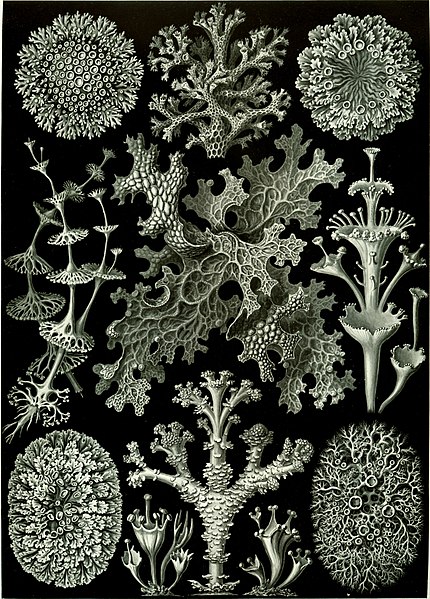
Lichens from Haeckel's Kunstformen der Natur (1904)
Ptak Science Books has a piece on Ernst Haeckel's Kunstformen der Natur (1904), a compendium of staggeringly lovely lifeforms found in nature.


Speaking of staggeringly lovely, have you seen BibliOdyssey's article on the Flora Sinensis, the first Western book (1656) to document the sub-tropical flora of China?

Why do people still insist that apes are not monkeys? It’s all down to an old taxonomy that is today quite obsolete, says PaoloV at Zygoma.


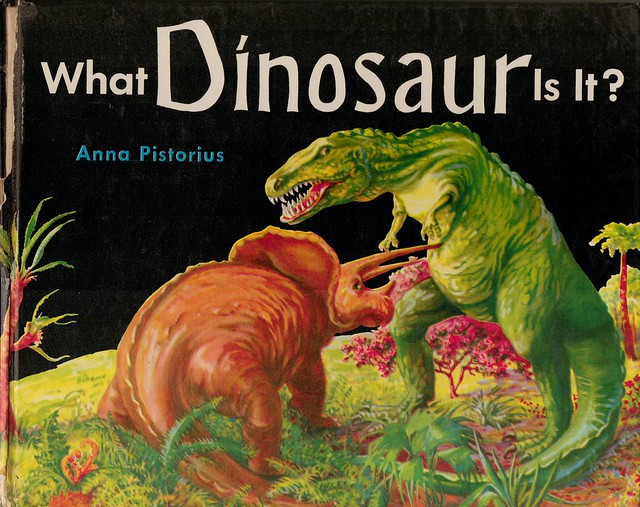
In the 1950s, Anna Pistorius created an illustrated book of dinosaurs for kids. Love in the Time of Chasmosaurs has some lovely scans and explanations from it.

Kristina Killgrove, a biological anthropologist at UNC Chapel Hill, recounts the story of the ill-fated Tudor ship Mary Rose and describes isotopic studies aimed to determine the origins of its sailors in Powered by Osteons.


[And that’s it for May 2011, folks! Thanks to all those who submitted articles (and especially to Thony C., indefatigable as ever, for finding fascinating tidbits in the scientific blogosphere). I hope this encourages you to write up your own pieces on science and its history and philosophy. Do consider submitting your blog article to the next edition of the giant's shoulders. You can use the carnival submission form. Past posts and future hosts can be found on the blog carnival index page.]

Kim Barker, the former South Asia correspondent for the Chicago Tribune, wrote The Taliban Shuffle: Strange Days in Afghanistan and Pakistan, in which [via Cafe Pyala] is described Nawaz Sharif's efforts to find her a boyfriend. He failed, and then offered himself. Food, though:
We adjourned our meeting for lunch in the dining room, where two places were set at a long wooden table that appeared to seat seventy. We sat in the middle of the table, facing each other over a large display of fake orange flowers. The food was brought out in a dozen courses of silver dishes—deep-fried prawns, mutton stew, deep-fried fish, bread, a mayonnaise salad with a few vegetables for color, chicken curry, lamb. Dish after dish, each carried by waiters in traditional white outfits with long dark gray vests. Like the good Punjabi that Sharif was, he kept pushing food on me. “Have more prawns. You like prawns, right?” He insisted on seconds and thirds. It felt like a make-believe meal. I didn’t know which fork to use, not that it mattered in a culture where it was fine to eat with your hands, but the combination of the wealth, the empty seats, and the unspoken tiger in the room made me want to run screaming from the table. I needed to get out of there.

Margaret Truman is known for her political thrillers, and Murder at the Kennedy Center is par for that course. Like her previous eight thrillers, this is a best-seller, and fit for a long flight, when the machinations of the rich and powerful in Washington DC become as stereotypical as this meal at a 'fancy' restaurant:
They'd chosen house specials: salmon with a bouquet of enoki mushrooms for her, lobster in beurre blanc for him, after sharing a cold foie gras with a garnish of beluga caviar. A Muscadet accompanied the meal, inexpensive and unambitious. Mac Smith had had enough of complexity and ambition for one day.
Now, with coffee in front of them, they sat back in their heavy armchairs and looked at each other.
"I am disappointed, you know," she said.

Welcome, folks, to the LXXVII edition of the Mathematics Blog Carnival. We have a wide-ranging litany of articles, although - despite our best efforts - not seventy-seven of them. Still, quite a few to whet an appetite or three.

According to custom, we must start with the oddities of the number. Instead, we'll just intersperse the facts amongst the various articles.

77 is a deficient number.

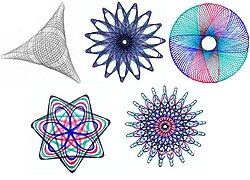
Sol Lederman presents Curve stitching with Mathematica posted at Playing With Mathematica.
Meanwhile, does anyone remember the NBC adventure series 'The Tales of the 77th Bengal Lancers'?
Ever heard of curves with infinite perimeter and zero area? Read That's Impossible! One Giant Nerdgasm at Consumed By Wanderlust.
And, of course, Jesus of Nazareth is supposed to be of the 77th generation from Adam.
What does the Great Pyramid tell us about ancient Egyptian mathematics? Dave Richeson reveals an interesting consequence in Division by Zero.
77 is evil.
Alexander Bogomolny presents Areas on the Graphs of Power Functions posted at CTK Insights.
77 is also vile!
At Travels in a Mathematical World,  Peter Rowlett presents a collection of podcasts and videos from the Math/Maths Week 2010, and from Young Researchers in Mathematics 2011.
77 is the number of digits of the 12th perfect number. Somewhat uncannily, 77 also is the number of integer partitions of the number 12.
Mike Croucher ponders whether graphical calculators have outlived their usefulness at Walking Randomly.
77 is the sum of three squares, 42 + 52 + 62, as well as the sum of the first eight prime numbers.
Speaking of calculators, did you know you could multiply on your fingers? I didn't, but Math and Multimedia reveals some tricks.
77 is the atomic number of the element iridium. Does anyone remember Motorola's ill-fated ventured of the same name that was supposed to revolutionise global telecommunications?
While the little folk do elementary mathematics on their fingers, the powerhouses of the discipline get their breakthroughs at the most peculiar places and moments in time. Dick Lipton lists some of them in Godel's Lost Letter and P = NP.
77 is the largest number that cannot be written as a sum of distinct numbers whose reciprocals sum to 1.
Pat Ballew highlights the quotation 'old mathematicians don't die, they just go off on a tangent', and illustrates nicely the properties of tangents to a cubic at Pat's Blog.
77 is not a sum of two squares - but it is a sum of 2 squares!
At Short Sharp Science, Catherine de Lange reveals how tattoos (unsightly at the best of times, heheh) become even unsightlier with age. Mathematicians have developed a model that describes the aging of tattoos. (Do you think the picture below looks like a tattoo of 77? No? Dash it.)
And IT History has a little piece on the beginnings of computer user groups - all the way back in 1952!


Speaking of beginnings, it's the centenary of IBM. Take a look at this celebratory post at Antipodes: Reflections from an Australian Expatriate in France?

"Wannabe professional gambler" Zac mixes up probability and ethical humanism in his post Gambling Theory at Zac Sky.

SquareCircleZ ponders what is the correct graph of arccot(x)?

Alex Bellos discovers that there are more to triangle centres than he had previously imagined (and revealed to us in his book Alex's Adventures in Numberland).

Roice has some clever Geodesic Saddles.

And Joe Manausa shows how Tallahassee residents need to wait till 2018 for their house prices to return to equilibrium in his case study. Long time to wait, eh?

And just so that we Anglospeakers don't feel too alone, we are pleased to reveal that the Spanish blogosphere has its own Carnival of Mathematics. The latest installment is by Juan Martínez-Tébar Giménez at Los Matemáticos no son gente seria, and it showcases entertaining pieces on, among a couple of dozen other things, Tartaglia and Cardano, the Nash conjecture, the decipherment of a wartime diary, and the centenary of the Royal Spanish Mathematical Society.

That's it for this month, people. Please do take a look at our sister carnival - Math Teachers at Play -  and also note that you can follow the Carnival of Math on Twitter: @Carnivalofmath. The next Carnival of Mathematics should come up around Jun 3, 2011. Please send in your submissions here.

5.06.2011

Jahangir the Cruel

The usual story is that the first three great Mughal Emperors were kindly souls - well, kindly by the standards of the time - and the next two were dissolute, and Aurangzeb was the absolute nadir, the pits, the cruellest and most ruthless of the lot. It turns out that Shah Jahan, his father, was no slouch in the cruelty department, and even Jahangir, famously addled addict to wine and opium, had his moments of barbarity.

Not even high-ranked nobility was safe from Jahangir's fury. There's a story that his chamberlain broke one of his favourite Chinese porcelain dishes. In a panic, the chamberlain sent a servant to scour China for a replacement. Two years later, the servant still wasn't back, and Jahangir asked to see the dish. Quaking, the chamberlain informed him that it was broken, whereupon the Emperor exploded in rage. He ordered the guard to lash the poor man a hundred and twenty times with a corded whip, as he watched, and then told his porters to beat him with cudgels until those broke. As the English traveller William Hawkins (who was the imperial court at the time) reports
At least twenty men were beating him, till the poore man was thought to be dead, and then he was hauled out by the heels and commanded to prison.
The next day, Jahangir was informed that the chamberlain was still alive, whereupon he was sentenced to life imprisonment. One of the royal princes rescued him from gaol and nursed him back to health. Still, the Emperor seethed; summoning the man before him, he ordered him 'never to come again before him until he had found such a like dish, and that he travel through China to seek it.'

The chamberlain journeyed across China for fourteen months, it is said, to no avail. Eventually he learned that the King of Persia owned a similar dish, who sent it to him out of pity.

(From Giles Milton's Nathaniel's Nutmeg: How One Man's Courage Changed the Course of History)

5.05.2011

Geronimo

Did anyone stop to wonder why the operation to take out Osama Bin Laden was codenamed 'Geronimo'? In yet another example of the staggering ignorance (or indifference) of the US government, it is because Geronimo, the great Apache warrior, was another figure who eluded the US military for years.

Read this, and weep. Once again, native Americans are shown how little the majority of their countrymen care for them. [Via HNN.]

Poppy Z. Brite is a writer with a large cult. What does she write? As far as I can make out, based on her Self Made Man, a collection of short stories, it's weak horror and mild fantasy and a lot of homosexual boinking, all described with a sparkling use of words. She has moved on - I hear - to gastronomic crime fiction, which I haven't read, but this collection of stories has at least one passage (in Mussolini and the Axeman's Jazz) describing food. See for yourselves:
Cagliostro stood behind his counter and waited on the last customer of the day, an old lady buying half a pound of salt cod. When she had gone, he locked the door and had his supper: a small loaf of bread, a thick wedge of provolone, a few olives chopped with garlic. He no longer ate the flesh of creatures, though he must sell it to maintain the appearance of a proper Italian grocery.
Above his head hung glossy loops of sausage and salami, rafters of wind-dried ham and pancetta, luminous globes of caciocavallo cheese. In the glass case were pots of creamy ricotta, stuffed artichokes, orbs of mozzarella in milk, bowls of shining olives and capers preserved in brine. On the neat wooden shelves were jars of candied fruit, almonds, pine nuts, aniseed, and a rainbow of assorted sweets. There were tall wheels of parmesan coated in funereal black wax, cruets of olive oil and vinegar, pickled cucumbers and mushrooms, flat tins containing anchovies, calamari, octopus. Enormous burlap sacks of red beans, fava beans, chickpeas, rice, couscous, and coffee threatened to spill their bounty onto the spotless tile floor. Pastas of every shape, size, and color were arranged in an elaborate display of bins facing the counter.